
(309) 321-8412 | 1101 W Jackson St, Suite A, Morton, IL 61550
(309) 321-8412 | 1101 W Jackson St, Suite A, Morton, IL 61550
How Shockwave Therapy Resolves Chronic Achilles Tendinopathy Without Surgery
Shockwave Therapy resolves chronic Achilles tendinopathy by delivering targeted acoustic energy into damaged tendon tissue — activating cellular repair that rest, stretching, and cortisone injections cannot reach. It isn't pain management. It's a biological restart for tissue that stopped healing on its own.
Chronic Achilles tendinopathy isn't a pain problem. It's a biology problem. The tendon's internal repair process — collagen synthesis, fibroblast activity, new blood vessel formation — launched after the original injury, stalled under chronic load, and never finished. The pain signals that the repair was left incomplete. Every intervention aimed only at the pain leaves the unfinished repair untouched.
Shockwave Therapy works by converting acoustic pressure waves into a cellular signal. That signal does three things: it breaks up disorganized scar tissue and calcific deposits blocking normal tendon mechanics; it activates dormant fibroblasts and drives collagen production — research documents up to a 2.5-fold increase in collagen synthesis within local tendon tissue; and it forces structural remodeling so the tendon rebuilds with organized, load-bearing fibers instead of weak, chaotic scar tissue.
The clinical data supports the mechanism. Randomized controlled trials report success rates between 75% and 80% for chronic Achilles tendinopathy treated with extracorporeal shockwave therapy. Combined radial and focused protocols reduce pain scores by an average of 3.5 points on the visual analog scale. Long-term follow-up shows over 80% of patients remain pain-free or significantly improved at the one-year mark. Adverse effects are minimal — mild transient redness in fewer than 10% of patients.
A standard protocol runs across multiple sessions. Each session is short. The tissue responds and remodels across the full course — no surgical risk, no systemic medication, no masking of the structural failure underneath.
For patients who have exhausted standard conservative care and are facing a surgical recommendation, Shockwave Therapy is the non-invasive path that addresses the actual source of the problem — and finally gives the tendon the signal that restarts the repair.
Last Updated: July 29, 2026
- • Why Chronic Achilles Tendinopathy Doesn't Heal on Its Own
- • Why Standard Treatments Keep Missing the Target
- • What Shockwave Therapy Actually Does Inside the Tendon
- • The Healing Cascade: What Happens After Each Session
- • How to Know If Shockwave Therapy Is the Right Call for Your Achilles
-
• Frequently Asked Questions About Shockwave Therapy for Achilles Tendinopathy
- • Why do standard physical therapy protocols often fail to resolve chronic Achilles tendinopathy?
- • What are the realistic time and session details for a Shockwave Therapy protocol?
- • How does the care plan change if my Achilles tendon doesn't show improvement after the first few sessions?
- • Why should I avoid expecting a single-session fix for a chronic tendon injury?
- • Can I return to activity between Shockwave Therapy sessions, or do I need complete rest?
- • What is the difference between radial and focused Shockwave Therapy for Achilles tendinopathy?
- • The Construction Site Was Never Finished — Until Now
Why Chronic Achilles Tendinopathy Doesn't Heal on Its Own
Here's what most people are never told: the Achilles tendon isn't staying injured because it's weak. It's staying injured because the repair process broke down midway through and never restarted.
Picture a construction site that got abandoned halfway through. The crew showed up after the injury — fibroblasts, collagen-producing cells, new blood vessels trying to form. They started the work. Then the load kept coming, the tissue environment turned hostile, and they walked off the job.
The pain you feel now isn't the original injury. It's the signal that the build was never finished.
That's why rest doesn't fix it. Rest pulls the load off the site. It doesn't call the crew back.
What a stalled tendon needs isn't passive recovery. It needs a mechanical signal the repair process can actually respond to — which is exactly what understanding how acoustic energy regenerates damaged tissue makes clear.
The Biology Behind a Tendon That Stopped Repairing Itself
Tendons don't have the same blood supply as muscle. That's not a flaw — it's how they hold up under load for decades. But that same design makes them slow healers when the repair process stops moving.
In a healthy healing response, fibroblasts migrate into damaged tissue, lay down new collagen, and organize it into load-bearing fibers. NIH research on tissue repair confirms that when this process is properly reactivated, shockwave therapy drives up to a 2.5-fold increase in collagen synthesis within local tendon tissues.
But in chronic tendinopathy, that reactivation never happens. The fibroblasts are dormant. The collagen that did form is disorganized. The tissue looks healed on the surface. It isn't.
Disorganized collagen can't absorb force the way healthy tendon tissue does. So every step loads a structure that distributes stress wrong.
The pain isn't new damage. It's a tissue that rebuilt incorrectly — and keeps breaking down under normal use because the architecture was never corrected.
Why 'Chronic' Is a Different Problem Than 'Acute'
Acute tendon pain and chronic tendinopathy aren't the same condition at different stages. They're different biology entirely — and treating one like the other is where most care plans go wrong.
An acute injury triggers an inflammatory cascade — the body's first-responder system. It's fast, aggressive, and designed to stabilize damage quickly. Cortisone works there because it damps that response.
But chronic tendinopathy isn't an inflammatory condition anymore. That phase ended. What's left is a failed remodeling problem — and NIH long-term outcome data shows that over 80% of patients who receive proper tissue-level intervention remain pain-free or significantly improved at the one-year mark. Getting to that outcome means doing something the inflammatory playbook can't do.
That's why chiropractic care that integrates Shockwave Therapy treats chronic Achilles tendinopathy as a tissue remodeling problem — not an inflammation problem.
Applying an anti-inflammatory solution to a remodeling failure doesn't restart the biology. It quiets the alarm while the building stays unfinished.
| Stage | Tissue State | Repair Activity | Clinical Symptom |
|---|---|---|---|
| Acute Injury | Structurally intact with localized micro-tears and inflammatory markers | Full inflammatory cascade — fibroblasts mobilize, blood vessels form, collagen production begins | Sharp localized pain, swelling, warmth — classic inflammation signals |
| Early Repair | Partial scaffolding in place — disorganized collagen being laid down under continued load | Remodeling begins but stalls as mechanical stress outpaces the repair rate | Pain persists after activity, stiffness in the morning, gradual loss of explosive function |
| Chronic Tendinopathy | Disorganized collagen matrix — structurally compromised tissue that cannot distribute load correctly | Repair activity effectively halted — fibroblasts dormant, collagen synthesis arrested | Dull persistent pain with activity, recurring flare-ups, no improvement with rest alone |
| Failed Conservative Care | Tissue remains structurally stagnant — cortisone and passive rest do not reactivate cellular repair | No new remodeling signal introduced — the construction site stays abandoned | Temporary symptom relief followed by return of pain — the underlying build remains unfinished |
| Acoustic Disruption (Phase 1) | Calcific deposits and scar tissue mechanically disrupted by targeted acoustic pressure waves | Dormant fibroblasts receive the physical signal needed to reactivate | Initial treatment discomfort as the stalled tissue responds to the first remodeling cue |
| Cellular Activation (Phase 2) | Local tissue environment shifting — collagen synthesis resuming, vascular ingrowth beginning | Active biological repair restarts as cells respond to the acoustic stimulus | Gradual reduction in pain as organized repair tissue begins replacing the disorganized matrix |
| Structural Remodeling (Phase 3) | Load-bearing collagen fibers organized and integrated — tendon architecture approaching functional integrity | Repair cycle completes what the original inflammatory response left unfinished | Sustained pain relief with restored functional capacity — the build finishes |
Why Standard Treatments Keep Missing the Target
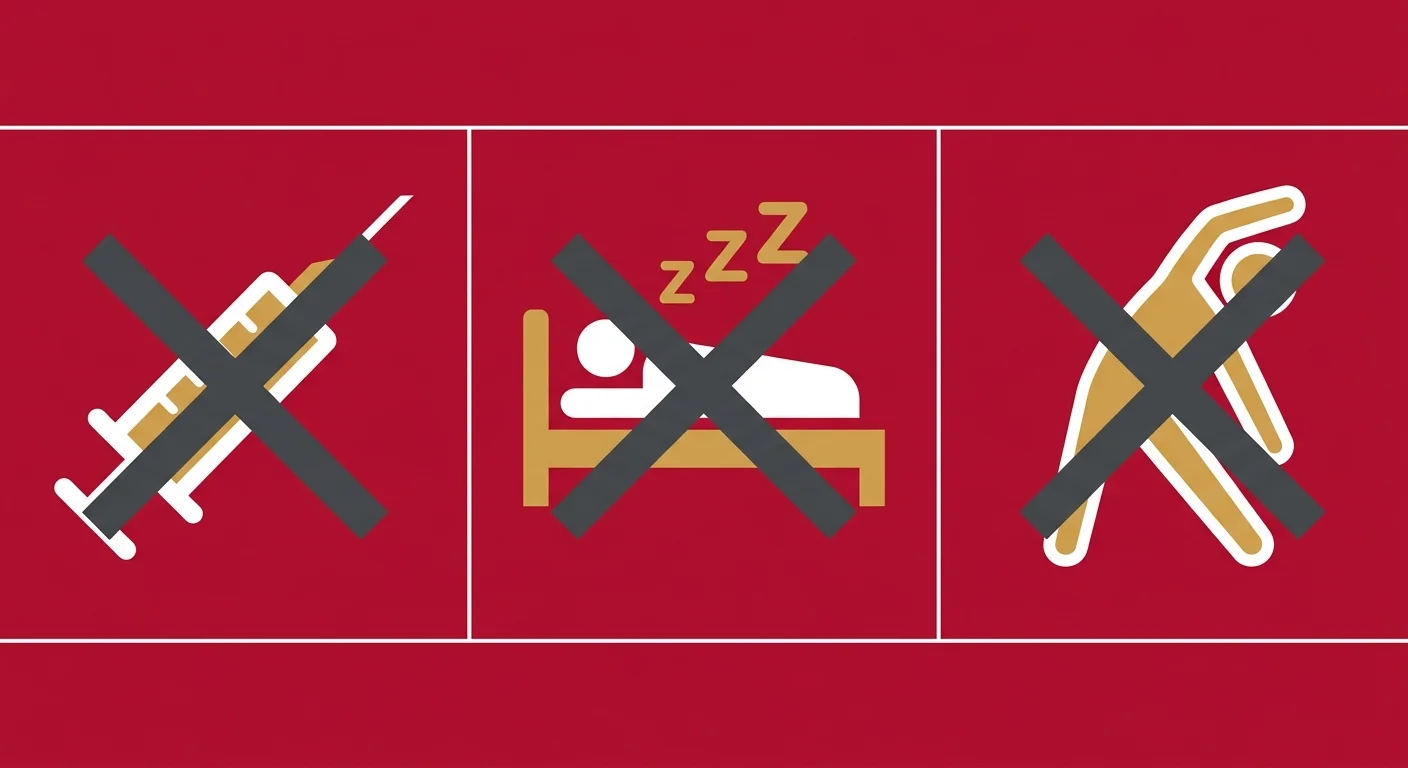
Most people with chronic Achilles tendinopathy have run the same sequence. Rest. Physical therapy. Cortisone. Repeat. And most of them got the same result — temporary relief, then right back where they started.
That isn't a treatment failure. It's a targeting failure. Rest, physical therapy, cortisone — every one of them hits the symptom layer. None of them touch the stalled construction site underneath.
The biology doesn't reset because you rested. It resets when it receives the right signal. Standard protocols never deliver that signal. That's the gap.
What Cortisone Actually Does — and What It Doesn't
Cortisone is a powerful anti-inflammatory tool. In the right context — acute injury, active inflammatory cascade — it does exactly what it's designed to do. Chronic tendinopathy isn't that context.
By the time a tendon injury turns chronic, the inflammatory phase is finished. The fibroblasts stopped migrating. The collagen that did form is disorganized. The tissue isn't hot and angry — it's structurally compromised and biologically stalled.
Injecting cortisone at that stage is like sending a fire crew to a building where the fire's been out for months. The problem isn't flames. It's that nobody ever finished the repairs.
And repeated cortisone injections don't just fail to help — they're associated with further degradation of the tendon structure itself. NIH clinical evidence shows that success rates between 75% and 80% in treating chronic Achilles tendinopathy come from interventions that reactivate cellular repair — not from suppressing an inflammatory response that stopped driving the problem months ago.
The Cookie-Cutter Protocol Problem in Tendon Rehab
Rehab runs into the same wall. Eccentric loading programs and standardized physical therapy sequences aren't inherently wrong. They're wrong when they ignore what's actually happening inside the tissue — and most of them do.
A tendon with disorganized collagen and dormant fibroblasts doesn't remodel just because you load it progressively. The tissue needs the right mechanical stimulus — and whether radial vs focused shockwave protocols is the right call depends entirely on where the damage sits and what the cells need to respond.
That decision point is exactly where a cookie-cutter protocol falls apart.
At Touch of Wellness Chiropractic, the care plan starts with what the tissue is actually doing — not with a standardized sequence built for a generic tendon injury. And when a protocol isn't producing results, it changes. That's not a weakness in the clinical model. That's the whole point of having one.
| Treatment Approach | What It Targets | What It Misses | Long-Term Outcome |
|---|---|---|---|
| Rest and load reduction | Immediate mechanical stress on the tendon | The stalled cellular repair process — fibroblasts remain dormant; disorganized collagen stays in place | Pain returns when normal activity resumes; underlying tissue structure unchanged |
| Cortisone injection | Active inflammatory response | The failed remodeling environment that replaced inflammation — cortisone has no mechanism to reactivate dormant fibroblasts or reorganize collagen | Temporary pain relief; repeated injections associated with further tendon structural degradation |
| Generic eccentric loading / standard physical therapy | Muscle strength and progressive load tolerance | The disorganized collagen architecture that can't absorb force correctly regardless of load progression | Functional gains plateau; tissue remodeling failure persists beneath improved strength |
| Anti-inflammatory medication (oral NSAIDs) | Residual pain and swelling signals | The absence of a biological trigger to restart collagen synthesis and fibroblast migration | Symptom management only; no structural change to the tendon's repair environment |
| Shockwave Therapy | The stalled cellular repair process directly — through acoustic pressure delivered to the tissue | Nothing at the structural level — this is the mechanism that addresses what every other approach misses | Collagen synthesis reactivated; organized load-bearing fibers rebuilt; durable resolution of the underlying remodeling failure |
What Shockwave Therapy Actually Does Inside the Tendon
Cortisone works at the surface. Acoustic energy works inside the cell. That distinction is everything.
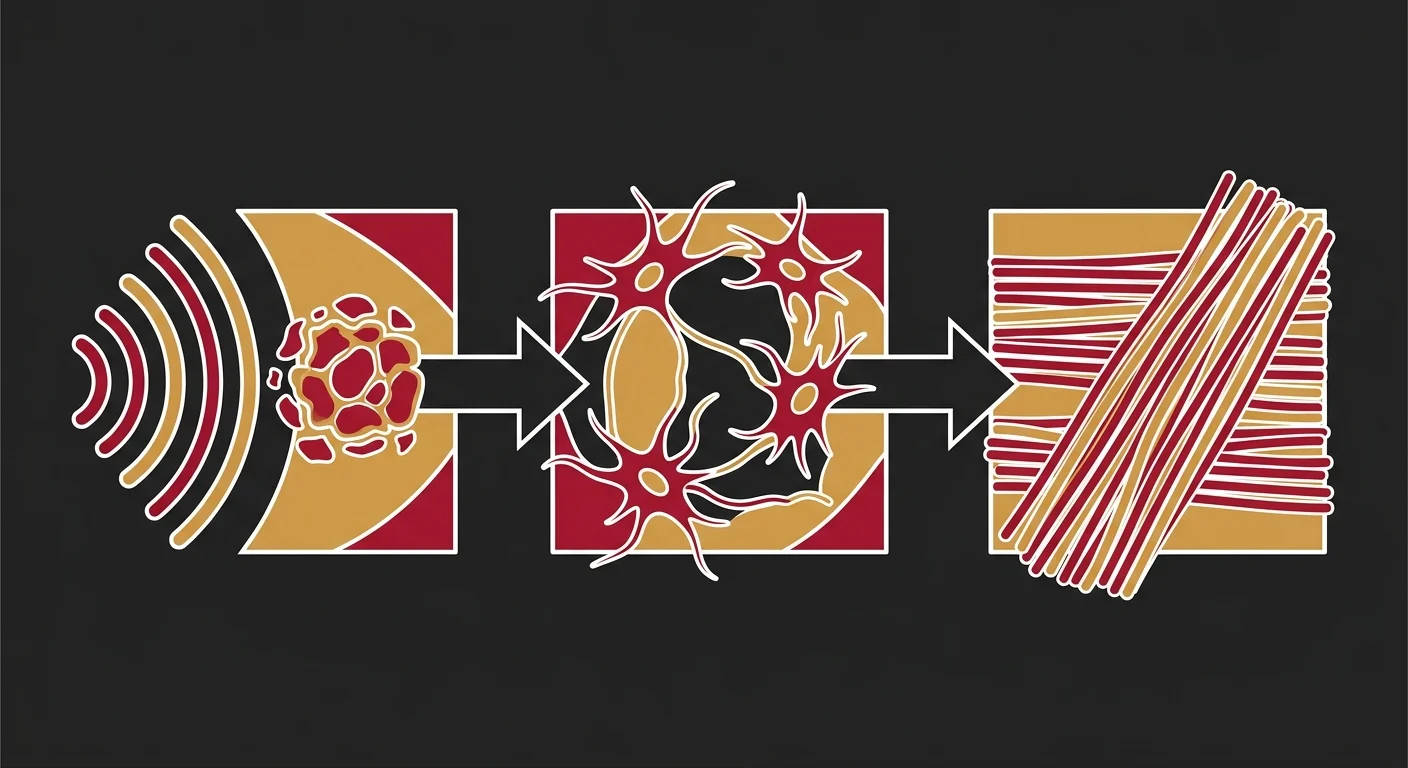
Shockwave Therapy doesn't quiet the pain signal. It converts acoustic pressure into a biological instruction the tendon can actually respond to. What follows isn't symptom management. It's the three-phase repair sequence the tendon was supposed to complete the first time — and didn't.
Each phase builds on the one before it. Rush the protocol, skip a step, or stop at the first sign of improvement — and the construction site stays unfinished again.
Phase 1: Acoustic Disruption — Breaking the Calcification Lock
Chronic Achilles tendinopathy isn't just damaged tissue. It's blocked tissue. Calcific deposits and disorganized scar formation physically interrupt the tendon's mechanical pathway — and until that blockage clears, nothing downstream can work.
That's what shockwave energy hits first. High-pressure acoustic waves fragment calcific deposits and break apart the dense scar matrix that's been stacking up since the repair process quit. The tendon can't remodel around that material. It has to go.
This is also where patients feel the most during treatment. If you want to understand what that pressure actually signals for healing, the short answer is this: it's not a sign something's wrong. It's confirmation that the mechanical input is reaching the tissue that needs it.
Phase 2: Cellular Activation — Waking Up Dormant Repair Pathways
Clear the blockage, and the dormant biology can finally respond. That's what Phase 2 is — the moment the stalled construction crew gets called back.
Acoustic waves trigger fibroblast migration into the tendon tissue. Those fibroblasts start producing collagen — not the chaotic type that formed during the failed repair cycle, but structured collagen aligned with the tendon's mechanical load. Research documents up to a 2.5-fold increase in collagen synthesis within local tendon tissues during this reactivation phase.
New vascular ingrowth follows right behind. NIH protocol research confirms that combining radial and focused shockwave protocols reduces pain scores by an average of 3.5 points on the visual analog scale — not a subjective impression, but a direct measurement of the cellular environment shifting from stagnation to active repair.
Phase 3: Structural Remodeling — Building Functional Tendon Tissue
Cellular Activation lays the raw material. Phase 3 is where that material actually becomes a tendon.
The collagen deposited during Cellular Activation is initially immature. Structural Remodeling is the phase where mechanical loading — applied correctly and progressively — organizes those fibers into load-bearing architecture. The tissue isn't just present. It's oriented, tensioned, and capable of absorbing the forces a functional Achilles tendon faces every day.
That's the payoff. Shockwave Therapy doesn't patch over the unfinished build — it restarts it. The same three-phase sequence the tendon's biology attempted after the original injury, now running all the way through. Oriented fibers. Load-bearing structure. A tendon that can actually do its job again.
| Shockwave Phase | Biological Target | Cellular Response | Measurable Outcome |
|---|---|---|---|
| Cellular Activation | Dormant fibroblasts and collagen-producing cells | Fibroblast migration triggered; structured collagen synthesis initiated along mechanical load lines | Up to a 2.5-fold increase in collagen synthesis within local tendon tissues |
| Cellular Activation + Structural Remodeling transition | Pain signaling pathways and vascular ingrowth sites | New vascular channels established; pain environment shifts from stagnation to active repair | Pain scores reduced by an average of 3.5 points on the visual analog scale |
| Full Protocol (all three phases) | Patient safety profile across shockwave treatment course | Mild transient redness is the primary reported adverse response; no serious adverse events | Mild transient redness reported in fewer than 10% of patients |
The Healing Cascade: What Happens After Each Session
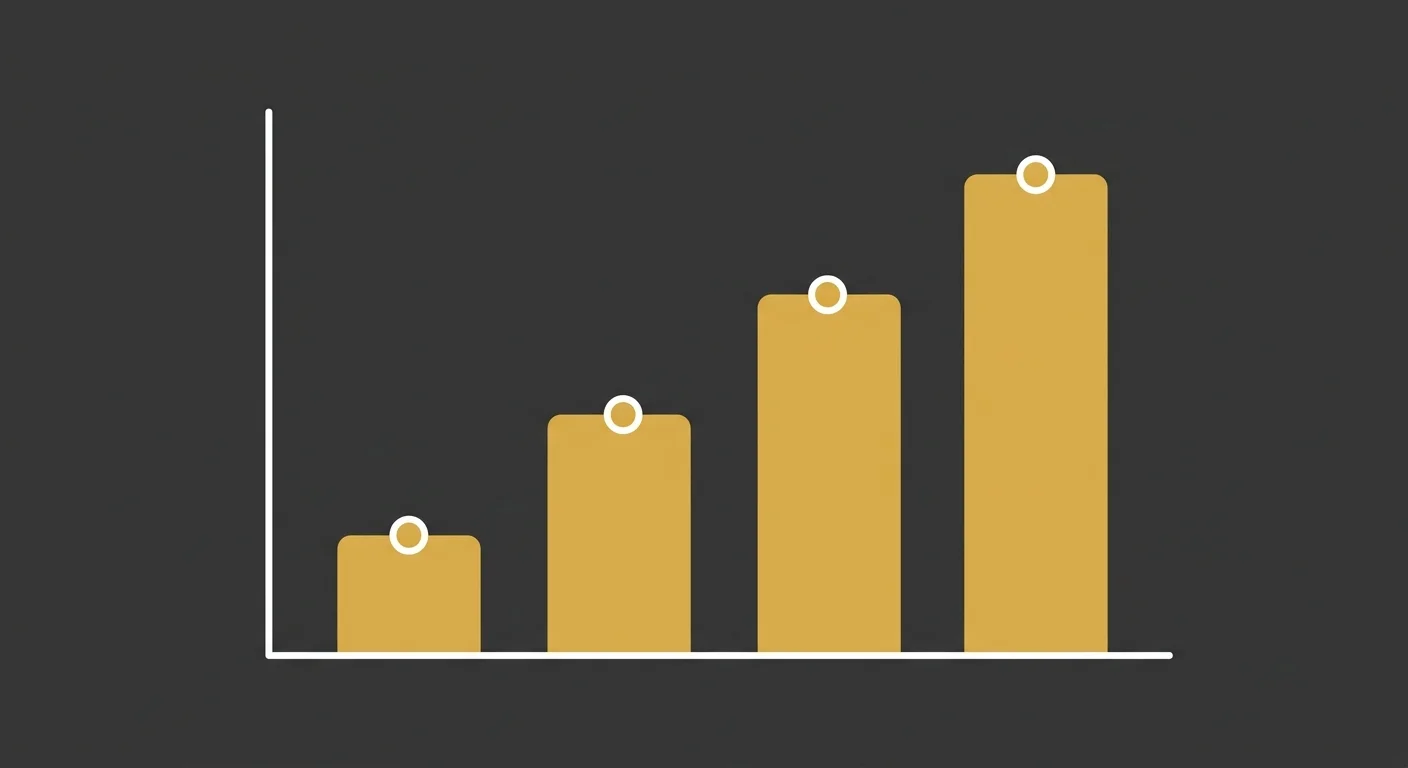
That three-phase sequence is the biology. But biology doesn't run on one session. That gap — between what the tissue needs and what a single treatment delivers — is exactly where patients quit too early.
The real work happens between sessions, not during them. Each session drops a mechanical signal into the tissue. Then fibroblasts recruit. New collagen lays down. Blood supply starts pushing into areas that have been starved of it. The next session hits before that first response peaks — stacking the biological stimulus before the initial repair wave finishes. That's not recovery creeping forward. That's the protocol working.
None of that is accidental. Shockwave Therapy doesn't saturate the tissue once and walk away. It progressively amplifies a repair signal — one the tendon's biology is finally capable of receiving again.
Session-by-Session: What the Tissue Is Actually Doing
Early sessions are almost entirely clearance work. Calcific deposits, dense scar matrix, collapsed vascular pathways — the acoustic energy hits all of it first. Patients feel the most treatment sensation here. That's not a bad sign. It means the energy is reaching the compromised tissue that's been stalled since the original repair process broke down.
By the middle sessions, Cellular Activation is running. Fibroblasts are migrating. Collagen synthesis is climbing. And new blood supply is pushing in — restoring circulation through scar-occluded tissue is one of the least visible shifts happening inside the tendon at this stage, and one of the most essential. Without vascular ingrowth, the repair cells can't sustain what they started.
Later sessions shift the biology into Structural Remodeling. The raw material is already there — immature collagen fibers, active fibroblasts, restored vascular pathways. What the final sessions do is reinforce the mechanical load signal that tells those fibers how to orient. The construction crew is back on site. Now the architecture gets built.
Why the Timeline Feels Slower Than You Expect
Here's what most patients aren't told going in: the timeline feels slower than the biology actually is.
Here's what nobody explains upfront: functional improvement lags behind tissue changes by weeks. Reduced pain, better load tolerance, less morning stiffness — the nervous system updates its threat signal after the collagen has already started remodeling. Clinical success rates of 75% to 80% in randomized controlled trials reflect patients who finished the protocol. Not patients who bailed when progress felt invisible. Long-term follow-up shows over 80% remain pain-free or significantly improved at the one-year mark. That durability comes from letting Structural Remodeling complete. Cut the protocol short at the first sign of relief and those numbers fall apart fast.
The stalled construction site doesn't become a finished building in a single afternoon. The biology runs its sequence at the pace the tissue allows. What Shockwave Therapy does — what nothing aimed at the symptom layer has ever done — is give that biology a reason to run it at all. That's the signal that restarts the build.
| Session Window | Tissue Activity | Expected Patient Experience | Clinical Marker |
|---|---|---|---|
| Middle sessions | Cellular Activation — fibroblast migration, structured collagen synthesis, early vascular ingrowth | Sensation decreasing; functional load tolerance beginning to improve | Active repair environment established; tissue shifting from stagnation to regeneration |
| Final sessions | Structural Remodeling — immature collagen fibers organized into load-bearing architecture, vascular pathways reinforced | Functional improvement in morning stiffness, activity tolerance, and pain during loading | Protocol completion rates correlate with 75% to 80% clinical success in controlled trials |
| 1-year follow-up | Sustained Structural Remodeling — mature collagen matrix, stable vascular supply, full mechanical load capacity | Over 80% of patients remain pain-free or significantly improved | Over 80% of patients treated with shockwave therapy remain pain-free or significantly improved at a 1-year mark |
| Throughout all sessions | Mild transient surface response — localized redness at treatment site in a small minority of patients | Minimal adverse effects; redness resolves rapidly post-session | Mild transient redness reported in fewer than 10% of patients undergoing shockwave protocols |
How to Know If Shockwave Therapy Is the Right Call for Your Achilles
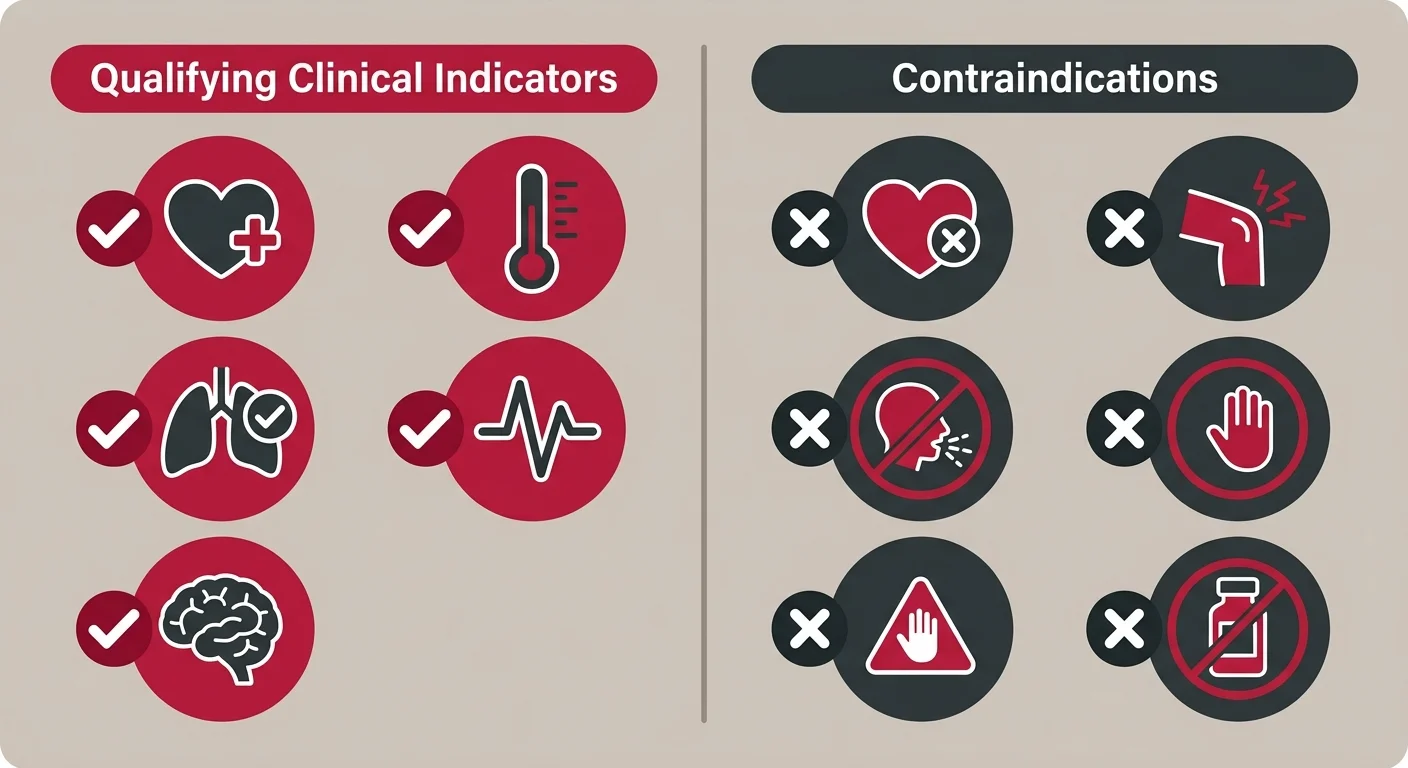
That's the biology. Whether it applies to your Achilles is a different question — and it doesn't get answered by a search engine.
Shockwave Therapy solves one specific problem: a repair process that stalled and never restarted. If your problem is an acute rupture, active systemic inflammation, or a structural failure that needs surgical repair first — acoustic energy isn't the right signal. The protocol is precise. The patient profile it serves best is equally precise.
Those 75% to 80% clinical success rates from randomized controlled trials aren't a blanket promise. They belong to patients who fit the criteria. That's exactly what the assessment is sorting out.
Clinical Criteria: Who Gets the Most From This Protocol
The primary entry point is chronic Achilles tendinopathy that conservative care couldn't close out. Rest. Stretching. Anti-inflammatory protocols. Standard physical therapy. You did the work, and the tendon kept returning to baseline anyway. That's the stalled construction site. That's who this protocol is built for.
Insertional tendinopathy — where the tendon meets the heel bone — responds differently than mid-portion tendinopathy. The tissue architecture is different. The calcific deposit pattern is different. And the shockwave parameters have to reflect that. Whether radial vs focused shockwave therapy is the right modality split depends on the exact location and depth of the damage. That determination comes from a hands-on assessment — not a symptom description.
Long-term follow-up shows over 80% of shockwave therapy patients remain pain-free or significantly improved at the one-year mark. But those outcomes cluster around one specific profile: chronic, non-responsive tendinopathy. Not acute injuries. Not partial ruptures. Not presentations that needed a different pathway first. The number means something — when the patient fits.
Who This Protocol Isn't Built For
This protocol isn't built for one-session expectations. Chronic tendinopathy didn't develop in a single training run — and it doesn't reverse from a single acoustic pulse.
And it's not built for patients who check out between sessions. The days after each treatment are when the real work happens — fibroblasts recruiting, collagen laying down, new vascular supply threading into tissue that's been starved of it for months. That process requires loading the tendon correctly. Not ignoring it. Not hammering heavy training just because the pain backed off temporarily. Patients who expect the provider to carry the whole load don't get the outcomes the research reflects. Both parties have to show up.
If there's a clear surgical indication — complete rupture, bone pathology that needs structural repair — acoustic energy isn't the starting point. Running a shockwave protocol on tissue that needs a fundamentally different intervention first has no clinical value. The assessment tells you which conversation you're actually in.
What a Genuine Assessment Looks Like Before Treatment Begins
A genuine assessment doesn't begin with a protocol. It begins with the tendon.
At Touch of Wellness Chiropractic, the clinical picture comes first — symptom duration, prior treatment history, where in the tendon the damage is concentrated, how the tissue responds to load. The 15-minute door-to-door standard isn't a shortcut through that process. It means the time you're here goes toward what actually matters — not intake paperwork, not waiting room delays.
If the assessment confirms that acoustic disruption, cellular activation, and structural remodeling are the right sequence for your Achilles — the care plan gets built around that clinical picture. Not a billing calendar. And if the tissue is pointing somewhere else, that's the answer you get. Real answers are more valuable than comfortable ones.
| Candidacy Factor | Strong Candidate | Poor Candidate | Why It Matters |
|---|---|---|---|
| Symptom Duration | Chronic tendinopathy persisting for months despite rest, stretching, or anti-inflammatory protocols | Acute injury or fresh tendon trauma with fewer than 6 weeks of symptoms | Shockwave Therapy restarts a stalled repair process — it requires a stalled repair process to exist in the first place |
| Prior Conservative Care | Has completed standard physical therapy, cortisone, or rest protocols without lasting resolution | Has not yet attempted any conservative intervention — no baseline treatment history | The research outcomes reflect patients whose tendon has already demonstrated it won't resolve on its own |
| Injury Location | Mid-portion or insertional Achilles tendinopathy with confirmed tissue degeneration | Complete or partial rupture requiring structural surgical repair | Acoustic energy targets degenerated, scar-blocked tissue — not mechanically failed tissue that needs reconstruction |
| Calcific Deposits | Calcific deposits or dense scar matrix present within the tendon body | No calcification and no scar obstruction — tissue architecture is intact | Acoustic Disruption is most effective when there is a physical blockage for the pressure wave to clear |
| Patient Engagement | Willing to complete the full protocol and load the tendon correctly between sessions | Expects single-session resolution or plans to ignore tissue activity between appointments | The tissue does active repair work in the days after each session — passive participation undercuts the biology |
| Systemic Condition | No active systemic inflammatory condition or blood clotting disorder affecting treatment site | Active systemic inflammation, anticoagulant therapy, or local infection at the treatment area | Shockwave Therapy introduces a controlled mechanical stimulus — systemic conditions that disrupt healing pathways change the risk profile |
| Surgical Indication | No current surgical referral — condition is non-operative but non-resolving | Clear surgical indication confirmed by imaging or specialist evaluation | Acoustic energy is not a substitute for structural intervention when the tissue has failed beyond the threshold the protocol is designed for |
Frequently Asked Questions About Shockwave Therapy for Achilles Tendinopathy
The biology doesn't lie. But the biology isn't what's keeping people up at night. What people need answered — before they commit to anything — is what this actually looks like from the inside.
These aren't theoretical questions. They're the ones about time, about what happens when progress feels invisible, about what to do when the plan stalls. Answer those honestly before you start, and the protocol works better.
Why do standard physical therapy protocols often fail to resolve chronic Achilles tendinopathy?
Physical therapy isn't designed to restart a stalled repair process. It's designed to manage load and quiet pain signals. Those are the right tools for an acute injury that's actively healing. They're the wrong tools for a tendon whose construction crew stopped showing up months ago.
Chronic Achilles tissue isn't inflamed in any traditional sense. The fibroblasts aren't active. The collagen matrix is disorganized. Blood flow through scar-occluded zones is compromised. Stretching and progressive loading can manage symptoms around that biology. They don't change the cellular environment that caused the stall.
That's why the same Achilles that improves with physical therapy keeps returning to baseline the moment loading increases. The symptom got quieter. The underlying biology didn't move.
What are the realistic time and session details for a Shockwave Therapy protocol?
A full protocol for chronic Achilles tendinopathy runs across multiple sessions, spaced deliberately so the tissue can respond between applications. Cellular activation needs time to build before the next acoustic signal stacks on top of it.
At Touch of Wellness Chiropractic, the 15-minute door-to-door standard means your time here is spent on treatment. Not on administrative delays. Not on waiting room time. Efficiency is a clinical commitment, not a scheduling convenience.
The specific session count gets determined at assessment — based on symptom duration, tissue presentation, and how the tendon responds to initial treatment. Here's what the research reflects: clinical success rates between 75% and 80% belong to patients who completed the full protocol. Long-term follow-up shows over 80% remain pain-free or significantly improved at the one-year mark. Those numbers belong to the patients who didn't cut it short.
How does the care plan change if my Achilles tendon doesn't show improvement after the first few sessions?
It changes. That's the point.
If the tissue isn't responding the way the clinical picture suggested — if pain reduction isn't tracking, if load tolerance isn't improving, if the biology is running slower than expected — the protocol gets reassessed. Parameters shift. The modality split between radial and focused delivery gets reconsidered. Session spacing gets adjusted.
What doesn't happen is running the same sequence and expecting a different result. If a treatment isn't working and you keep doing it anyway, that's the clinical definition of failure. Stopping, reassessing, and pivoting isn't a weakness in the care plan. It's the whole reason the care plan was built around your tissue instead of a template.
Why should I avoid expecting a single-session fix for a chronic tendon injury?
The injury isn't a single event. It's a biology problem that accumulated over time inside tissue whose repair process failed.
The Achilles that's been symptomatic for months didn't break down overnight. The fibroblast population stalled progressively. The collagen matrix degraded layer by layer. Scar tissue occluded circulation over time. That cellular environment doesn't reverse in one session of acoustic energy — any more than a construction site with a failed foundation gets finished in a single afternoon.
Clinical success rates between 75% and 80% in randomized controlled trials reflect patients who completed a full protocol. Not patients who stopped after one session because the pain temporarily dropped. Expecting single-session resolution from a chronic tendon injury isn't optimism. It's a mismatch between the problem and what any intervention can biologically accomplish in one application.
Can I return to activity between Shockwave Therapy sessions, or do I need complete rest?
Controlled activity — yes. Complete rest — no. And that's not the right frame for this.
The tissue is doing active biological work in the days after each session. Fibroblasts are migrating. Collagen synthesis is increasing. New vascular supply is being established through zones that were previously occluded. That process responds to load signals — the right load, applied correctly, tells the newly forming collagen fibers how to orient and what mechanical demands to prepare for.
Complete rest removes that signal. Heavy training overwhelms it. The target is purposeful, graduated loading that supports the biology already running — not aggressive activity that forces the tissue to absorb structural stress before remodeling is complete. The care plan tells you what that looks like for your tendon at each stage. It isn't a generic rest prescription.
What is the difference between radial and focused Shockwave Therapy for Achilles tendinopathy?
Radial shockwave delivers acoustic energy in a divergent wave pattern — highest intensity at the applicator tip, spreading outward through the tissue. It covers a broader treatment area and works well for mid-portion Achilles tendinopathy, where the degenerative zone spreads across a larger tissue cross-section.
Focused shockwave converges energy at a precise target depth. That specificity matters at the insertional attachment point — where the tendon meets the heel bone — because the tissue is denser there, calcific deposits are more common, and the energy needs to reach a defined depth without dissipating across surrounding structures.
Combining both modalities reduces pain scores by an average of 3.5 points on the visual analog scale. Which modality — or which combination — fits your presentation gets determined at assessment, based on injury location, tissue depth, and the clinical picture. That's not a protocol template decision. It's a tendon decision.
The Construction Site Was Never Finished — Until Now
The construction site was never finished.
That's the actual diagnosis — not the pain, not the morning stiffness, not the Achilles that quits every time you push it. The tendon's repair crew showed up after the original injury, got overwhelmed, and stopped. Everything since — cortisone, rest, stretching, standard physical therapy — has been renovation work on a site where the foundation never got poured.
Shockwave Therapy isn't treatment for the symptom. It's the signal that restarts the build.
Acoustic Disruption clears what's blocking access. Cellular Activation puts the repair crew back on site. Structural Remodeling finishes the architecture the tendon needed from the beginning. That three-phase sequence is exactly what randomized controlled trials are measuring when they report success rates between 75% and 80% for chronic Achilles tendinopathy — and it's what long-term follow-up is tracking when over 80% of patients remain pain-free or significantly improved at the one-year mark.
That durability isn't luck. It's what happens when the biology finally runs its sequence all the way through.
So if you've been managing a chronic Achilles that keeps returning to baseline — if you've already run the standard sequence and the tendon keeps stalling — the question isn't whether something can be done. The question is whether the right signal has been applied yet.
At Touch of Wellness Chiropractic, that answer starts with an honest assessment of what's actually happening inside the tissue. Not a protocol handed over before the clinical picture is clear. Not a care plan built around a billing calendar.
The construction site doesn't have to stay unfinished. But it won't finish itself — and no intervention aimed only at the pain has ever given the tendon a reason to try again.
Here's the thing about chronic Achilles pain: rest didn't fix it, cortisone didn't fix it, and standard physical therapy gave you a few good weeks before it came back. That's not a willpower problem. That's a tissue problem that hasn't been given the right signal to heal. If you're in Morton, Peoria, or the surrounding area and you're done waiting it out, find out what an honest assessment looks like at Touch of Wellness Chiropractic.
Copyright Touch of Wellness Chiropractic 2026
1101 W Jackson St, Suite A Morton, IL 61550
Web Design by iTech Valet