
(309) 321-8412 | 1101 W Jackson St, Suite A, Morton, IL 61550
(309) 321-8412 | 1101 W Jackson St, Suite A, Morton, IL 61550
What Is Shockwave Therapy and How Does It Regenerate Damaged Tissue in 2026?
Shockwave therapy is a non-invasive, acoustic-based treatment that uses focused pressure waves to trigger biological repair at the cellular level in damaged musculoskeletal tissue. It is cleared by the FDA for specific chronic soft tissue conditions and works through four sequential cellular events: mechanotransduction, neovascularization, calcification breakdown, and stem cell recruitment.
Mechanotransduction is where the process starts. Acoustic mechanical energy converts into cellular signals that activate proliferation pathways inside the cell nucleus — prompting new collagen production and structural repair. The tissue doesn't just absorb the energy. It responds to it.
Neovascularization follows. Acoustic stimulation upregulates vascular endothelial growth factor (VEGF), which triggers new blood vessel formation in the treated area. Chronically damaged tissue is often ischemic — cut off from adequate blood supply. New vessels restore the nutrient flow that repair requires.
Where calcification has hardened inside soft tissue, acoustic waves generate microcavitation bubbles that collapse and release localized energy. That mechanical disruption breaks apart pathological calcific deposits. The lymphatic system clears the debris — a process the body couldn't complete on its own.
Stem cell recruitment is the final step. Acoustic stimulation triggers the migration and proliferation of local mesenchymal progenitor cells to the injury site. Those cells synthesize healthy extracellular matrix — the structural scaffolding that holds new tissue together.
Clinical trials document success rates between 65% and 85% for chronic conditions like plantar fasciitis and tendinopathy, with significant reductions in pain scores within 12 weeks. But those outcomes depend on more than device settings. Shockwave therapy works when the acoustic stimulus meets tissue that is biologically ready to respond — and that depends on the structural and neurological environment surrounding the injury site.
Shockwave therapy doesn't mask pain. It initiates a biological cascade. You can't paint over a cracked foundation — and shockwave therapy, done correctly, doesn't try to. It rebuilds it.
Last Updated: July 29, 2026
- • What Shockwave Therapy Actually Is — And What It Isn't
- • Why Common Pain Treatments Leave Damaged Tissue Intact
- • The Four Cellular Events That Rebuild Damaged Tissue
- • What Conditions Respond to Acoustic Tissue Healing — and What Don't
-
• Frequently Asked Questions About Shockwave Therapy and Tissue Regeneration
- • How many shockwave therapy sessions are needed to regenerate damaged tissue in 2026?
- • Is shockwave therapy painful for patients with chronic tissue damage?
- • How does shockwave therapy compare to a cortisone injection for chronic pain?
- • Can I continue exercising during a shockwave therapy care plan?
- • What are the main clinical contraindications for acoustic tissue healing?
- • The Foundation Has to Hold
What Shockwave Therapy Actually Is — And What It Isn't
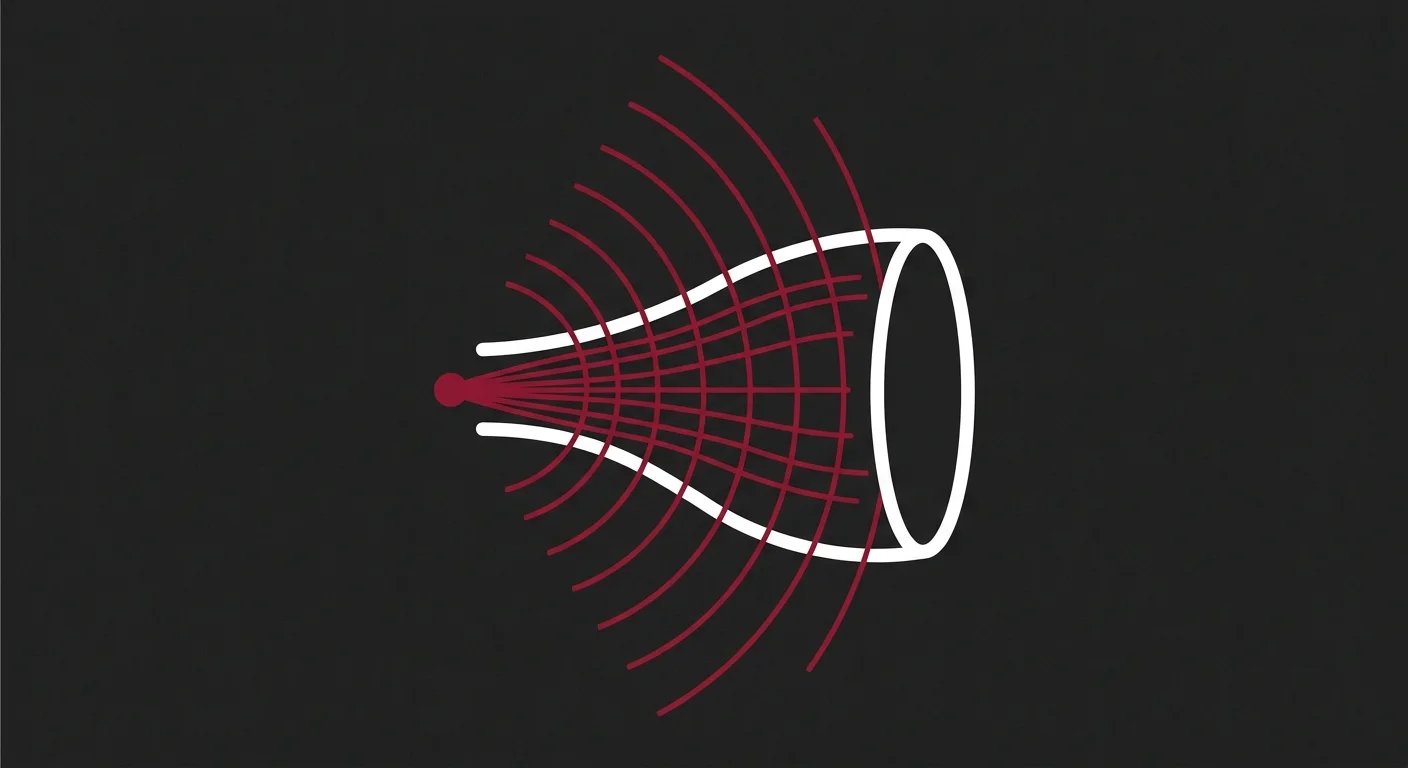
Most patients walk in knowing shockwave therapy 'does something with sound waves.' That's it. And that half-understanding is exactly where the wrong decisions about care begin.
Here's what it actually is: a non-invasive treatment that delivers focused acoustic pressure waves into damaged tissue to trigger a biological repair cascade. It doesn't numb. It doesn't suppress. It initiates.
And here's what it isn't: a spot treatment.
Shockwave therapy isn't something you apply to one stubborn tendon in isolation and walk away from. The tissue that responds to acoustic stimulation exists inside a structural and neurological system. That system determines whether the repair holds — or whether it falls apart the moment the patient goes back to doing what broke the tissue in the first place.
The Acoustic Mechanism: How Sound Becomes a Healing Signal
The process starts at the cellular membrane. Pressure waves hit tissue and the mechanical energy doesn't pass through — it converts. That conversion has a name: Mechanotransduction.
According to NIH research, that mechanical-to-cellular signal conversion activates Focal Adhesion Kinase pathways inside the cell. FAK activation tells the cell nucleus to start producing new collagen and structural matrix. The cell doesn't just absorb the pressure wave. It reads it as an instruction.
That's what makes shockwave therapy in Morton, IL different from surface-level pain management. FDA-cleared acoustic wave devices target depth-specific pathology — focused or radial energy aimed at exactly the tissue layer that needs repair. Sound becomes a signal. The signal becomes new tissue.
Why the 'Quick Fix' Model Gets Shockwave Therapy Wrong
The 'quick fix' model treats shockwave therapy like a cortisone shot with a different delivery mechanism. Apply it to the painful spot, reduce the symptom, move on. That's painting over a cracked foundation. The crack keeps spreading whether you see it or not.
The biology isn't complicated. Cortisone fails chronic tendon pain for one precise reason: it shuts down the inflammatory response — which is the body's own repair signal. Shockwave therapy does the opposite. It amplifies that signal and puts the repair cascade back in motion.
But here's where it breaks down. Apply shockwave therapy without addressing the structural imbalances and nervous system patterns driving the tissue damage, and you're doing cellular work inside a broken environment. New collagen forms. It forms inside the same system that destroyed the original tissue.
That's the gap the 'quick fix' model never closes. Shockwave therapy doesn't fail because the biology is wrong. It fails when the biology is applied without a systems-level framework. The cellular events are real. What determines whether they hold is everything surrounding them.
| Treatment Type | Mechanism | Addresses Root Tissue Damage? | Typical Effect Duration |
|---|---|---|---|
| Shockwave Therapy | Delivers focused acoustic pressure waves that trigger a biological repair cascade — Mechanotransduction, Neovascularization, Calcification Breakdown, and Stem Cell Recruitment | Yes — initiates cellular repair and new tissue formation at the site of structural damage | Durable when integrated into a systems-level care framework that supports the repaired tissue |
| Cortisone Injection | Suppresses the local inflammatory response to reduce perceived pain | No — masks the body's repair signal without restoring tissue integrity | Temporary; symptoms commonly return once the anti-inflammatory effect subsides |
| Rest and Activity Modification | Reduces mechanical load on the injured tissue to prevent further breakdown | Partially — limits ongoing damage but does not actively rebuild degraded tissue structure | Dependent on whether the underlying structural driver of injury is resolved |
| Shockwave Therapy as Spot Treatment (isolated use) | Acoustic stimulation applied to a single tissue site without addressing surrounding structural or neurological dysfunction | Partially — cellular events occur locally but the system producing the breakdown remains intact | Limited; new tissue forms inside an environment still generating the conditions that caused the original injury |
| Shockwave Therapy within a Systems Framework | Acoustic stimulation coordinated with assessment of biomechanical imbalances and nervous system function affecting the injured site | Yes — cellular repair is supported by correcting the structural and neurological environment surrounding it | Durable; repaired tissue is structurally and neurologically supported, reducing reinjury risk |
Why Common Pain Treatments Leave Damaged Tissue Intact
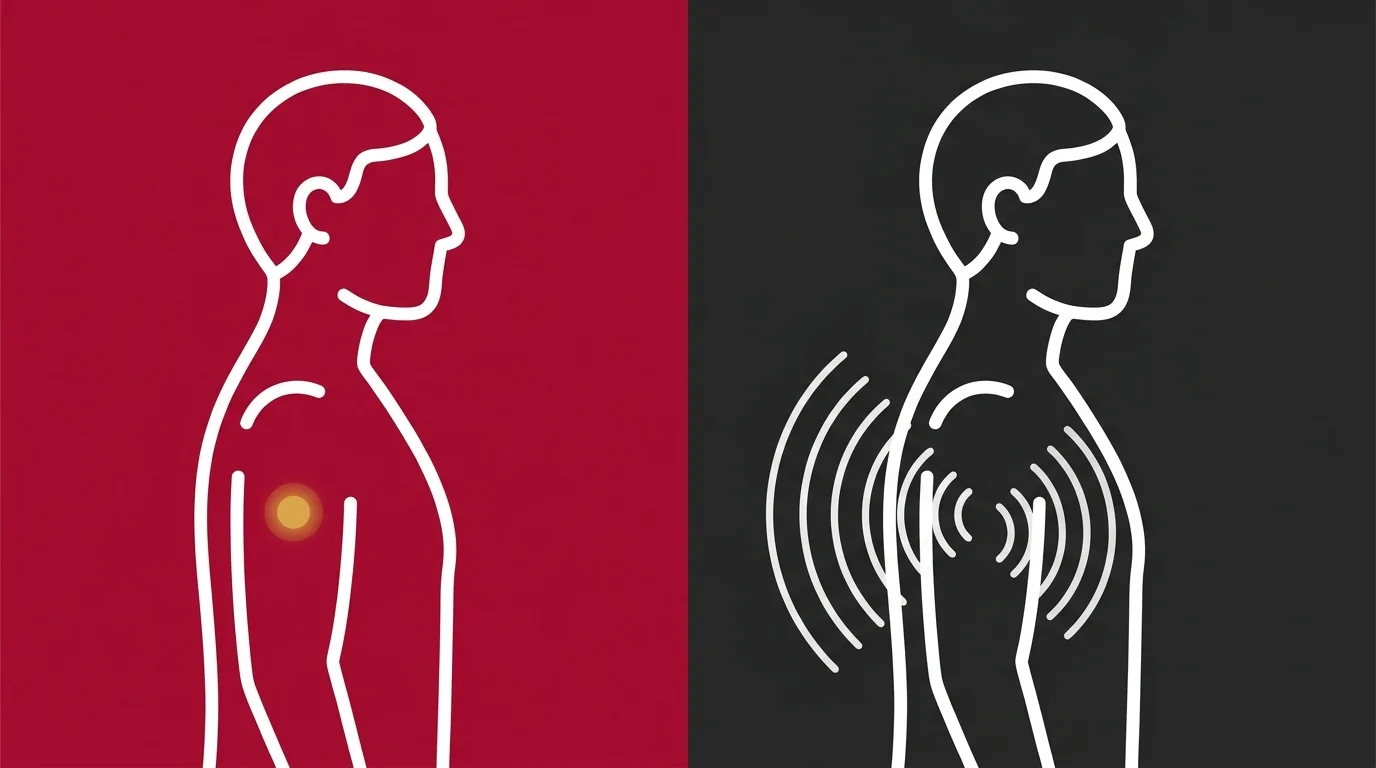
Most chronic pain treatments aren't built to repair anything. They're built to help you stop feeling what's still broken.
That's not a small distinction. Cortisone injections suppress inflammation. Anti-inflammatories block pain signals. Rest reduces load on the tissue. Each one operates at the symptom layer. Not one of them touches the structural deficit underneath.
Here's the thing — you can't paint over a cracked foundation. The tissue keeps degrading while the pain stays quiet. Until it doesn't. That cycle is something patients with chronic tendon and attachment-point damage know better than anyone. A window of relief. Then the symptoms come back. And with them, the quiet certainty that nothing inside the tissue actually changed.
The Cortisone Problem: Numbing a Signal Isn't the Same as Fixing the Source
Cortisone dials down inflammation. That sounds like a solution. It isn't — because inflammation is the body's signal to start repairing itself.
When that signal gets blocked, the repair cascade stalls. NIH findings on chronic tendinopathy show success rates between 65% and 85% when treatment actually engages the tissue's biological repair machinery. Cortisone doesn't engage that machinery. It cuts the call before the repair crew can respond.
Shockwave therapy doesn't suppress. It amplifies. The acoustic-driven collagen remodeling process that begins with mechanotransduction is exactly what cortisone forecloses. New structural matrix can't form when the cellular instruction pathways are pharmacologically silenced.
Who This Approach Doesn't Serve — And Why That Matters
That said — individualized chiropractic care built around acoustic tissue repair isn't the right fit for everyone. That's worth saying out loud.
If you want one session to eliminate pain before next weekend, this isn't that. The cellular events that produce lasting repair — mechanotransduction, neovascularization, calcification breakdown, stem cell recruitment — don't complete in a single visit. They unfold across a care plan. And that plan only works for patients willing to follow it through.
The patients who see durable results aren't the ones who tried shockwave therapy once and waited. They're the ones who showed up for the full biological process. Because the goal was never quieter pain. It was rebuilt tissue.
| Condition | Standard Approach | What It Misses | Where Shockwave Therapy Intervenes |
|---|---|---|---|
| Chronic Tendinopathy | Cortisone injection to suppress inflammation | Silences the body's repair recruitment signal — the biological call that triggers collagen rebuilding never goes out | Mechanotransduction activates cell nuclear pathways to produce new collagen and structural matrix, amplifying rather than suppressing the repair cascade |
| Plantar Fasciitis | Anti-inflammatory medication and orthotics | Reduces symptomatic load but leaves the degraded fascial tissue structurally unchanged — pain returns when load resumes | Neovascularization restores blood supply to ischemic tissue, delivering the nutrients required for genuine structural repair |
| Calcific Tendinopathy | Rest and physical therapy around the calcified deposit | Neither removes the calcification nor restores the tissue architecture — the mechanical obstruction remains intact | Calcification Breakdown uses acoustic microcavitation to mechanically disrupt calcific deposits so the lymphatic system can clear the debris |
| Chronic Enthesopathy | Localized pain management and activity modification | Manages the symptom at the surface level while the attachment site continues to degrade without structural rebuilding | Stem Cell Recruitment draws local progenitor cells to the injury site to synthesize healthy extracellular matrix and rebuild the structural scaffolding |
| Recurring Soft Tissue Breakdown | Repeated short-term interventions targeting each flare individually | Treats each episode as isolated while the underlying structural and neurological environment continues producing the conditions for breakdown | Systems-level acoustic therapy addresses the biological environment — not just the painful site — so repaired tissue has a structurally supported foundation to hold |
The Four Cellular Events That Rebuild Damaged Tissue
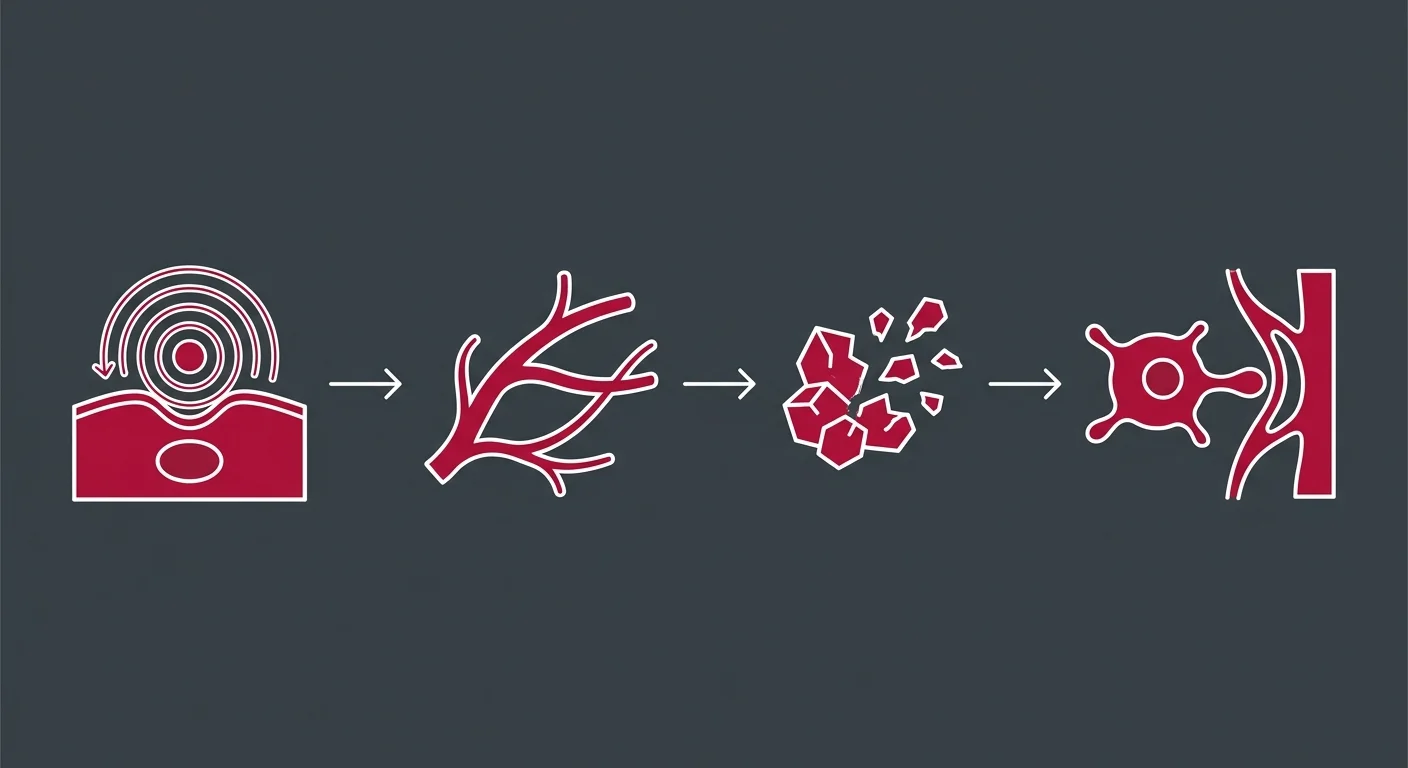
So what's actually happening inside the tissue when shockwave therapy is applied? Not at the symptom layer. At the cellular level, in sequence.
Four events. Mechanotransduction, Neovascularization, Calcification Breakdown, Stem Cell Recruitment. Each one sets the conditions for the next. Skip one, and the sequence breaks.
Cellular Event 1: Mechanotransduction
Mechanotransduction is where the cascade starts. The pressure wave reaches the cell membrane — and the mechanical energy doesn't pass through. It converts into a biological signal.
That signal activates Focal Adhesion Kinase pathways inside the cell nucleus. FAK activation tells the cell to start producing new collagen and structural matrix. The cell isn't absorbing the wave. It's reading it as a repair instruction.
That's the line that separates shockwave from anything working at the pain layer. NIH's mechanotransduction research confirms physical pressure activates cell nuclear proliferation pathways directly. The body's own repair machinery does the work. The acoustic wave is the trigger.
Cellular Event 2: Neovascularization
Here's the problem no one talks about with chronic tissue damage. The blood supply is gone. Years of microtrauma and inflammation have starved the injured area — the tissue is ischemic. And ischemic tissue doesn't heal. Period.
Acoustic stimulation upregulates vascular endothelial growth factor — VEGF — which drives the formation of new blood vessels in the treated area. New vessels restore nutrient flow. And without that nutrient flow, the collagen production Mechanotransduction set in motion has nowhere to go. The first event needs the second to survive.
Patients dealing with heel pain from plantar fasciitis hit this gate hard. Tissue ischemia drives the chronicity in that condition. No new blood supply means the downstream events run on empty — the biology is there, but the resources aren't arriving. Neovascularization isn't optional in that picture. It's load-bearing.
Cellular Event 3: Calcification Breakdown
Calcification is what unresolved tendon damage looks like after years. The body deposits calcium into soft tissue — a misguided stab at repair. Those deposits harden, restrict movement, and sit in the way of everything the first two events are trying to build.
Acoustic waves generate microcavitation bubbles that collapse and release localized energy directly at the calcific deposit. That physical disruption breaks the calcification apart. The lymphatic system then clears the debris — a clearance the body couldn't complete before the acoustic intervention. It's not a chemical process. It's demolition, followed by the body's own cleanup.
Cellular Event 4: Stem Cell Recruitment
The final event decides the quality of what gets built. Functional tissue — or scar filling a gap.
Acoustic stimulation triggers migration and proliferation of local mesenchymal progenitor stem cells to the injury site. Those cells synthesize healthy extracellular matrix — the scaffolding that gives new tissue the mechanical properties of functional tendon, fascia, or muscle. Not a patch. Actual structural material.
That's the rebuilt foundation. Shockwave therapy doesn't paint over the crack — it recruits the cells that close it from the inside out. But Stem Cell Recruitment only produces durable results when Mechanotransduction, Neovascularization, and Calcification Breakdown have already done their part. The sequence isn't a preference. It's the whole mechanism.
| Cellular Event | Biological Trigger | Tissue Outcome | Timeline |
|---|---|---|---|
| Mechanotransduction | Acoustic pressure wave contact with cell membrane | New collagen and structural matrix production initiated | Begins at first session; collagen synthesis builds across care plan |
| Neovascularization | VEGF upregulation triggered by acoustic stimulation | New blood vessels form; nutrient supply restored to ischemic tissue | Progresses across sequential sessions as vessel formation accumulates |
| Calcification Breakdown | Microcavitation bubble collapse at calcific deposit site | Calcified lesions disrupted; lymphatic system clears debris | Dependent on deposit density; clearance continues between sessions |
| Stem Cell Recruitment | Acoustic stimulation triggers migration of local mesenchymal progenitor cells | Healthy extracellular matrix synthesized; structurally sound new tissue forms | Remodeling and matrix synthesis continue after active treatment ends |
What Conditions Respond to Acoustic Tissue Healing — and What Don't
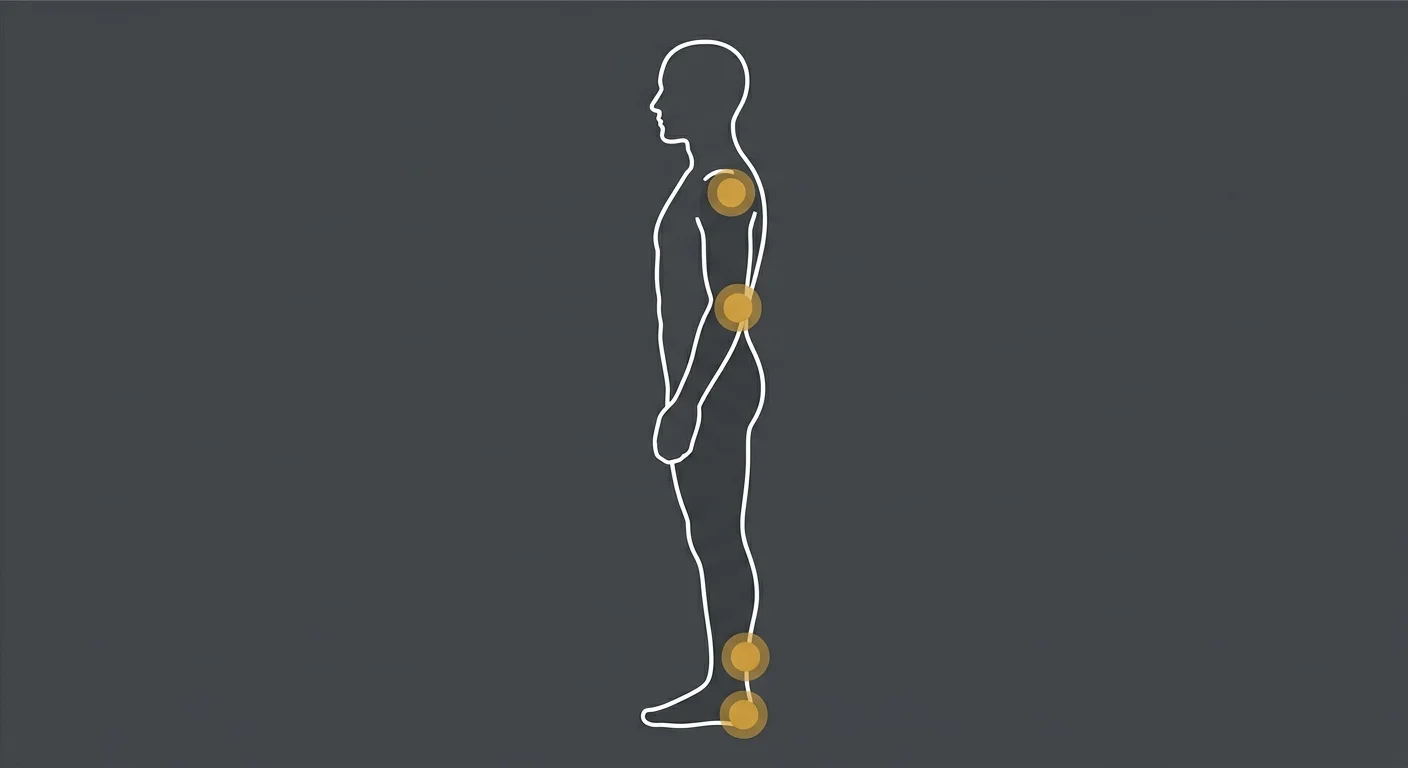
So the mechanism works. The harder question is: works for what — and definitively not for what?
Not every chronic pain condition is a tissue regeneration problem. Some are structural. Some are systemic. Some are neurological. Applying acoustic therapy to the wrong diagnosis doesn't rebuild the foundation — it just rattles a wall that was never cracked.
The conditions that respond best share one clinical profile: chronic soft tissue pathology where the body's own repair mechanisms have stalled, the tissue is ischemic and structurally degraded, and FDA-cleared acoustic wave devices can safely reach the depth of the dysfunction. That profile has hard edges. Knowing where those edges are matters as much as knowing what's possible inside them.
Conditions With Strong Clinical Response Data
Chronic enthesopathies and tendinopathies sit at the top of that list. These are the diagnoses where the four-event cascade — Mechanotransduction, Neovascularization, Calcification Breakdown, Stem Cell Recruitment — addresses the actual pathology. Not the pain sitting on top of it. The structural breakdown driving it.
Plantar fasciitis, chronic rotator cuff tendinopathy, lateral epicondylitis, calcific shoulder tendinopathy, chronic Achilles tendinopathy — these are the diagnoses where avoiding surgery through acoustic tissue repair becomes a realistic clinical outcome when the full biological sequence runs to completion. These aren't speculative applications. Clinical trials document success rates between 65% and 85% for these diagnoses, with significant reductions in pain scale scores within 12 weeks.
What all of these conditions share: degraded structural tissue the body can't independently repair because the repair environment itself has failed. That's precisely what Neovascularization restores. It's what Stem Cell Recruitment then rebuilds on top of. When advanced cold laser therapy is layered into the care plan alongside shockwave therapy, the regenerative environment gets further support — two mechanisms working toward the same structural outcome instead of one doing it alone.
Clinical Contraindications: When Shockwave Therapy Is the Wrong Tool
Here's what doesn't belong in the conversation: pretending this tool works for everything. FDA-cleared acoustic wave devices deliver focused mechanical energy to targeted tissue depth. That mechanism has contraindications. And they aren't a risk-benefit calculation — they're a hard stop.
Active malignancy at or near the treatment site, blood clotting disorders, pregnancy overlying the target area, and the presence of a pacemaker are absolute contraindications. These aren't risk tolerances to weigh against potential benefit. They're boundaries the clinical evidence has drawn for a reason. Applying acoustic therapy across any of these conditions doesn't rebuild a foundation. It causes harm.
Acute inflammatory conditions fall outside scope for a different reason. When tissue is actively inflamed rather than chronically degenerated, shockwave therapy is the wrong tool for the stage — not the wrong tool forever. It's a regenerative mechanism. It's not an acute anti-inflammatory one. If the tissue hasn't moved into the chronic, structurally degraded state where the cellular cascade becomes relevant, the acoustic stimulus doesn't match the problem. That's not a technology failure. That's a diagnosis failure. And no amount of acoustic energy fixes a misidentified foundation.
| Condition | Clinical Evidence Level | Expected Response Window | Notes |
|---|---|---|---|
| Chronic Plantar Fasciitis | High — clinical trials document strong response data | Significant pain reduction within 12 weeks | Success rates between 65% and 85% in peer-reviewed trials; tissue ischemia addressed directly through Neovascularization |
| Chronic Tendinopathy (Rotator Cuff, Achilles, Lateral Epicondylitis) | High — documented in peer-reviewed clinical evidence | Significant reductions in visual analog pain scale scores within 12 weeks | Chronic enthesopathies and tendinopathies sit at the top of the clinical response list; all four cellular events apply |
| Calcific Shoulder Tendinopathy | High — strong clinical response; FDA-cleared device application | Response window aligns with the 12-week pain scale improvement data | Calcification Breakdown event is directly applicable; FDA-cleared acoustic devices target depth-specific pathology |
| Active Malignancy at Treatment Site | Absolute contraindication — outside clinical scope | Not applicable | FDA-cleared devices are approved for specific chronic soft tissue conditions only; malignancy is an absolute boundary the clinical evidence has drawn |
Frequently Asked Questions About Shockwave Therapy and Tissue Regeneration
Here's what people ask before they book.
And they deserve straight answers — not vague timelines built to keep you coming back.
How many shockwave therapy sessions are needed to regenerate damaged tissue in 2026?
Any provider who hands you a session count before finishing an assessment isn't planning your care. They're filling a schedule.
What the research actually establishes: significant reductions in pain scores are documented within 12 weeks for conditions like chronic plantar fasciitis and tendinopathy, with success rates between 65% and 85%. But those numbers describe outcomes — not prescriptions. Session protocols are built around the biological sequence, not a calendar.
Mechanotransduction. Neovascularization. Calcification breakdown. Stem cell recruitment. Each phase takes time to complete. A real care plan tracks where the tissue is in that sequence — not how many weeks have passed since the first appointment.
Is shockwave therapy painful for patients with chronic tissue damage?
Most patients brace for sharp pain. What they feel is deep pressure — an uncomfortable awareness that the energy is reaching the target tissue. That matters clinically. It confirms the acoustic wave is hitting the right depth.
Chronically damaged tissue is already sensitized. So yes, there's discomfort. It's real, it's temporary, and it ends when the session does.
That's the difference between shockwave discomfort and the pain that sent you here in the first place. One stops. The other has been running for months.
How does shockwave therapy compare to a cortisone injection for chronic pain?
A cortisone injection does one thing: it suppresses inflammation. It doesn't rebuild tissue. It doesn't restore blood supply. It doesn't break down calcification or recruit the cells that form new structural matrix.
It paints over the crack. Sometimes well enough that the pain disappears for months. But the crack is still there.
Shockwave therapy works at the cellular level. Clinical trials show success rates between 65% and 85% for chronic enthesopathies and tendinopathies — the exact conditions where cortisone delivers temporary relief without touching the degraded tissue underneath. One tool masks the problem. The other rebuilds the foundation.
Can I continue exercising during a shockwave therapy care plan?
That answer depends on two things: what's being treated and where the tissue is in the regeneration sequence.
High-load activity that stresses the treated structure during the active repair window can interrupt the cellular cascade before it completes. That's not a policy restriction — it's biology. Push through the wrong window and you're competing with the repair process, not supporting it.
The care plan defines what's appropriate at each stage. The answer isn't always stop everything. But it's never ignore the sequence and grind through it either.
What are the main clinical contraindications for acoustic tissue healing?
FDA-cleared acoustic wave devices can safely target depth-specific musculoskeletal pathology. But that mechanism has hard limits — and they're not negotiable.
Active malignancy at or near the treatment site, blood clotting disorders, pregnancy overlying the target area, and the presence of a pacemaker are absolute contraindications. These aren't risk factors to weigh against potential benefit. They're clinical boundaries the evidence has drawn for a reason.
Acute inflammatory conditions fall outside scope too. Shockwave therapy is a regenerative tool. When tissue is actively inflamed rather than chronically degenerated, the acoustic cascade doesn't fit the problem. Applying it anyway doesn't accelerate healing — it misidentifies the foundation entirely.
The assessment catches all of this before treatment begins. That's not a formality. That's the whole point of starting there.
The Foundation Has to Hold
Cortisone quiets the alarm. Anti-inflammatories mute the signal. Rest reduces the load for a while.
None of them fix what's broken.
Patients know this cycle. A window of relief, the return of symptoms, the growing certainty that nothing inside the tissue actually changed. That's what happens when you keep painting over a cracked foundation.
Shockwave therapy works at the cellular layer. Mechanotransduction converts acoustic pressure into a biological repair instruction. Neovascularization restores the blood supply that chronic damage has starved. Calcification breakdown clears the hardened debris the body couldn't remove on its own. Stem cell recruitment builds the structural scaffolding that makes new tissue functional — not just present.
Each event depends on the one before it. That sequence isn't a clinical preference. It's the entire mechanism.
And it only holds when it's applied inside a system that's been assessed and supported as a whole — not just aimed at whatever spot currently hurts.
That's the clinical standard at Touch of Wellness Chiropractic. Dr. Karen Hannah's Zoology background — whole-body biological systems analysis — means shockwave therapy here isn't a standalone procedure. It's integrated into a root-cause care plan that asks why the tissue failed, what's preventing it from repairing on its own, and what the full system needs to support what's being rebuilt.
New tissue doesn't stay new because the acoustic cascade completed. It stays new because everything surrounding it was addressed.
You can't paint over a cracked foundation. The only question worth asking now is whether you're ready to rebuild it.
Pain that keeps coming back isn't bad luck. The tissue was never actually rebuilt. That's the conversation a shockwave therapy assessment at Touch of Wellness Chiropractic starts.
Copyright Touch of Wellness Chiropractic 2026
1101 W Jackson St, Suite A Morton, IL 61550
Web Design by iTech Valet