
(309) 321-8412 | 1101 W Jackson St, Suite A, Morton, IL 61550
(309) 321-8412 | 1101 W Jackson St, Suite A, Morton, IL 61550
What Exercises Maintain Mobility During Functional Recovery?
The exercises that maintain mobility during functional recovery are active, low-impact, and nervous-system-aware — not passive, not isolated, and not left to chance. Gentle range-of-motion drills, controlled isometric holds, and multi-planar stretching keep joints moving and prevent the tissue shortening and neural pathway degradation that complete immobilization causes.
Muscle atrophy can begin within 72 hours of immobilization. That is not a warning — it is a deadline. Early mobilization, even at low intensity, reduces recovery time by up to 25% compared to passive rest approaches. The body does not wait for you to feel ready before it starts compensating.
The exercises that matter most fall into three categories: gentle joint mobility drills that move affected areas through available range without stress loading, low-intensity isometric holds that stimulate motor unit recruitment by up to 60% without requiring full joint movement, and progressive weight-bearing work that reintroduces load in a controlled, non-compensatory pattern. Nervous system adaptation to targeted mobility training occurs within 2 to 4 weeks when the protocol is consistent and appropriate to the recovery stage.
Active mobilization consistently outperforms passive rest. Active recovery protocols show a 30% greater reduction in pain disability scores compared to bed rest — across chronic spinal pain populations, not just acute cases. Low-impact physical activity can decrease chronic joint pain intensity by about 40% while improving overall functional independence. The CDC recommends at least 150 minutes of moderate-intensity physical activity per week, adapted to individual limitations, to maintain joint health during recovery.
Movement restores range. Chiropractic adjustment restores the signaling that makes coordinated movement possible. Both are required. Neither is sufficient alone.
Last Updated: July 20, 2026
- • Why Rest Alone Won't Restore What You Lost
- • The Mobility Exercises That Actually Rebuild Function
- • This Is Not the Right Approach for Everyone
- • How to Build Your Mobility Practice Around Your Recovery Stage
-
• Frequently Asked Questions About Mobility Exercises and Functional Recovery
- • Can resting too much actually delay my mobility recovery?
- • What type of low-impact exercises are safest when recovering from chronic back pain?
- • How does chiropractic adjustment support active mobility exercises?
- • How do I know if pain during a mobility exercise is a warning sign or normal healing?
- • What is the timeline for seeing mobility results during functional recovery?
- • Movement Is the Medicine — But Only When It's the Right Movement
Why Rest Alone Won't Restore What You Lost
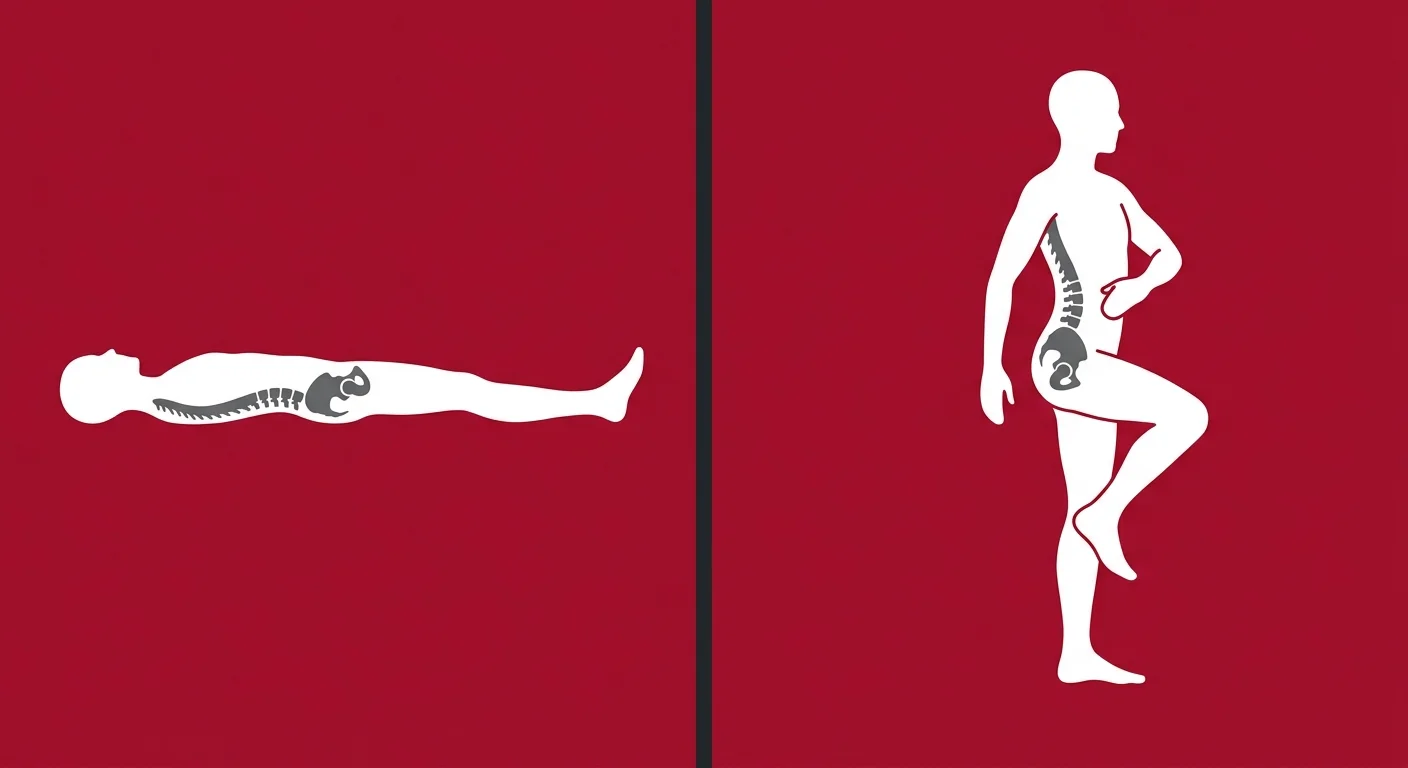
Rest doesn't restore function. It freezes it. And when what you're freezing is pain, stiffness, and a body that can't do what it used to — that's not recovery. That's just waiting.
NIH research shows muscle atrophy begins within 72 hours of immobilization. Most providers don't tell you that when they hand you a rest prescription. The body starts adapting to inactivity almost immediately — and those adaptations don't reverse themselves just because you eventually start moving again.
Rest produces tissue shortening, neural pathway degradation, and a nervous system that's learned to route around the problem instead of through it.
You don't recover from that by waiting.
You recover by moving — carefully, deliberately, and with a real clinical picture of what's actually happening inside the system. Not a generic protocol handed to everyone with the same complaint.
Why the Cookie-Cutter Recovery Protocol Fails
Here's the standard script: you report pain, you're told to rest, ice it, maybe take something for inflammation. Once the acute symptoms settle, you're cleared to return to activity.
That's not a recovery plan. That's symptom management with a discharge date attached.
Rest isn't the problem. Uniform application is.
Patients who come through Touch of Wellness Chiropractic after following that protocol describe the same sequence: they rested, they felt better, they returned to normal activity, and the pain came back within weeks. Because the root cause never got addressed.
Rest managed the output. It didn't change the system.
Active recovery protocols produce a 30% greater reduction in pain disability scores compared to bed rest. That's not a rounding error.
Passive rest removes load from the system. Active mobilization restores the system's ability to handle load.
Those aren't the same outcome. Not even close.
Think of it like an orchestra without a conductor. Every instrument can produce sound on its own — every exercise, every joint, every muscle group doing its part. But without coordinated direction, it's noise.
A cookie-cutter protocol hands you a list of generic exercises without asking whether the conductor — the nervous system — is actually signaling the right things. That gap is exactly what the Chronic Pain Functional Rebirth protocol is built to close: not just restoring movement, but restoring the signaling that makes movement mean something.
At Touch of Wellness Chiropractic, chiropractic care in Morton IL drives every care plan from that same premise. Apply the right exercises without restoring the underlying signaling, and you get incomplete results — every time.
| Recovery Approach | What It Does to the Body | Typical Outcome at 6 Weeks | Mobility Trajectory |
|---|---|---|---|
| Complete Rest / Immobilization | Removes load from the injured area but halts active tissue repair signals; neural pathways begin rerouting around the problem rather than through it | Acute symptoms settle; underlying dysfunction remains; compensatory movement patterns become habitual | Stalls — range of motion plateaus or regresses as tissue shortens and motor recruitment weakens |
| Cookie-Cutter Passive Protocol | Generic exercises applied without clinical assessment of root cause; treats the symptom presentation, not the system driving it | Temporary symptom relief; pain returns when the patient resumes normal activity load | Inconsistent — improves briefly then regresses when the protocol ends and no structural correction has occurred |
| Early-Stage Recovery (Guided Low-Intensity Movement) | Introduces controlled range-of-motion work and isometric holds that preserve neural signaling without overloading healing tissue | Measurable reduction in stiffness; motor recruitment patterns begin stabilizing; compensatory habits interrupted early | Progressive — nervous system begins adapting to structured input; range of motion expands without aggravating the underlying condition |
| Active Recovery Phase (Multi-Planar Mobilization + Chiropractic Care) | Pairs progressive weight-bearing movement with chiropractic adjustment to restore joint mechanoreceptor signaling alongside tissue conditioning | Functional capacity improves alongside pain reduction; patient can tolerate increasing activity without symptom flare | Accelerating — coordinated nervous system signaling supports compounding gains across successive sessions |
| Functional Integration Phase (Load-Bearing, Activity-Specific Movement) | Reintroduces functional demands — the specific movements, loads, and patterns the patient needs to perform in daily life — within a monitored clinical framework | Patient achieves activity-specific performance milestones; care plan transitions toward maintenance or discharge | Sustained — movement freedom becomes self-reinforcing as the system learns to handle real-world demands without compensation |
The Mobility Exercises That Actually Rebuild Function
Not all movement is recovery. There's a difference between exercises that restore how a joint signals and exercises that just produce visible motion. One rebuilds the system. The other keeps it busy.
The three categories that actually rebuild function are controlled articular rotations, isometric loading holds, and multi-planar movement patterns. Each one targets a different layer — joint mechanics, motor unit recruitment, and neuromuscular coordination. Each builds on the one before it. Skip a layer and you don't get partial results. You get incomplete recovery dressed up as progress.
Here's the first question most patients ask when they commit to a structured recovery plan: how long is this going to take? And the honest answer is — that depends entirely on which exercises are in the plan and whether those exercises match where the patient actually is in recovery. That's why knowing your timeline for seeing functional improvement before locking into any single approach is worth understanding first. The protocol drives the timeline. Not the calendar.
Controlled Articular Rotations
Controlled articular rotations move a joint through its full available range under minimal load — slowly, deliberately, without compensation from surrounding muscle groups. That last part is where most people go wrong.
Here's the thing about a restricted joint: the body is efficient. It routes movement around the problem without telling you it's doing it. You end up with what looks like range of motion without actually mobilizing the segment that needs it. Controlled articular rotations are slow enough — and require enough focused attention — to isolate the target joint instead of letting adjacent structures take over. That distinction isn't a technical detail. It's the whole point.
That's not a philosophical point — it's measurable. NIH findings on motor signaling confirm that dynamic stretching and low-intensity controlled movement preserve neural pathway signaling during recovery. The nervous system doesn't just register the movement. It recalibrates around it. Done consistently, controlled articular rotations re-educate the joint's mechanoreceptors — the sensors that feed positional data back to the nervous system so it knows where the joint is and what to coordinate next.
Isometric Loading Holds
Isometric holds are the most underused tool in functional recovery — and the most misunderstood.
An isometric hold means contracting a muscle against resistance without moving the joint. That sounds like doing nothing. It isn't. Isometric muscle activation stimulates motor unit recruitment by up to 60% — a level of neural engagement that full-range dynamic movement often can't match when a joint is acutely restricted or post-acute hypersensitive. So you're training the nervous system to fire the right muscles without asking the joint to perform something it isn't ready for yet.
Nervous system adaptation to targeted mobility training occurs within 2 to 4 weeks — but only when the protocol matches the recovery stage and gets applied consistently. Isometric holds are the bridge between Early-Stage Recovery, where full movement isn't safe or productive, and the Active Recovery Phase, where progressive loading becomes possible. Skip that bridge. Jump straight to dynamic movement before the nervous system is primed. That's one of the most common reasons patients plateau — not because they pushed too hard, but because they went in the wrong order.
Multi-Planar Movement Patterns
Movement in a single plane isn't recovery. It's rehearsal.
Real-world function — picking something up, turning while standing, catching your balance mid-stride — doesn't happen in a single plane. It happens across multiple planes simultaneously. A recovery protocol that only trains flexion and extension in a controlled, seated environment is producing fitness for that environment. Multi-planar movement patterns address this directly: progressively introducing rotation, lateral loading, and diagonal movement that reflects how the body actually works.
Here's what a single-plane recovery protocol actually costs you biologically: consistent multi-planar movement prevents collagen cross-linking in healing ligaments — the process that causes connective tissue to shorten and stiffen when joints stay locked in limited movement patterns too long. That stiffness doesn't announce itself. It compounds quietly. The Functional Integration Phase is where multi-planar work becomes the primary driver, building on the joint mobility gained in Early-Stage Recovery and the motor unit engagement built in the Active Recovery Phase. Shockwave therapy is frequently applied alongside this phase to address residual soft tissue restriction that limits the quality of multi-planar movement — not as a substitute for the movement work, but as the tool that makes the movement work more effective.
| Exercise Category | Primary Target | Neural Benefit | Example Movement | Recovery Stage Fit |
|---|---|---|---|---|
| Controlled Articular Rotations | Joint mechanoreceptors and available range | Re-educates positional sensors that feed movement data back to the nervous system | Slow, unloaded neck circles; hip CAR sequences performed standing | Early-Stage Recovery |
| Isometric Loading Holds | Motor unit recruitment and neural firing patterns | Trains the nervous system to activate the right muscles without demanding joint movement it isn't ready for | Wall sit holds; isometric glute contractions in supine position | Early-Stage Recovery into Active Recovery Phase |
| Dynamic Stretching | Neural pathway signaling and soft tissue extensibility | Preserves and restores signaling continuity along movement pathways compromised by restriction or guarding | Active hamstring sweeps; controlled shoulder pendulum swings | Active Recovery Phase |
| Single-Plane Progressive Loading | Targeted muscle groups and primary movement patterns | Reinforces motor sequencing along specific movement corridors before multi-directional demands are introduced | Bodyweight squats; banded hip hinges along a controlled sagittal path | Active Recovery Phase |
| Multi-Planar Movement Patterns | Neuromuscular coordination across rotation, lateral, and diagonal planes | Integrates nervous system signaling across the full movement spectrum that real-world function requires | Rotational step patterns; diagonal reach-and-load sequences; lateral weight transfer drills | Functional Integration Phase |
This Is Not the Right Approach for Everyone

Not everyone who walks in is ready for active mobility work.
Putting these protocols on the wrong starting condition doesn't speed anything up. It creates new problems — and those problems frequently outlast the original injury.
That's not a disclaimer. It's the clinical reality that cookie-cutter protocols ignore entirely.
CDC guidelines on joint health recommend 150 minutes of moderate-intensity activity per week — adapted for physical limitations. That one word carries the whole argument. Adapted means the starting condition gets assessed first. Not assumed. Not generalized from a diagnosis code. Assessed.
If chronic joint pain has kept you away from the activities you've been putting off — and you're ready to return to the activities that pain forced you to give up — there's a structured path for that.
But it only works if the starting point is accurate.
The wrong exercises at the wrong stage produce compensation patterns that stick around long after the original injury is gone. That's not a risk worth taking when actual recovery is the goal.
When Active Mobility Work Needs to Wait
Active mobility work needs to wait when there's an active inflammatory flare, unresolved structural instability, or acute nerve compression that hasn't been assessed.
Moving through an unstable or acutely inflamed joint doesn't build function. It reinforces dysfunction.
Those are not the same outcome.
Here's the thing — this isn't only about clinical contraindications. It's also about fit.
If you want a single-session fix, or you're committed to replicating whatever protocol your previous provider used before we've even finished the assessment, this isn't the right approach. The clinical picture drives every decision. That's not negotiable.
And when the clinical picture says the body isn't ready for active loading, the right move is to support the system until it is — through modalities like cold laser therapy that reduce tissue-level inflammation without adding mechanical stress.
CDC research on joint pain relief shows that low-impact physical activity can decrease chronic joint pain intensity by about 40% — but that result depends entirely on the activity being appropriate to the condition.
The patients who don't see that outcome aren't failing because they lack effort. They're failing because no one assessed their starting condition accurately enough to match the exercise to the stage.
That's the gap individualized assessment closes. Before a single rep is performed.
| Patient Behavior | What It Signals | Why It Undermines Recovery | What to Do Instead |
|---|---|---|---|
| Arrives expecting the exact protocol their previous provider used | Protocol Challenger — unwilling to follow a new clinical lead before assessment is complete | Assessment findings get overridden before care begins; the protocol drives decisions instead of the clinical picture | Allow the assessment to establish the starting condition first — the protocol follows from that, not from prior provider habits |
| Expects full resolution after one or two sessions | One-Adjustment Miracle Seeker — abandons care before nervous system adaptation has time to establish | Mobility gains require consistent, staged progression; leaving before the Active Recovery Phase produces incomplete results and reinforces compensation patterns | Commit to the full care plan — nervous system recalibration and joint mechanoreceptor re-education take time and sequencing |
| Selectively follows parts of the care plan while skipping others | Plan Picker — partial commitment produces partial results; compensation patterns fill the gaps left by skipped stages | Missing a stage — especially the Early-Stage Recovery groundwork — means later phases like the Functional Integration Phase build on an unstable foundation | Follow the full protocol in sequence; each stage is load-bearing for the one after it |
| Refuses specific modalities before any clinical assessment | Pre-Emptor — overrides clinical judgment before care begins, removing tools that may be essential to the recovery sequence | Blocking modalities like cold laser therapy during active inflammation leaves tissue-level barriers in place that prevent safe progression to active loading | Let the assessment drive modality selection — clinical findings determine what the system needs, not personal preference ahead of evaluation |
| Expects the provider to do all the work between appointments | Passive Patient — recovery requires both parties showing up; home protocol compliance directly determines how well in-office work translates to lasting function | Nervous system adaptation and joint mechanoreceptor signaling depend on consistent repetition between sessions; passive waiting resets the system rather than building on it | Engage the between-session protocol as seriously as the in-office work — that's where the gains consolidate |
How to Build Your Mobility Practice Around Your Recovery Stage
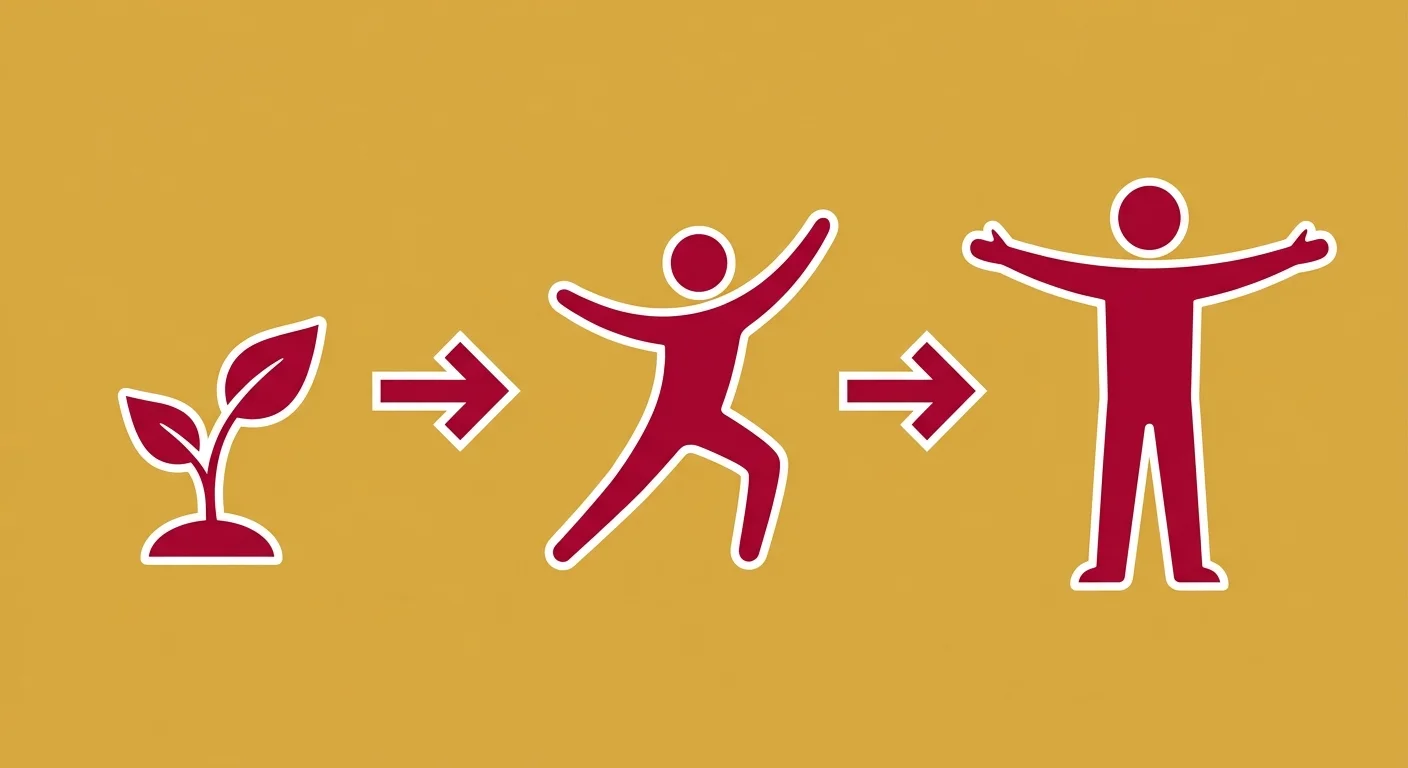
Knowing which exercises exist isn't the problem. Knowing when each one belongs — that's what most protocols never tell you.
The three stages of functional recovery aren't labels someone invented to organize a handout. They reflect real physiological transitions — tissue-level stabilization first, then progressive motor engagement, then full neuromuscular integration. Each stage demands a different movement emphasis. Push through any of them too fast and you don't speed recovery up. You set it back.
What follows is a stage-matched framework — not a substitute for a clinical assessment, but a map so you understand why each exercise belongs where it does. And what you actually lose by skipping ahead.
Early-Stage Recovery
Early-Stage Recovery has one priority: don't create new compensation patterns while the system is still stabilizing.
The right movements at this stage are breath-coordinated diaphragmatic work, controlled articular rotations inside a pain-free range, and low-intensity isometric holds. Nothing that loads the joint dynamically. Nothing that asks the nervous system to coordinate movement patterns it hasn't re-learned how to signal yet. Nervous system adaptation to targeted mobility training takes 2 to 4 weeks — but only when the protocol actually matches the stage. Force active loading before that window closes and you get compensation patterns, not recovery.
Here's where most patients quit. The tissue has stabilized. The clinical picture looks fine. But the pain signal hasn't turned off yet — and without understanding why, that gap feels like failure. It isn't. It's a nervous system that hasn't finished recalibrating. Understanding why the brain still registers pain after the structural work is done isn't a detour from the protocol. It's what keeps people in it long enough to get through it.
Active Recovery Phase
The Active Recovery Phase begins when joint mechanoreceptor signaling has stabilized enough to tolerate progressive loading. Not when pain disappears entirely. When controlled movement no longer produces a reactive flare.
Isometric holds get more deliberate and time-extended here. Controlled articular rotations expand in range. The first multi-planar patterns arrive — low amplitude, building tolerance. That shift matters because isometric activation stimulates motor unit recruitment by up to 60%. The nervous system isn't just registering joint position anymore. It's coordinating firing sequences. The CDC recommends 150 minutes of moderate-intensity activity per week, adapted for physical limitations — and the Active Recovery Phase is typically where patients first approach that threshold in a way the condition can actually support.
What makes this phase isn't volume. It's quality. Sloppy reps at higher load don't build function — they build compensatory habit. And the nervous system doesn't distinguish between the two. Every rep is either reinforcing the right signal or training a workaround.
Functional Integration Phase
The Functional Integration Phase is where mobility practice stops resembling rehabilitation and starts resembling life.
Multi-planar movement becomes the primary emphasis here — rotation, lateral loading, diagonal reach patterns. Real function demands all of it at once, not in sequence. That's why single-plane protocols fall short at this stage: consistent multi-planar movement prevents collagen cross-linking in healing ligaments, keeping connective tissue pliable instead of shortening into the restrictions that isolated protocols leave behind. When the nervous system is signaling correctly, movement that once required conscious management becomes automatic. That's not a metaphor. That's what the work is for.
This is the stage where the work done in exercises for mobility during functional recovery translates into things that actually matter — carrying groceries without bracing for it, sleeping through the night, staying present during a full workday without managing pain in the background. That's what Functional Integration Phase looks like when the protocol was right from the beginning. Not a smaller version of the pain you started with. A different life.
| Recovery Stage | Primary Goal | Exercise Focus | Weekly Volume Target | Progress Signal |
|---|---|---|---|---|
| Early-Stage Recovery | Stabilize without creating compensation patterns | Breath-coordinated diaphragmatic work, gentle controlled articular rotations within pain-free range, low-intensity isometric holds | Short, frequent sessions — movement quality over duration; no dynamic loading | Controlled movement completes without reactive flare or compensatory bracing |
| Active Recovery Phase | Progressively load the nervous system as mechanoreceptor signaling stabilizes | Time-extended isometric holds, expanded-range controlled articular rotations, introductory multi-planar patterns at low amplitude | Structured sessions building toward condition-appropriate moderate-intensity activity, adapted to physical limitations | Multi-planar patterns tolerated without compensatory substitution; controlled movement no longer triggers reactive pain |
| Functional Integration Phase | Translate motor coordination gains into real-world movement automaticity | Full multi-planar loading — rotation, lateral loading, diagonal reach patterns — mirroring demands of daily function | Consistent daily movement practice; volume reflects life demands, not just clinical targets | Previously effortful movement patterns become automatic; daily activities complete without active pain management |
Frequently Asked Questions About Mobility Exercises and Functional Recovery
Most of the hesitation isn't stubbornness. It's earned skepticism. People who've followed protocols that didn't work aren't going to hand their trust over easily the second time. That's not a problem. That's information.
Here are the questions that come up most before someone commits to this approach. The answers are direct. Vague reassurances are useless when you're making a real clinical decision.
Can resting too much actually delay my mobility recovery?
Yes — and faster than most people expect.
Muscle atrophy can begin within 72 hours of immobilization. That's not a slow decline you have time to reverse later. It's a rapid physiological shift happening while you're waiting for the pain to pass on its own. Early mobilization reduces recovery time by up to 25% — which means every day of passive rest isn't neutral. It's a step in the wrong direction.
Rest has a role. It belongs at the acute inflammatory peak. It doesn't belong as a default strategy for everything that hurts.
What type of low-impact exercises are safest when recovering from chronic back pain?
The safest starting point for most chronic back pain presentations is breath-coordinated diaphragmatic work and gentle controlled articular rotations within a pain-free range.
These don't load the spine dynamically. They restore position sense and reduce protective guarding without adding mechanical stress to tissue that's still stabilizing.
Low-impact physical activity can decrease chronic joint pain intensity by about 40% — but that result requires the activity to match the condition. Walking before the joint is ready isn't low-impact for that joint. It's premature loading in disguise.
How does chiropractic adjustment support active mobility exercises?
Chiropractic adjustment restores joint mechanoreceptor signaling — the feedback loop between the joint and the nervous system that tells the body where it is in space and how to coordinate movement around it.
Without that signal, mobility exercises are asking muscles to fire in patterns the nervous system can't yet direct accurately. Nervous system adaptation to targeted mobility training occurs within 2 to 4 weeks. But that adaptation depends on the signal being clear before the training starts.
Adjustment doesn't replace the exercises. It makes them work. Ask a musician to play a difficult piece in a room with no acoustics and no conductor — you'll get effort, but not music.
How do I know if pain during a mobility exercise is a warning sign or normal healing?
Productive discomfort feels like effort — a muscle working, a range being reclaimed. It fades within minutes of stopping and doesn't return at rest.
Warning signs are different. Sharp, shooting, or radiating pain during the exercise. Pain that persists hours after the session. Numbness or tingling that appears or intensifies mid-movement.
If you're adjusting your body to avoid the pain rather than moving through it, that's the nervous system telling you the load or range isn't appropriate yet. Stop. Reassess. Don't continue until you know which one it is.
What is the timeline for seeing mobility results during functional recovery?
Nervous system adaptation to targeted mobility training begins within 2 to 4 weeks — that's when the signaling changes become measurable. Functional results follow that adaptation. They don't precede it.
What most people notice first isn't dramatic pain reduction. It's reduced morning stiffness, better tolerance for sustained positions, and movement that stops requiring active management.
Isometric activation stimulates motor unit recruitment by up to 60% — which means the neurological work happening early in the protocol is building the foundation for everything that comes after. There's no universal timeline. But when the protocol matches the stage and the nervous system is supported, the trajectory is clear. You stop guessing whether it's working and start noticing that it already has.
Movement Is the Medicine — But Only When It's the Right Movement
The exercises don't work without the nervous system behind them.
Run the right protocol — diaphragmatic breathing, isometric holds, multi-planar loading — and you can still stall out completely. Not because the exercises are wrong. Because the signal isn't getting through. Chiropractic adjustment restores that signal. It doesn't replace the movement work. It's what makes the movement work mean something.
Passive rest doesn't move you forward. It holds the status quo in place while the body quietly accommodates to restriction — and calls it stability.
The patients who break that cycle aren't the ones who rested longest or pushed hardest. They're the ones whose protocols matched their stage. Whose movement was paired with a nervous system that was ready to receive it. Whose care changed in real time when something stopped producing results.
That's what individualized, systems-based recovery looks like at Touch of Wellness Chiropractic. And it's exactly what cookie-cutter protocols can't replicate — no matter how many visits they schedule.
The instruments were always there. Most recovery protocols just never put anyone on the podium.
When chiropractic adjustment restores joint mechanoreceptor signaling and the right mobility exercises follow in the right sequence, the whole system plays together. Movement that once felt like a daily liability becomes something you stop managing entirely.
That's not a promise. It's what functional recovery looks like when the approach is built around your clinical picture instead of a template. The question was never whether you could move again. It was whether anyone was going to fix what you'd been running without all along — an orchestra without a conductor.
If your recovery keeps cycling back to square one, that's not a streak of bad luck. That's what happens when the movement work and the nervous system are never actually talking to each other. At Touch of Wellness Chiropractic, the assessment starts with what you report — not a protocol someone pulled off a shelf before you finished your first sentence. When you're ready to find out what's actually driving the stall, Book Appointment.
Copyright Touch of Wellness Chiropractic 2026
1101 W Jackson St, Suite A Morton, IL 61550
Web Design by iTech Valet