
(309) 321-8412 | 1101 W Jackson St, Suite A, Morton, IL 61550
(309) 321-8412 | 1101 W Jackson St, Suite A, Morton, IL 61550
How Long Does It Take to See Functional Results With Chronic Pain?
Functional results with chronic pain take 6 to 12 weeks. That's not a guess — it's the biological timeline of a nervous system that has physically rewired itself to stay in warning mode.
The alarm is still going off. It's been going off so long, the system no longer knows what normal feels like.
Chronic pain produces lasting neuroplastic changes in the central nervous system. Those changes build persistent hypersensitivity pathways. They don't dissolve after one adjustment. They don't respond to passive treatment. They require active, structured retraining over time.
Research on spinal manipulation dose-response shows maximum functional improvement is optimized at 12 sessions over a 6-week period. Shockwave therapy trials show patients reach peak functional restoration 8 to 12 weeks after completing their protocol. These aren't conservative estimates. They reflect how long the nervous system physically needs to form new, non-pain-dominant pathways.
Integrating targeted active therapies with spinal adjustments produces significantly higher functional capacity than rest or passive treatment alone. The pace of recovery depends on what type of care is delivered — and whether it adapts to real-time patient response.
An estimated 20.9% of U.S. adults — 51.6 million people — live with chronic pain. Of those, 6.9% experience high-impact chronic pain that severely limits their ability to work or function daily. Most have already tried something. It helped briefly. Then the pain came back, because the nervous system dysregulation was never addressed.
Functional recovery from chronic pain isn't a single event. It's a progressive biological reset across three clinical phases: System Overload, Neural Recalibration, and Functional Restoration. Each phase builds on the last. The timeline is real. The mechanism is biological. And the outcome depends entirely on whether care is individualized enough to adapt as the system changes.
Last Updated: July 20, 2026
- • Why Chronic Pain Doesn't Respond to Quick Fixes
- • The 6-to-12-Week Functional Recovery Window Explained
- • What Real Recovery Milestones Look Like Week by Week
- • How Adjunct Therapies Accelerate the Recovery Window
-
• Frequently Asked Questions About Chronic Pain Recovery Timelines
- • How long does it take to see functional results with chronic pain?
- • Why does nervous system recovery from chronic pain take longer than a single adjustment?
- • What is the Chronic Pain Functional Rebirth protocol at Touch of Wellness Chiropractic?
- • How does Shockwave Therapy speed up my recovery timeline?
- • What exercises maintain mobility during functional recovery?
- • Will I need to keep coming back indefinitely after the 12-week window?
- • The Nervous System Has a Memory — And You Can Change It
Why Chronic Pain Doesn't Respond to Quick Fixes
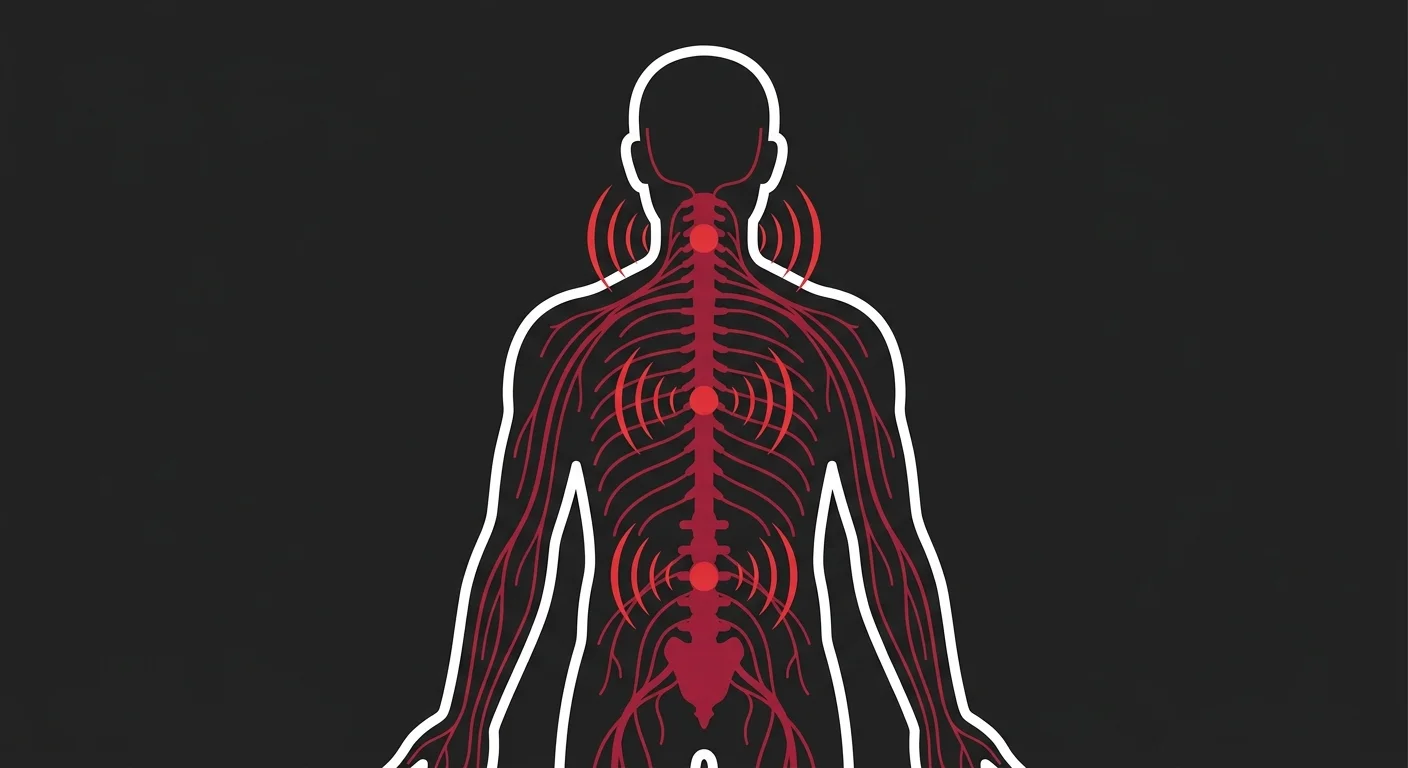
Chronic pain doesn't just hurt. It rewires.
By the time most people walk through the door, they've already tried stretching, medication, a few adjustments somewhere else, maybe a round of physical therapy. None of it held. That's not a coincidence. The nervous system isn't just sending pain signals anymore — it has structurally changed to keep sending them. CDC data puts 20.9% of U.S. adults — 51.6 million people — inside that rewired state right now.
That's not a symptom problem. It's a system problem. And system problems don't respond to single-session fixes.
The Nervous System in Chronic Pain Is Not the Same System Anymore
Here's what's actually happening inside the body. Chronic pain doesn't just persist — it physically rebuilds the central nervous system around itself. The circuits fire so often they get reinforced. And once those hypersensitivity pathways are locked in, the nervous system stops recognizing normal sensation as normal.
Think of a miscalibrated alarm system that's been stuck in warning mode for months. The original threat is gone. But the alarm keeps firing because it's been rewired to fire. Deprogramming that takes weeks — not one session.
That's the biological reality most quick-fix approaches skip over entirely. One adjustment can quiet the alarm — temporarily. It shifts joint mechanics, interrupts the nerve input, and the pain backs off for a few days. But the hypersensitivity pathways the system spent months building? Those don't move. The alarm resets. And then it fires again.
Why the Cookie-Cutter Protocol Fails Chronic Pain Patients
Most cookie-cutter protocols fail chronic pain patients for one reason: they treat the site of pain, not the system running the pain signal.
So the same adjustment sequence runs every visit — regardless of how the patient's nervous system is actually responding. Nobody's tracking whether the hypersensitivity is shifting. The visits happen. The protocol runs. The pain comes back. And the patient gets told to book again, because that's what the protocol says next.
That's not a care plan. It's a template. And a template doesn't adapt when the system isn't responding the way the template expects. The Chronic Pain Functional Rebirth protocol exists for exactly this reason — because chronic pain requires a clinical contract built around real-time patient response, not a fixed sequence.
What chiropractic care looks like for chronic pain patients isn't a longer visit count. It's a clinical sequence that tracks whether the nervous system is actually recalibrating — and changes course when it isn't. That's not a minor distinction. That's the difference between functional recovery and a symptom loop that never ends.
| Pain State | What the Nervous System Is Doing | Why Single-Session Relief Doesn't Hold |
|---|---|---|
| Acute pain (recent injury) | Sending a temporary warning signal in response to tissue damage — the nervous system is functioning correctly | Single-session relief often holds because the signal has a clear, resolvable cause — address the tissue, the signal quiets |
| Subacute pain (weeks to months) | Beginning to reinforce pain pathways through repeated firing — hypersensitivity is starting to develop but hasn't fully hardwired | Relief is inconsistent — some sessions hold, others don't, because the system is mid-transition between acute response and chronic state |
| Chronic pain (months to years) | Has undergone maladaptive neuroplastic rewiring — the pain signal is now structurally embedded, firing independently of the original trigger | Single-session relief temporarily quiets joint mechanics or nerve input but doesn't reprogram the hypersensitivity pathways already built — the alarm resets and fires again |
| High-impact chronic pain (severely limits function) | Operating in sustained System Overload — the central nervous system has normalized the pain state and treats it as baseline | Passive or isolated treatments produce brief windows of relief with no cumulative effect — the system returns to its rewired baseline because nothing changed the underlying circuitry |
The 6-to-12-Week Functional Recovery Window Explained
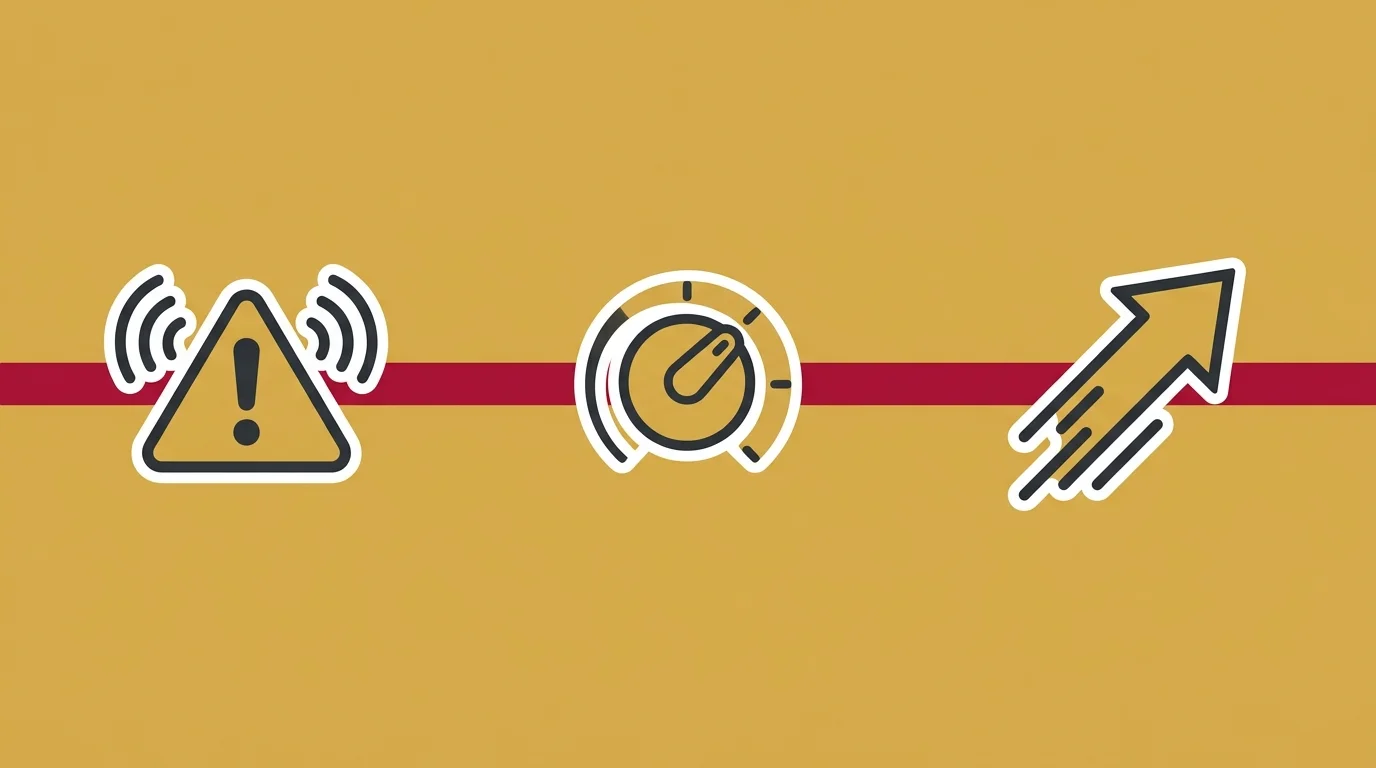
Six to twelve weeks isn't a number someone invented for a brochure. It's the window the nervous system actually needs to physically build new, non-pain-dominant pathways.
Chronic pain doesn't just hurt. It rewires.
Those maladaptive neuroplastic changes take weeks to physically deprogram. That's not a conservative estimate. That's the biology.
So when care pairs targeted active therapies with spinal adjustments, functional capacity climbs. But that climb only holds if the clinical sequence is built to adapt — not just repeat.
The timeline is real. The mechanism is biological. What happens inside that window determines whether recovery holds — or collapses the moment care stops.
What the Dose-Response Research Actually Shows
Dose-response research doesn't guess at timelines. It measures them.
According to NIH research, maximum functional improvement and pain mitigation from spinal adjustments are optimized at 12 sessions over a 6-week period. That's not the minimum before results appear. That's the threshold where outcomes are statistically maximized.
There's a difference. Most practices never explain it.
Here's what that means in practice. Showing up twice a week for six weeks isn't a billing strategy. It's the dosing window where the nervous system's hypersensitivity pathways begin to structurally yield.
Drop below that threshold, and the alarm keeps firing. Patients who've dealt with sciatica in Morton IL know this pattern exactly — temporary relief, then return.
Why the Timeline Varies Patient to Patient
Here's the thing — no two patients start from the same biological position. That's exactly why the window runs six to twelve weeks instead of landing on a single date.
How deeply the nervous system has rewired determines how long Neural Recalibration takes. A patient two years into chronic pain has more maladaptive pathways reinforced than someone eight weeks in.
The biology isn't the same. So the timeline isn't the same.
But depth of rewiring isn't the only variable. Whether care actually adapts in real time matters just as much.
Targeted active therapies integrated with spinal adjustments produce higher functional outcomes than passive treatment alone. Not because the modalities are more sophisticated — because a responsive clinical sequence catches what isn't working and changes it before the patient plateaus.
A fixed protocol doesn't have that mechanism. It runs the same template until the patient quits — or improves by coincidence.
| Recovery Window | Clinical Phase | Primary Goal | What Drives Progress |
|---|---|---|---|
| Weeks 1–2 | System Overload | Interrupt the hypersensitivity cycle and reduce acute nervous system load | Spinal adjustments targeting joint mechanics and nerve input; establishing clinical baseline |
| Weeks 3–6 | Neural Recalibration | Begin structural reprogramming of pain-dominant pathways | 12 sessions over a 6-week period driving maximum functional improvement and pain mitigation |
| Weeks 6–12 | Functional Restoration | Consolidate new non-pain-dominant pathways and restore functional capacity | Targeted active therapies integrated with spinal adjustments achieving higher functional capacity than passive treatment alone |
What Real Recovery Milestones Look Like Week by Week
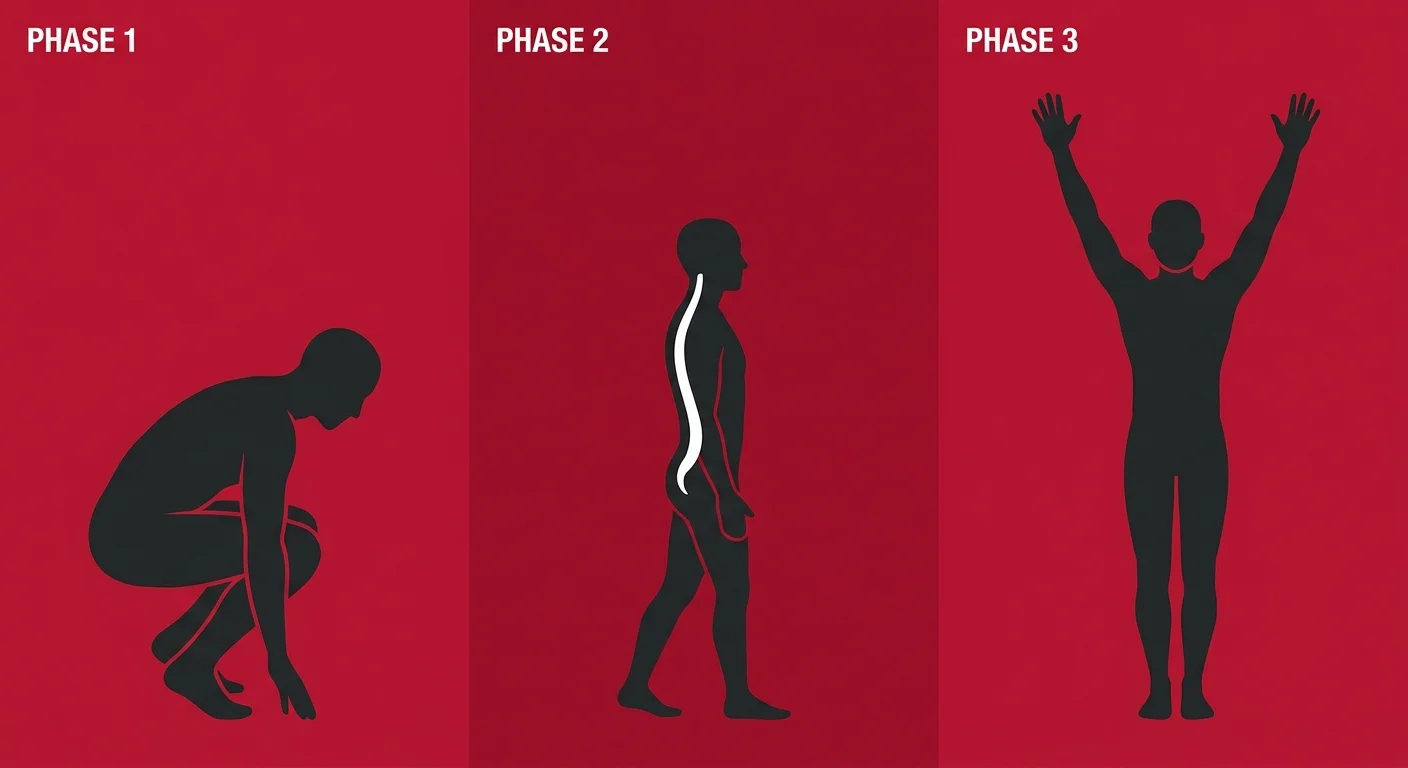
Here's what nobody tells you: a recovery timeline with no signposts isn't a plan. It's just waiting.
Most patients can't tell progress from plateau. No one mapped it out for them. So they finish six weeks of care feeling a little better, improvement stalls, and they decide the treatment failed. It didn't. They moved through a phase without recognizing what it was.
Each of the three recovery phases — System Overload, Neural Recalibration, and Functional Restoration — produces distinct, recognizable signals. Knowing what those signals are changes the entire experience. A confusing clinical process becomes something you can actually track.
Phase 1 — System Overload: Weeks 1 Through 3
Weeks 1 through 3 are the hardest to read.
During System Overload, the nervous system is still running its hypersensitivity pathways at full volume. Early sessions introduce new mechanical input — but the alarm hasn't quieted. Some patients feel brief relief after an adjustment. Others feel almost nothing. Both of those responses are normal. Neither one tells you the treatment isn't working.
Don't look for dramatic pain reduction here. That's the wrong metric for weeks 1 through 3. Look for small windows of relief that last a little longer after each session. If those windows exist — even briefly — the nervous system is receiving the signal. That's recalibration starting. Not finishing. Starting.
Phase 2 — Neural Recalibration: Weeks 4 Through 8
This is where the nervous system starts to actually move.
During Neural Recalibration, the maladaptive pathways chronic pain built begin to lose their grip. This is the critical window. Dose-response research puts the peak of functional improvement and pain mitigation at 12 sessions over a 6-week period. Relief periods get longer. Pain flares become less predictable in the wrong direction — and more predictable in the right one. The trend reverses. That's the signal.
This is also the phase where active therapy integration makes the biggest difference. What you do between sessions to maintain mobility reinforces the new pathways the nervous system is trying to build. Passive rest doesn't do that. It just gives the old alarm circuitry room to reassert itself.
Phase 3 — Functional Restoration: Weeks 9 Through 12
By weeks 9 through 12, the shift should be functional — not just symptomatic.
Functional Restoration isn't measured in pain scores. It's measured in what you can do again. Sleeping through the night. Sitting through a full workday. Getting back to the activity chronic pain took off the table. Those are the real markers. Not a number on a scale — evidence that the nervous system has genuinely recalibrated.
That's what the Chronic Pain Functional Rebirth protocol is built toward. The alarm was going off. It's been deliberately reprogrammed. Not by one adjustment. By a clinical sequence that was structured, adapted in real time, and carried all the way through — which is exactly what the next phase of care has to deliver.
| Week Range | Clinical Phase | What Patients Typically Notice | What the Provider Is Tracking |
|---|---|---|---|
| Weeks 1–3 | System Overload | Temporary relief windows after sessions; overall pain still dominant; some days feel unchanged or slightly worse before they improve | Whether the nervous system is receiving and responding to new mechanical input; length and consistency of relief windows between sessions |
| Weeks 4–6 | Neural Recalibration (early) | Relief periods noticeably longer; pain flare-ups less intense; sleep may begin to stabilize; movement starts to feel less threatening | Whether hypersensitivity pathways are beginning to yield; how the patient responds to integrated active therapies alongside adjustments |
| Weeks 7–9 | Neural Recalibration (deepening) | Fewer unpredictable pain spikes; functional activities that were previously off-limits become possible again; patient begins to trust movement | Consistency of gains across sessions; whether care needs to pivot based on what's responding and what isn't; mobility work compliance between visits |
| Weeks 10–12 | Functional Restoration | Return to activities chronic pain had removed — sustained sleep, full workdays, physical activity; pain no longer the dominant daily signal | Whether functional markers hold between sessions without reinforcement; readiness to transition from active recovery to maintenance or discharge |
How Adjunct Therapies Accelerate the Recovery Window
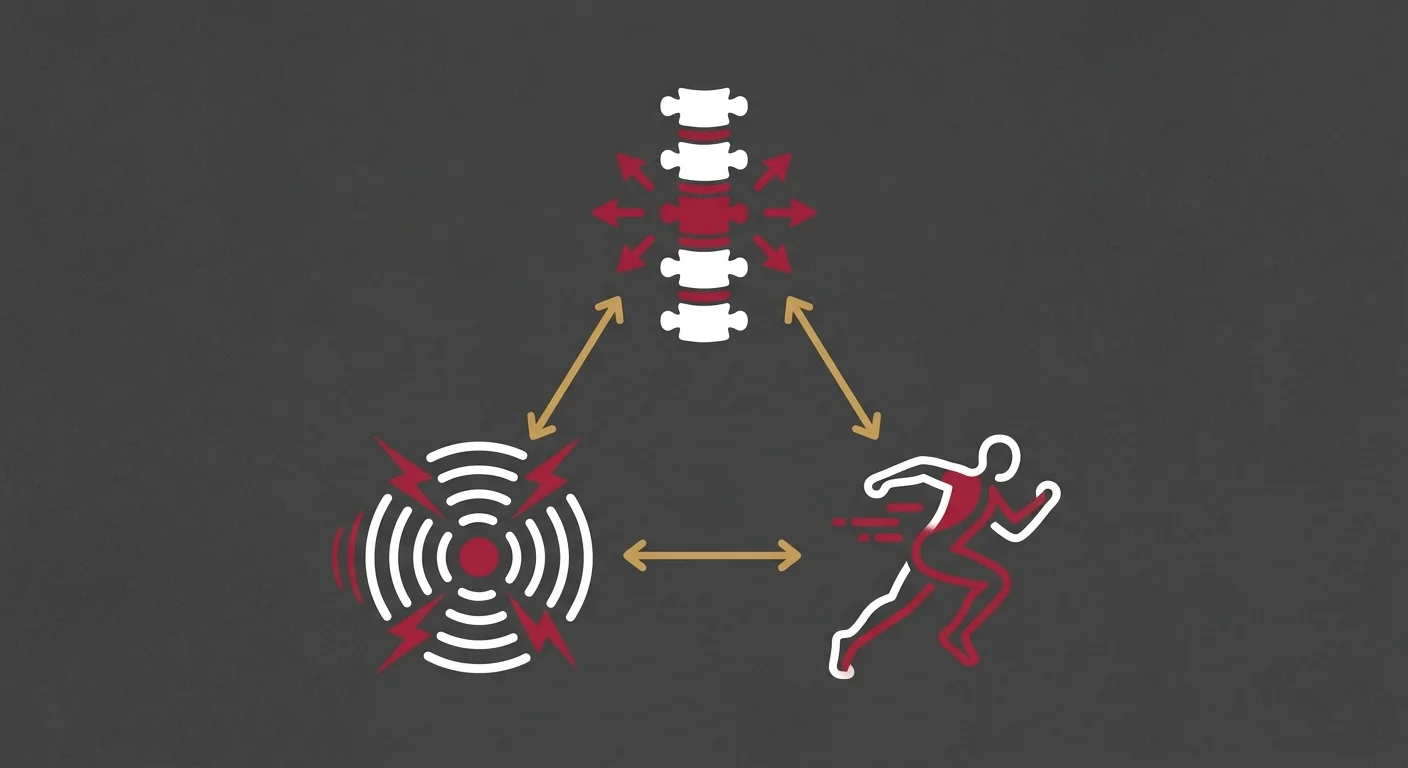
Spinal adjustments do essential work. They restore joint mechanics. They cut nerve interference. But when the nervous system has been running a chronic alarm for months or years, adjustments alone can't close the loop.
Shockwave Therapy isn't an add-on. It's a force multiplier. Adjunct therapies address the tissue-level and cellular-level obstacles that block nervous system recalibration — the parts of recovery a spinal adjustment alone can't fully reach.
That's the difference between compressing a recovery timeline and dragging it out. When targeted active therapies stack with adjustments, functional capacity climbs far higher than passive treatment alone. The biology responds faster. The alarm gets reprogrammed sooner.
What Shockwave Therapy Adds to the Recovery Equation
Chronic pain leaves a physical residue. Scar tissue. Fibrotic adhesions. Cellular damage. They create mechanical resistance even after the nervous system starts to recalibrate. That residue doesn't respond to rest. It responds to targeted mechanical stimulus — and rest has no mechanism to deliver that.
Shockwave Therapy delivers exactly that. Acoustic energy drives into damaged soft tissue — breaking down adhesions, triggering cellular repair, restoring the tissue mobility the nervous system needs to complete Neural Recalibration. And the results don't arrive immediately. They compound. Trials show patients consistently hit their peak functional restoration milestones 8 to 12 weeks after finishing their protocol — because tissue remodeling keeps advancing after the sessions end.
That timing is deliberate. The gains don't stop at symptom relief — they build into Functional Restoration. For patients who've already burned through standard approaches without lasting results, that compounding effect is often what changes the clinical picture entirely. Shockwave Therapy doesn't just accelerate the window. It raises the ceiling of what recovery can actually reach.
Why Active Mobility Work Is Non-Negotiable Between Visits
Here's the recovery pattern that feels responsible. You show up. You receive care. You go home and rest. You repeat. It feels like you're doing the right thing. You're not.
Passive rest lets the old alarm circuitry reassert itself. The maladaptive pathways chronic pain built don't disappear because an adjustment interrupted them. They need active competition — new movement patterns, new neuromuscular inputs — to get structurally displaced. That's why stacking targeted active therapies with adjustments produces far higher functional outcomes than rest alone ever does.
According to CDC surveillance, 6.9% of U.S. adults — 17.1 million people — live with high-impact chronic pain that severely limits daily life or work. Most of them have been told to rest more, move less, and wait it out. That advice is exactly why their nervous systems never complete the reset. Targeted mobility work between sessions is how the body holds the gains the adjustments are building.
This Protocol Is Not for Everyone — And That Matters
This protocol demands full engagement. Not partial. Not selective. Full. That's not a warning — it's a filter.
If you're looking for a single adjustment that resolves everything, this isn't the right clinical model. If you're willing to follow the parts of the care plan that feel convenient and skip the rest, the biology won't cooperate. Partial commitment produces partial results. That's not a policy. That's how nervous system recovery works.
The patients who move through System Overload, Neural Recalibration, and into Functional Restoration are the ones who stay in the sequence. They let the clinical picture drive course corrections. They don't arrive with a fixed idea of what care should look like and dig in when the data says otherwise. That willingness isn't a personality trait. It's the variable the biology requires. Nothing substitutes for it.
| Therapy Type | Role in Recovery | When It's Used | What It Cannot Replace |
|---|---|---|---|
| Shockwave Therapy | Breaks down scar tissue and fibrotic adhesions that create mechanical resistance; stimulates cellular repair at the tissue level; allows the nervous system to complete Neural Recalibration without being blocked by residual physical damage | Introduced during Neural Recalibration; gains compound through Functional Restoration as tissue remodeling continues after sessions end | Spinal adjustments — Shockwave Therapy addresses soft tissue obstacles but does not restore joint mechanics or reduce nerve interference directly |
| Cold Laser Therapy | Reduces inflammation and accelerates cellular repair in irritated nerve and soft tissue pathways; supports nervous system recovery by lowering the background inflammatory signal that keeps the alarm system elevated | Used across all three phases, particularly during System Overload when inflammation is highest and the nervous system is most reactive | Spinal adjustments — Cold Laser Therapy calms the tissue environment but does not correct the mechanical dysfunction driving nerve interference |
| Targeted Mobility Work | Reinforces new neuromuscular pathways between sessions; prevents maladaptive patterns from reasserting themselves during recovery gaps; keeps the nervous system receiving active input rather than reverting to old alarm circuitry | Required throughout Neural Recalibration and Functional Restoration — this is the between-session work that holds the gains built during in-office care | Clinical care — mobility work extends and reinforces adjustments but does not replace the mechanical correction and nerve interference reduction that only in-office care provides |
| Acupuncture | Modulates nervous system signaling through targeted stimulation of peripheral nerve pathways; supports down-regulation of the hypersensitivity state that chronic pain establishes in the central nervous system | Most effective during Neural Recalibration when the nervous system is beginning to structurally yield and is receptive to recalibration inputs from multiple modalities | Spinal adjustments — Acupuncture influences nervous system signaling but does not address the structural joint mechanics that are driving the underlying nerve interference |
Frequently Asked Questions About Chronic Pain Recovery Timelines
These are the questions patients bring in after months of trying something that didn't hold.
So here are direct answers. Not timelines built to keep you coming back.
How long does it take to see functional results with chronic pain?
Most patients notice meaningful functional shifts between weeks 4 and 6 — when Neural Recalibration is actively underway. Dose-response research identifies 12 sessions over a 6-week period as the point where maximum functional improvement is optimized. Full results — the kind that hold — emerge across the complete 6-to-12-week sequence.
The biology doesn't compress on demand. But it moves on a predictable arc when the sequence is followed.
Why does nervous system recovery from chronic pain take longer than a single adjustment?
Because chronic pain rewires the nervous system at a structural level. The central nervous system builds persistent hypersensitivity circuits — pathways reinforced so many times they take weeks to physically deprogram. A single adjustment interrupts the alarm. It doesn't replace the circuitry. Reprogramming requires repeated, sustained mechanical input across the full sequence. That's not a limitation of care. That's how nervous system biology works.
What is the Chronic Pain Functional Rebirth protocol at Touch of Wellness Chiropractic?
The Chronic Pain Functional Rebirth protocol at Touch of Wellness Chiropractic is a structured, three-phase clinical sequence — System Overload, Neural Recalibration, and Functional Restoration — built to move the nervous system through a deliberate biological reset. It's grounded in Dr. Karen Hannah's Zoology-to-systems clinical lens: treating chronic pain as a system-wide failure, not a localized complaint. The protocol adapts in real time based on what the patient actually reports. It's not a template. It's a clinical contract built around response.
How does Shockwave Therapy speed up my recovery timeline?
Shockwave Therapy addresses what adjustments can't reach on their own — scar tissue, adhesions, and cellular breakdown that create mechanical resistance even after spinal alignment improves. It doesn't replace the adjustment sequence. It removes the physical obstacles that slow it down.
Trials show patients reach peak functional restoration milestones 8 to 12 weeks after finishing their protocol. The tissue remodeling keeps progressing after sessions end. That's the difference between stalling at symptom relief and actually reaching Functional Restoration.
What exercises maintain mobility during functional recovery?
The specific mobility work depends on your clinical picture. It's assigned based on where you are in the sequence — not pulled from a generic exercise list.
What matters is that you actually do it. The exercises prescribed during functional recovery reinforce the new pathways your nervous system is building between sessions. Without that active input, the old alarm circuitry reasserts itself. Passive rest between sessions is one of the most common reasons recovery stalls.
Will I need to keep coming back indefinitely after the 12-week window?
No. The goal of every care plan here is to get you to a point where you don't need to keep coming. Honest, outcome-based recommendations — even when that means a shorter plan — are the standard. A provider who keeps you returning past the point of clinical need is serving their schedule, not your recovery. Once Functional Restoration is achieved and the nervous system has genuinely recalibrated, the objective is durability. Not dependency.
The Nervous System Has a Memory — And You Can Change It
Here's the thing about chronic pain: your nervous system didn't forget it. It built the alarm, reinforced the wiring, and drilled the pattern in deeper every time the signal fired without resolution.
That's not weakness. That's biology doing exactly what it was designed to do.
But biology that learned one pattern can learn another. That's the entire premise behind Chronic Pain Functional Rebirth.
The sequence moves through System Overload, Neural Recalibration, and Functional Restoration in that order because the alarm didn't get stuck in warning mode overnight. Resetting it requires the same kind of sustained, structured input that entrenched it — applied in the right direction.
At Touch of Wellness Chiropractic, that's what the clinical sequence is built to deliver. Not a template. Not a passive protocol. A structured biological reset that adapts as the system changes.
If you've been dismissed, handed a passive treatment plan, or told to rest your way back to function — that's exactly why the nervous system never completed the reset. Rest doesn't retrain the alarm. It just waits for it to quiet down. It doesn't.
The path forward isn't a single adjustment. It's a structured biological reprogramming sequence, adapted in real time, carried all the way through. Dr. Karen Hannah's Zoology-to-systems clinical lens exists for exactly this kind of case — the ones that didn't respond to the standard playbook, because the standard playbook never addressed the right system.
The alarm is still going off. The question is whether the next six to twelve weeks change that — or don't.
That alarm's been going off long enough. If you want to know what a structured reset actually looks like for your specific clinical picture, Book Appointment.
Copyright Touch of Wellness Chiropractic 2026
1101 W Jackson St, Suite A Morton, IL 61550
Web Design by iTech Valet