
(309) 321-8412 | 1101 W Jackson St, Suite A, Morton, IL 61550
(309) 321-8412 | 1101 W Jackson St, Suite A, Morton, IL 61550
How to Return to the Activities You Love After Years of Pain
Returning to the activities you love after years of chronic pain is achievable — but only when the clinical target shifts from pain reduction to functional recovery.
Chronic pain affects approximately 20.9% of U.S. adults — 51.6 million people. Of those, 6.9%, or 17.1 million, live with high-impact chronic pain that has sidelined them from the specific roles, routines, and physical demands that define their daily lives. These are not people who are slightly uncomfortable. These are people who have stopped doing the things that make them who they are.
The standard clinical response measures success in pain scores. Pain scores do not tell you whether someone can work a full shift, keep up with their kids, or get back on a trail. Functional recovery does.
Chiropractic care, delivered through an individualized, structured approach, targets the nervous system interference and spinal mechanics driving chronic pain at the root — not the symptom layer sitting on top. Research shows patients receiving chiropractic care alongside standard medical care reported significant improvements in functional disability at a rate far exceeding standard care alone. That gap is structural. Chiropractic adjustments address the cause; standard care alone addresses the signal.
Multimodal care combining spinal care, soft tissue work, and rehabilitative support promotes long-term activity resumption — not short-term relief. The CDC identifies conservative, non-pharmacologic approaches like chiropractic care as preferred first-line options for chronic musculoskeletal pain.
The clinical goal is not to return someone to a baseline that was already failing them. The goal is to restore the specific physical capacity that allows a person to return to the activities, relationships, and demands that define their life. That distinction changes how progress is measured, how care is delivered, and when a plan needs to change.
Last Updated: July 20, 2026
- • Why 'Feeling Better' Is the Wrong Finish Line
- • Why Cookie-Cutter Protocols Keep You on the Table, Not in the Game
- • What 'Getting Back to Being You' Actually Requires Clinically
- • The Chronic Pain Functional Rebirth Protocol: How It Works Step by Step
- • What You Can Realistically Expect — and When
-
• Frequently Asked Questions
- • What is the Chronic Pain Functional Rebirth protocol at Touch of Wellness Chiropractic?
- • Why is getting back to being you the primary clinical goal — not just pain reduction?
- • How does a Zoology background help solve chronic musculoskeletal pain?
- • What happens if a treatment plan stops producing functional results?
- • Can chiropractic care realistically help me return to sports or physical activities after years of chronic pain?
- • How is this different from what my primary care physician recommended?
- • Stop Waiting to Get Back to Being You
Why 'Feeling Better' Is the Wrong Finish Line

Most chronic pain patients have felt better before.
Good weeks. A good month, even. Then they try to do something that used to be ordinary — a full shift, a hike, an afternoon on the floor with their kids — and it collapses.
Feeling better is not the same as functioning differently. That distinction is the whole game.
The standard finish line is a drop in pain scores. That metric is easy to chart. It's also almost completely disconnected from whether a person can return to the life they actually want.
A pain score tells you how someone feels on a given Tuesday. It tells you nothing about whether they can coach their kid's soccer game on Saturday.
That's exactly what the Chronic Pain Functional Rebirth protocol is built to reject.
The clinical target here is not comfort. It's capacity. Getting back to being you means reclaiming the specific activities, roles, and physical demands that made your life yours — not settling for a lower level of daily pain.
The Difference Between Pain Reduction and Functional Recovery
Pain reduction and functional recovery are not the same outcome. Not even close.
Pain reduction means the nervous system has stopped firing alarm signals at the same intensity. Functional recovery means the body can actually perform — range of motion back, load tolerance restored, coordination sufficient for real physical activity.
But clinics that measure only pain scores will discharge a patient who has partially recovered — and call it a win.
That patient walks out with fewer symptoms and no capacity to return to the activities they came in for. The pain chart looks better. Their life doesn't.
That is not recovery. That is managed decline.
Individualized chiropractic care tracks functional milestones, not just symptom reports.
Can the patient lift their child without bracing? Sit through a full workday? Return to the movement patterns that mattered before pain took over?
Those are the benchmarks that reveal whether a care plan is working. Pain scores describe a Tuesday. Functional milestones describe a life.
What High-Impact Chronic Pain Actually Takes Away
Here's the scale. According to CDC data, 20.9% of U.S. adults — 51.6 million people — live with chronic pain. Of those, 6.9%, or 17.1 million people, experience high-impact chronic pain severe enough to strip away their ability to work, move, or participate in the routines that define who they are.
That is not a statistic about discomfort. That is a statistic about identity loss.
That 17.1 million number deserves a real look.
These are not people managing a nagging ache. These are people who have lost vocations, relationships, and versions of themselves to pain. They've stopped hiking. Stopped lifting. Stopped showing up to the things that used to matter.
And CDC's chronic pain surveillance makes clear this level of functional loss is the rule for this group — not the exception.
So the question is never just: does it still hurt?
The real question is what pain has taken from you — and whether your care plan is actually designed to give it back.
Pain scores describe where you are. Functional milestones describe where you're going.
| Clinical Benchmark | What It Measures | What It Misses | Why It Falls Short for Activity Recovery |
|---|---|---|---|
| Pain Score Reduction | Intensity of pain signals on a given day | Whether the patient can perform the physical tasks that define their life | A patient can score well on a pain scale and still be unable to lift, hike, work a full shift, or keep up with their kids |
| Symptom Tolerance Threshold | How much discomfort a patient can manage without reporting it | Whether underlying nervous system interference and functional capacity have actually changed | Tolerance is an adaptation — not a recovery. It measures endurance, not restoration. |
| Discharge Readiness (Pain-Based) | Whether pain levels have dropped enough to end the care relationship | Whether the patient has regained the range of motion, load tolerance, and coordination required for real activity | Patients discharged on pain metrics alone routinely re-present with the same functional deficits — because the root cause was never the finish line |
| Functional Milestone Tracking | Specific physical benchmarks tied to the patient's stated activity goals | Nothing — this is the correct measure | This is the clinical target: can the patient coach their kid's game, return to their trade, or complete the movement patterns that mattered before pain took over |
| Activity-Specific Outcome | Whether the patient has returned to the named roles, routines, and physical demands they identified at intake | Nothing — this is the correct finish line | Recovery is not a pain number. Recovery is the moment a patient does the thing they came in unable to do. |
Why Cookie-Cutter Protocols Keep You on the Table, Not in the Game
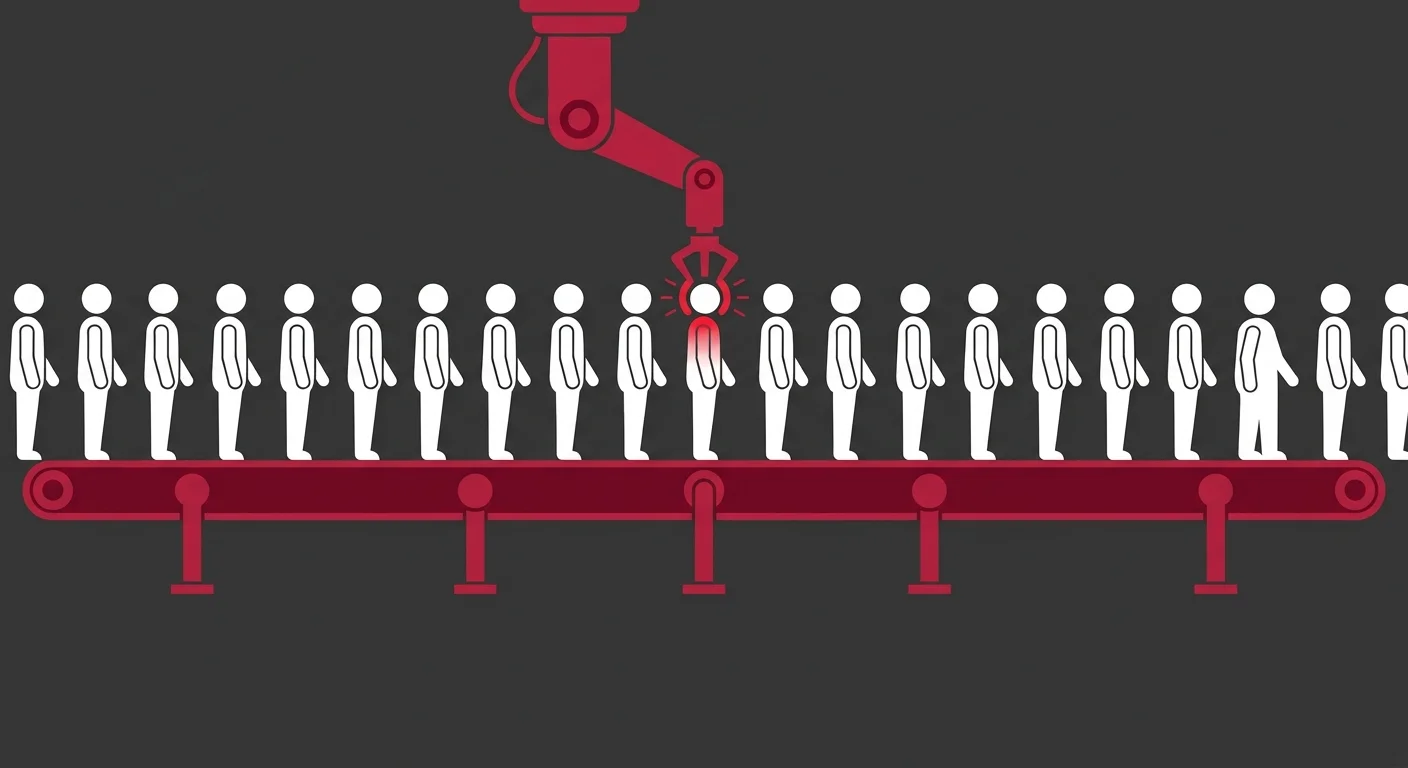
Most chronic pain patients don't fail to get better because their body can't heal.
They fail because the protocol running their care was never built for them. It was built for a diagnosis code.
Here's how it actually works. A diagnosis code walks through the door, and the same sequence fires: same adjustment order, same visit frequency, same discharge threshold. Patient feedback doesn't change it. A plateau doesn't change it. The protocol runs until the insurance calendar says stop — and the person attached to it gets managed along the way.
That structure keeps patients managed. It does not get them back to the trail, the weight room, or the job site.
The gap between those two outcomes is exactly where the Chronic Pain Functional Rebirth protocol begins.
The Cookie-Cutter Protocol: What It Is and Why It Fails
The cookie-cutter protocol isn't malicious. It's institutional.
When clinics run at volume, standardized care is efficient. The same sequence runs on every patient. Outcomes get charted against pain scores. Throughput keeps the lights on.
What the patient actually wants to get back to? That never enters the equation.
That's the assumption that breaks it. A diagnosis does not predict a recovery path.
Two people with identical MRI findings can have completely different functional limitations, different nervous system responses, and different targets for what they need to get back. Running the same protocol on both of them isn't clinical care.
It's template execution. And templates don't know the difference.
NIH-funded research shows patients receiving chiropractic care combined with standard medical care reported significant improvements in functional disability at 73% — compared to only 17% in standard care alone.
That gap isn't luck. It exists because individualized care targets the structural causes of functional breakdown. Not the symptom layer sitting on top of them.
But a cookie-cutter protocol produces none of that advantage. Chiropractic adjustments combined with manual therapy restore range of motion and measurable functional capacity — only when the approach is calibrated to who you are and what you're trying to get back.
Repeat the same sequence regardless of response, and it's not chiropractic care anymore. It's a schedule.
And a schedule has never gotten anyone back to the trail, the weight room, or the job site.
Who This Approach Does Not Serve
So let's be direct about who this is not for.
If you're coming in expecting a provider to replicate what your last clinic did — that's not the starting point here. The assessment drives the care plan. Not your previous provider's habits. Not a familiar sequence that felt productive once.
The clinical picture is always the starting point. Not your history with someone else's protocol.
And if you're looking for a plan you can follow in pieces — take the adjustments, skip the feedback, commit only to the parts that feel convenient — this isn't the right fit.
Partial commitment produces partial results. That's not an opinion. It's how recovery works.
The clinical loop here only functions when both sides are fully in it.
The patients who get back to being themselves are the ones who came in prepared to follow a clinical lead — not a familiar routine.
If your goal is to reclaim the specific activities pain has taken from you, that goal requires a protocol built around you. Not a template built around a diagnosis code.
That distinction is the whole thing.
| Protocol Type | Assessment Depth | Treatment Variation | Patient Feedback Integrated | Functional Recovery Focus |
|---|---|---|---|---|
| Cookie-Cutter Protocol | Diagnosis code only — no nervous system evaluation, no functional baseline | Fixed sequence applied to every patient regardless of response or plateau | Not integrated — visit count and pain scores drive decisions, not patient-reported feedback | Absent — discharge threshold is a pain score drop, not a return to activity |
| Chronic Pain Functional Rebirth Protocol | Nervous System Assessment establishes individual baseline — structural causes, movement restrictions, and activity-specific targets mapped before any adjustment is made | Targeted Adjustment calibrated to each patient's clinical picture — sequencing shifts when the picture shifts | Fully integrated — the Functional Feedback Loop treats every patient report as clinical data that can change the direction of care | Central — the outcome metric is capacity to perform specific activities, not comfort on a given day |
| Standard Medical Care Alone | Symptom-focused — imaging and lab markers guide decisions; nervous system function and spinal mechanics are rarely evaluated | Standardized pharmaceutical or physical therapy protocols with limited individual variation | Minimal — follow-up intervals are scheduled, not response-driven | Rarely explicit — functional goals are assumed rather than tracked as discrete clinical milestones |
| Volume-First Chiropractic Model | Intake form and chief complaint — no in-depth assessment of how structural dysfunction maps to the patient's specific functional limitations | Same adjustment sequence per visit type — efficiency prioritized over individual calibration | Charted but not acted on — protocol continues unchanged even when patient reports stagnation or regression | Secondary — revenue model incentivizes visit frequency over functional outcome velocity |
| Reassess-and-Pivot Model (Stage 4) | Ongoing — assessment is not a one-time intake event but a recurring clinical checkpoint that re-evaluates the nervous system and functional status at defined intervals | Dynamic — treatment selection changes the moment a plateau is detected; the Reassess and Pivot stage exists precisely to prevent protocol inertia | Required — patient feedback triggers clinical decision-making, not documentation compliance | Primary and measurable — progress is tracked against the patient's specific activity targets, not a generalized symptom scale |
What 'Getting Back to Being You' Actually Requires Clinically
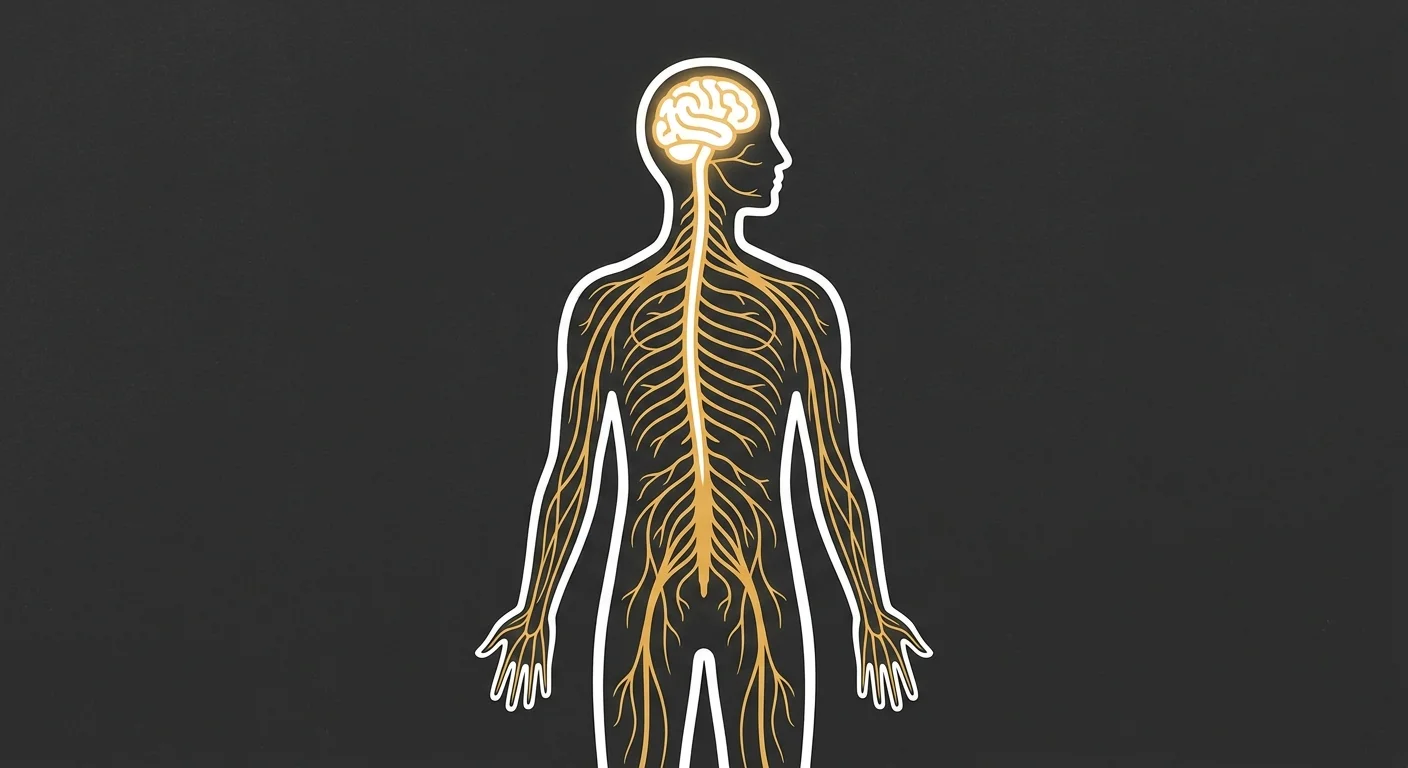
"Getting back to being you" is not a tagline.
It's a clinical target. And reaching it demands a starting point most chronic pain care never bothers to find.
The trail you stopped hiking. The shift you can't finish anymore. The weekend routines your family quietly stopped expecting you to show up for.
Those aren't rewards waiting on the other side of recovery. They are what recovery means.
A care plan that doesn't account for them isn't built around you. It's built around a billing code.
So what does it actually take to get there?
It starts with the nervous system. Not the spine as a mechanical object. The system running through it.
Why the Nervous System Is the Starting Point, Not the Spine
Here's the thing: most chronic pain care treats the spine like a stack of hardware. Bones. Discs. Joints. Fix the alignment, the thinking goes, and the pain clears.
But the spine isn't just a mechanical column. It's the physical housing of the central nervous system.
When that system is disrupted, the fallout shows up in ways no purely structural model can explain — or fix.
Chiropractic adjustments combined with manual therapy restore localized range of motion and measurable functional capacity — because they address nervous system interference, not just structural position.
The spine is the access point. The nervous system is the target.
That distinction changes what the assessment looks for, what the adjustment is meant to accomplish, and how progress gets measured.
At Touch of Wellness Chiropractic, the clinical goal isn't comfort. It's the restoration of nervous system function specific enough to support the activities that define a patient's life.
That goal can't be served by running the same sequence on every nervous system that walks through the door.
No two nervous systems are the same. Neither are the lives patients are trying to get back to.
What a Biology-Driven Assessment Actually Looks Like
A biology-driven assessment doesn't start with a treatment plan. It starts with a question.
What has pain taken from you? What did you try? What helped — even for a week — and what made things worse?
That history isn't background noise. It's clinical data. And it drives every decision that follows.
From that foundation, the assessment maps where interference exists in the nervous system, how the body is compensating around it, and what structural factors are actually driving the limitation the patient is living with every day.
CDC guidance identifies conservative, non-pharmacologic care as the preferred first-line approach for chronic musculoskeletal pain — because that category of care targets root-cause nervous system dysfunction, not just the signal it produces.
Multimodal approaches that layer spinal care with soft tissue work and targeted rehabilitative support drive long-term activity resumption. Not a temporary reduction in how loud the pain gets.
That's where cold laser therapy enters — not as an automatic add-on, but as part of a coordinated strategy. One built to reduce tissue-level inflammation and support nervous system recovery alongside chiropractic adjustments.
The assessment tells us what the body needs. The tools follow that determination.
Not the other way around.
| Clinical Input | Why It Matters for Functional Recovery | What Happens Without It |
|---|---|---|
| Nervous System Assessment built from patient history | Identifies where functional interference actually originates — not where the diagnosis code points. The assessment maps compensation patterns and nervous system disruption specific to this patient's activity limitations. | Care plan targets a label, not a person. Adjustments address the structural presentation that matches the diagnosis — not the functional breakdown the patient is living with. |
| Activity-specific functional targets | Gives the care plan a measurable, patient-defined outcome — returning to the trail, the job site, the weight room. Progress is tracked against what the patient has lost, not against a generic pain scale. | Recovery is declared when pain scores drop, regardless of whether the patient can do anything they couldn't do before. The goal was comfort, not function — and comfort is what gets delivered. |
| Multimodal care coordinated around nervous system recovery | Layers chiropractic adjustments, soft tissue support, and rehabilitative input in a sequence determined by the nervous system's response — not by a standard protocol timeline. Each modality serves the functional target. | Individual tools get applied in isolation or in a fixed order that doesn't adapt to the patient's response. Plateau is managed, not solved. The protocol continues on schedule regardless of whether function is returning. |
| Functional Feedback Loop between patient and provider | Turns every visit into a data point. What improved? What didn't? What activity did the patient attempt since the last appointment, and how did the body respond? That feedback actively shapes the next adjustment and the next phase of care. | Progress reporting is passive — the provider adjusts, the patient leaves, and no functional data is gathered between visits. The plan runs on a fixed schedule with no mechanism for the patient's lived experience to change it. |
| Willingness to reassess and pivot when a plateau occurs | Separates a care plan from a template. When a strategy stops producing functional improvement, the protocol changes — not continues. This is the clinical marker of a provider whose priority is the patient's outcome, not the plan's continuation. | The same sequence repeats until the insurance calendar or the patient's patience runs out. Plateau is treated as a patient compliance issue rather than a signal that the approach needs to change. |
The Chronic Pain Functional Rebirth Protocol: How It Works Step by Step
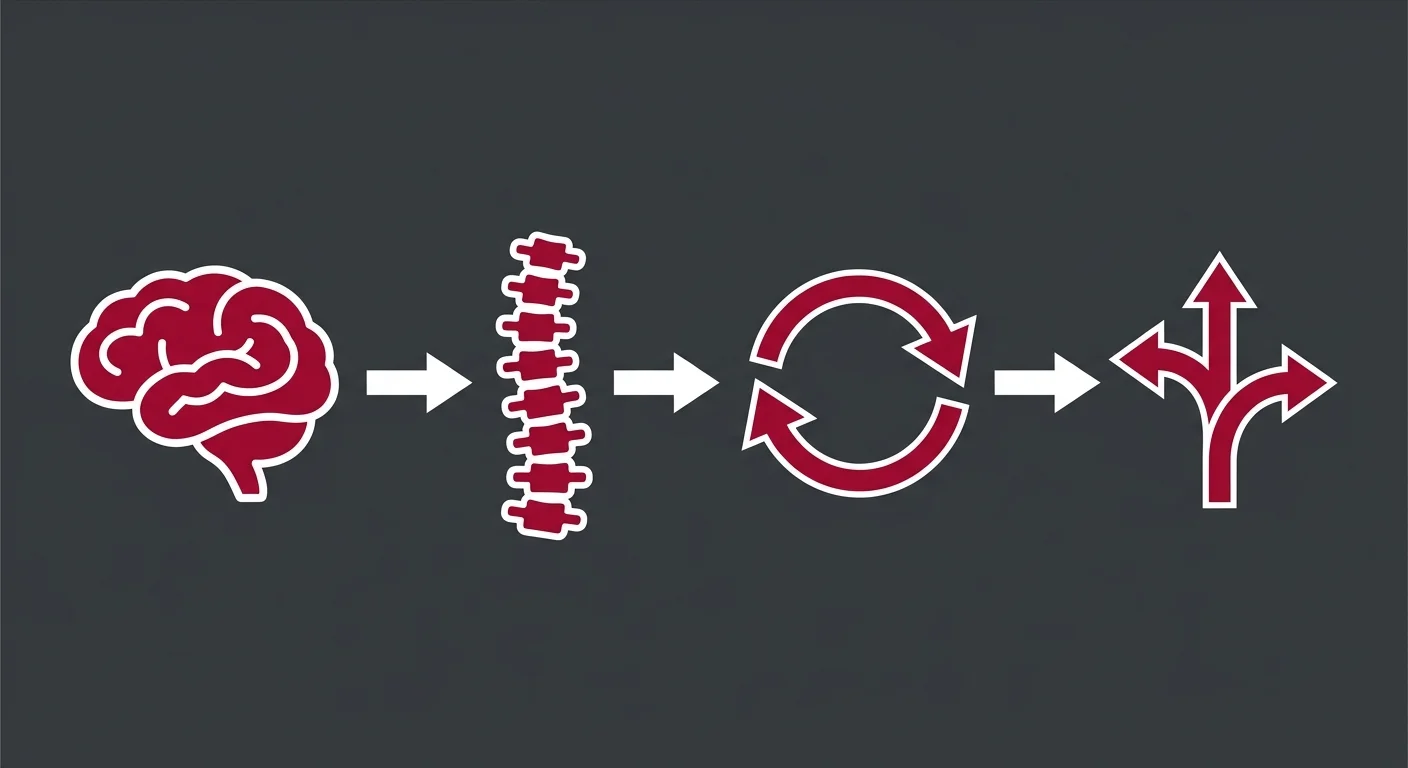
The Chronic Pain Functional Rebirth protocol isn't a service menu. It's a four-stage clinical system — and each stage feeds real data into the next.
That's what separates functional recovery from managed decline. Most chronic pain care runs a flat line — assess once, apply the protocol, discharge when the insurance window closes. This protocol runs on a loop. Every round of care generates data that reshapes the next round.
The four stages reflect how a nervous system under chronic load actually responds to care. One approach — what you'd find outlined in functional recovery vs. standard physical therapy research — treats the nervous system as a dynamic, responsive system and recalibrates in real time. The other treats it as a structure to be corrected once and released. Those are not the same thing. They don't produce the same outcomes.
Stage 1: Nervous System Assessment
Before the first adjustment, the nervous system has to be read. Not assumed. Not inferred from a diagnosis code. Read — from what the patient reports, how the body is compensating, and where the interference is actually living.
The Nervous System Assessment starts with clinical history. But it goes further than most intake forms ever reach. What activities has this person stopped doing? What did they try before, and why did it stop working? What produced temporary relief — and what happened when it wore off? That's not small talk. That's a functional map of where the nervous system is right now.
That map determines what happens next. Not the diagnosis code. Not whatever the last provider was doing. The assessment drives the care plan — on every visit, for every patient. That's the clinical standard here. Not a preference.
Stage 2: Targeted Adjustment
The Targeted Adjustment isn't a generic spinal correction. It's a precise intervention aimed at the specific interference the Nervous System Assessment identified — calibrated to what this patient's nervous system actually needs. That matching is what the data reflects. Patients receiving individualized chiropractic care alongside standard medical care reported significant improvements in functional disability at 73%, compared to 17% in standard care alone. The gap doesn't come from the adjustment technique. It comes from matching the technique to the individual.
Where the assessment identifies tissue-level factors that chiropractic adjustment alone won't resolve, advanced shockwave therapy enters Stage 2. Not as an add-on. Not as an upsell. The tool follows the finding. Always.
Stage 3: Functional Feedback Loop
The Functional Feedback Loop is where this protocol earns its name. After every round of care, the question isn't whether the pain score moved. The question is: what can you do now that you couldn't do before?
That shift in measurement is everything. Pain scores are passive — they tell you how bad it feels. Functional milestones are active — they tell you whether the protocol is working or just running. And the numbers reflect it: patients receiving individualized chiropractic care alongside standard medical care reported meaningful functional improvements at 73%, compared to 17% in standard care alone. That gap doesn't happen by accident. It happens because the measurement was aimed at the right target from the start.
So the Functional Feedback Loop runs both directions. The patient reports what has returned — and what hasn't. That data recalibrates the next intervention. The loop doesn't close when the insurance calendar runs out. It closes when the patient's specific functional targets are met.
Stage 4: Reassess and Pivot
Reassess and Pivot is the stage most clinical protocols never reach — because reaching it requires something most protocols aren't built for: the willingness to stop doing something that isn't producing results. That willingness is the clinical standard here. If a treatment isn't generating functional progress after a fair trial, repeating it isn't persistence. It's the clinical definition of failure.
The Reassess and Pivot stage closes the loop — and reopens it. A new assessment. A recalibrated Targeted Adjustment. A reset Functional Feedback Loop, now aimed at the next layer of functional limitation. Or the specific activity that still hasn't come back. That cycle continues until the patient is back to being themselves. Not a version of themselves that hurts less. The version that shows up for the things that define them.
| Protocol Stage | Clinical Action | Patient Role | Success Marker |
|---|---|---|---|
| Nervous System Assessment | Map the nervous system's current state through clinical history, functional questioning, and physical findings — identifying where interference lives and how the body is compensating | Report what has stopped working, what was tried before, and what produced even temporary relief — this is clinical data, not background | A functional map exists before any adjustment is made — care plan is driven by the assessment, not by a diagnosis code or previous provider's sequence |
| Targeted Adjustment | Deliver a precise chiropractic adjustment calibrated to the specific interference identified in Stage 1 — not a generic spinal correction applied by template | Engage with the care plan fully — partial commitment produces partial results; the adjustment is only as effective as the compliance behind it | Measurable restoration of localized range of motion and functional capacity — the body responds to the intervention that was actually matched to its need |
| Functional Feedback Loop | After every round of care, assess what the patient can do now that they could not do before — functional milestones replace pain scores as the primary progress metric | Report specific functional changes — what has returned, what has not, and which activities remain out of reach — so the provider can calibrate the next intervention | The patient's specific functional targets are advancing — not just pain levels declining; the loop stays open until the defined activities are restored |
| Reassess and Pivot | If functional progress stalls, stop the current approach and open a new Nervous System Assessment — recalibrate the Targeted Adjustment to address the next layer of limitation | Signal honestly when something is not working — this stage depends on accurate reporting, not on protecting the provider's protocol | A recalibrated care plan is in motion before the plateau becomes a regression — the protocol restarts toward the specific activity that has not yet returned |
What You Can Realistically Expect — and When

Most providers skip this conversation entirely.
Realistic expectations are not a soft topic. They are a clinical requirement. A patient who doesn't know what to expect will quit before the protocol works — or stay long past the point it stopped.
The Chronic Pain Functional Rebirth protocol doesn't run on a fixed calendar. It runs on functional milestones.
What shifts — and when — looks different for every patient. But there is a general arc. And understanding it changes everything about how you experience the process.
That arc isn't a promise. It's a clinical framework — built from what the nervous system actually does under chronic load, and what happens when that load gets addressed at the source.
The CDC names conservative, non-pharmacologic care as the preferred first-line approach for chronic musculoskeletal pain for exactly that reason. It targets root-cause dysfunction. Not just the signal it's sending.
Early Phase: What Shifts First
The first thing that shifts is rarely the thing patients expect.
It is not a dramatic drop in pain. It is a change in the pattern — how pain moves, when it appears, how long it lingers after a trigger.
That shift matters because it signals nervous system response. The system isn't static anymore. It's reacting — and when it reacts, the Functional Feedback Loop generates data that reshapes the next Targeted Adjustment.
Sleep quality stabilizes before pain scores move. Morning stiffness loosens faster. A position that was impossible becomes uncomfortable instead of unbearable.
Those aren't minor wins. They're the nervous system reporting that the direction of travel is correct.
None of that is the destination. It is directional data.
Report it. Every detail — what got easier, what didn't, what surprised you. That input is not background noise. It is the clinical fuel that drives Stage 3.
Mid-Phase: When Activity Re-Entry Begins
Activity re-entry does not happen all at once. It happens in layers.
A patient who stopped hiking does not summit a trail on the same visit they lift grocery bags without bracing. The protocol targets the next functional threshold — not the final one — and builds from there.
That sequencing is not caution. It is precision.
Research on multimodal care — combining spinal care, soft tissue work, and targeted rehabilitative support — shows meaningful long-term activity resumption. That's not incidental. It's what happens when the nervous system gets treated as a dynamic, responsive system and functional demands get reintroduced as the system demonstrates capacity.
Around 73% of patients receiving individualized chiropractic care alongside standard medical care reported significant improvements in functional disability. In standard care alone, that number was 17%.
That gap is what happens when a protocol tracks function instead of just waiting for pain to quiet down.
When the Plan Changes — and Why That Is a Feature, Not a Failure
If a treatment is not producing functional progress after a fair trial, repeating it is not perseverance.
It is the clinical definition of failure. The Reassess and Pivot stage exists specifically to prevent it.
Here's what that looks like in practice: when you reach a plateau, the plan changes.
Not because something went wrong. Because the nervous system gave the protocol exactly what it needed to go deeper. A plateau is data. It tells the clinician where the next layer of interference is living — and what the Targeted Adjustment needs to address next.
The plan shifting is not a detour. It is the route.
So when the plan shifts mid-course, that isn't the Chronic Pain Functional Rebirth protocol failing. That's it doing exactly what it was built to do.
The trail. The full shift. The weekend routines your family stopped expecting you for. That version of you is the outcome metric. Not a pain score. Not a number on a disability index.
Getting back to being you is the clinical target. The plan changes as many times as it needs to in order to get there.
| Recovery Phase | Typical Timeframe | Clinical Focus | Activity Milestone |
|---|---|---|---|
| Early Response | First several visits | Nervous System Assessment and initial Targeted Adjustment — identifying interference patterns and establishing baseline functional markers | Pain pattern shifts in character or timing; morning stiffness reduces; sleep quality begins to stabilize |
| Functional Activation | Ongoing — milestone-driven, not calendar-driven | Functional Feedback Loop in full operation — patient reports what has returned, provider recalibrates the Targeted Adjustment accordingly | Low-demand daily activities resume without bracing or compensation — lifting, sitting, standing tolerances improve |
| Plateau and Pivot | When functional progress levels off | Reassess and Pivot — new assessment identifies the next layer of interference; care plan recalibrates rather than repeats | Activities that required modification become fully accessible; the next functional threshold becomes the new target |
| Activity Re-Entry | Progressive — one functional threshold at a time | Targeted Adjustment advances toward identity-defining activities; multimodal support (including Shockwave Therapy or Cold Laser Therapy where indicated) addresses remaining tissue-level barriers | Return to the specific activity — hiking, physical work, recreational sport, or the weekend routine — that defined life before chronic pain |
Frequently Asked Questions
The protocol makes sense on paper. The harder question is whether it makes sense for you — your history, your skepticism, everything you've already put yourself through.
These aren't softballs. They're the questions that actually matter.
Straight answers. No qualifications, no soft exits. If this is the right fit, you'll know it by the last question.
What is the Chronic Pain Functional Rebirth protocol at Touch of Wellness Chiropractic?
The Chronic Pain Functional Rebirth protocol is a four-stage clinical framework — Nervous System Assessment, Targeted Adjustment, Functional Feedback Loop, Reassess and Pivot — where every stage feeds real data into the next one. It's not a care template. It's a living clinical system.
Here's the difference that defines it: this protocol doesn't track pain scores as the primary outcome. It tracks what you can actually do. Which of your defining activities have returned. Which haven't yet.
It's built for patients who've been through standard care, gotten partial relief, and hit a wall. That wall isn't a body that can't recover. It's a clinical approach that stopped looking for the right answer.
Why is getting back to being you the primary clinical goal — not just pain reduction?
Because pain quieting down while you avoid everything that used to trigger it isn't recovery. It's a truce with limitation.
The activities that define you — the trail, the full shift, the Saturday morning routine — aren't lifestyle extras. They're the outcome metric. When those return, the protocol has done its job. When they don't, pain score improvements are functionally meaningless.
The data is specific. Patients receiving individualized chiropractic care alongside standard medical care reported significant functional improvements at 73% — compared to only 17% in standard care alone. That gap closes when the provider tracks function. It stays open when they're only watching the pain.
How does a Zoology background help solve chronic musculoskeletal pain?
Zoology is whole-body biological systems analysis — how complex living systems interact, compensate, and break down under sustained load. That's not standard clinical training.
Chronic pain doesn't live in a single structure. It lives in a nervous system that's been reorganizing itself around a problem for months or years. Reading that reorganization — understanding what the system is compensating for, not just where it hurts — takes a systems thinker, not only a structural one.
That's the clinical differentiator. Dr. Karen Hannah's Zoology background means the Nervous System Assessment isn't a checklist of orthopedic tests. It's a biological read of what the system is actually doing — and what it needs to change direction.
What happens if a treatment plan stops producing functional results?
The plan changes. That's not a contingency. It's a built-in clinical standard.
A fair trial of a targeted approach without functional progress isn't a reason to repeat it harder. It's clinical data. It tells the assessment where to look next — which layer of nervous system interference hasn't been addressed, which adjustment needs recalibration.
Repeating a treatment that isn't producing results is the clinical definition of failure. So when progress plateaus, the Chronic Pain Functional Rebirth protocol doesn't stall. It reopens the Nervous System Assessment, recalibrates the Targeted Adjustment, and resets the Functional Feedback Loop toward the next layer. The plan shifts as many times as it needs to.
Can chiropractic care realistically help me return to sports or physical activities after years of chronic pain?
Yes — and the evidence is specific. Around 73% of patients receiving individualized chiropractic care in combination with standard medical care reported significant improvements in functional disability, compared to only 17% in standard care alone. That's not pain management. That's functional recovery.
But the honest answer includes this: activity re-entry happens in layers, not all at once. A patient who stopped hiking doesn't summit a trail on the same visit they lift grocery bags without bracing. The protocol targets the next functional threshold first — then the one after that.
The CDC identifies conservative, non-pharmacologic care as the preferred first-line approach for chronic musculoskeletal pain precisely because it targets root cause rather than managing the signal. Applied through a protocol that tracks functional milestones, that's how years of chronic pain become a clinical problem that gets solved — not just managed.
How is this different from what my primary care physician recommended?
The starting point is different. Primary care addresses chronic pain through symptom management — medication, imaging, referrals, and a wait-and-see posture on anything that doesn't show up on a scan. That model treats what's measurable and leaves the rest.
This protocol starts with the nervous system. The Nervous System Assessment finds the structural interference driving the symptoms — not just the symptoms themselves. The CDC's own guidance identifies conservative, non-pharmacologic therapies as the preferred first-line approach for chronic musculoskeletal pain. That guidance exists because the symptom-management model has a documented ceiling — and 20.9% of U.S. adults are living on the other side of it.
So this isn't adversarial. Primary care does what it's built to do. But when that's reached its limit, the question becomes who's still looking for the actual cause. That's where this protocol begins.
Stop Waiting to Get Back to Being You
Here's the thing nobody tells you after years of chronic pain: your body was not the problem.
The problem was that nobody built a plan around what recovery actually meant for you. Not 'feeling better in general.' The trail. The full shift. The Saturday morning routine your family quietly stopped expecting you to show up for.
That is the gap the Chronic Pain Functional Rebirth protocol was built to close. Not comfort. Not a lower number on a pain scale. Back to being you.
The Nervous System Assessment, the Targeted Adjustment, the Functional Feedback Loop, the Reassess and Pivot — none of those stages exist to manage your pain indefinitely.
They exist to move you through a clinical process that ends when your functional targets are met. When something isn't working, the plan changes. That is not a setback.
At Touch of Wellness Chiropractic, the willingness to stop, reassess, and go deeper is not a feature of care. It is the definition of it.
If you have been dismissed, handed a fixed protocol, or told to wait and see — you already know what a partial answer feels like.
The nervous system responds when it is read correctly, adjusted precisely, and tracked against what you can actually do. That is not a theory. It is what separates functional recovery from managed decline.
The only thing standing between you and the activities that define who you are is the decision to stop accepting less. Stop waiting to get back to being you.
Whatever pain has taken from you — the trail, the shift, the routines your people stopped expecting you to show up for — that is the clinical target. Not a lower number on a scale. Book your functional assessment and find out what it actually looks like to get back to being you.
Copyright Touch of Wellness Chiropractic 2026
1101 W Jackson St, Suite A Morton, IL 61550
Web Design by iTech Valet