
(309) 321-8412 | 1101 W Jackson St, Suite A, Morton, IL 61550
(309) 321-8412 | 1101 W Jackson St, Suite A, Morton, IL 61550
Why Chronic Pain Persists Even After an Original Injury Has Healed
Chronic pain that persists after an injury has healed is not a psychological condition. It is a physical malfunction of the nervous system — one where the brain and spinal cord keep generating pain signals long after the original tissue damage is gone.
The National Institute of Neurological Disorders and Stroke defines chronic pain as pain lasting 12 weeks or longer, with nervous system activity remaining elevated for months or years beyond the initial injury. In 2021, an estimated 20.9% of U.S. adults — approximately 51.6 million people — experienced chronic pain, with 6.9% reporting high-impact chronic pain that limits daily function.
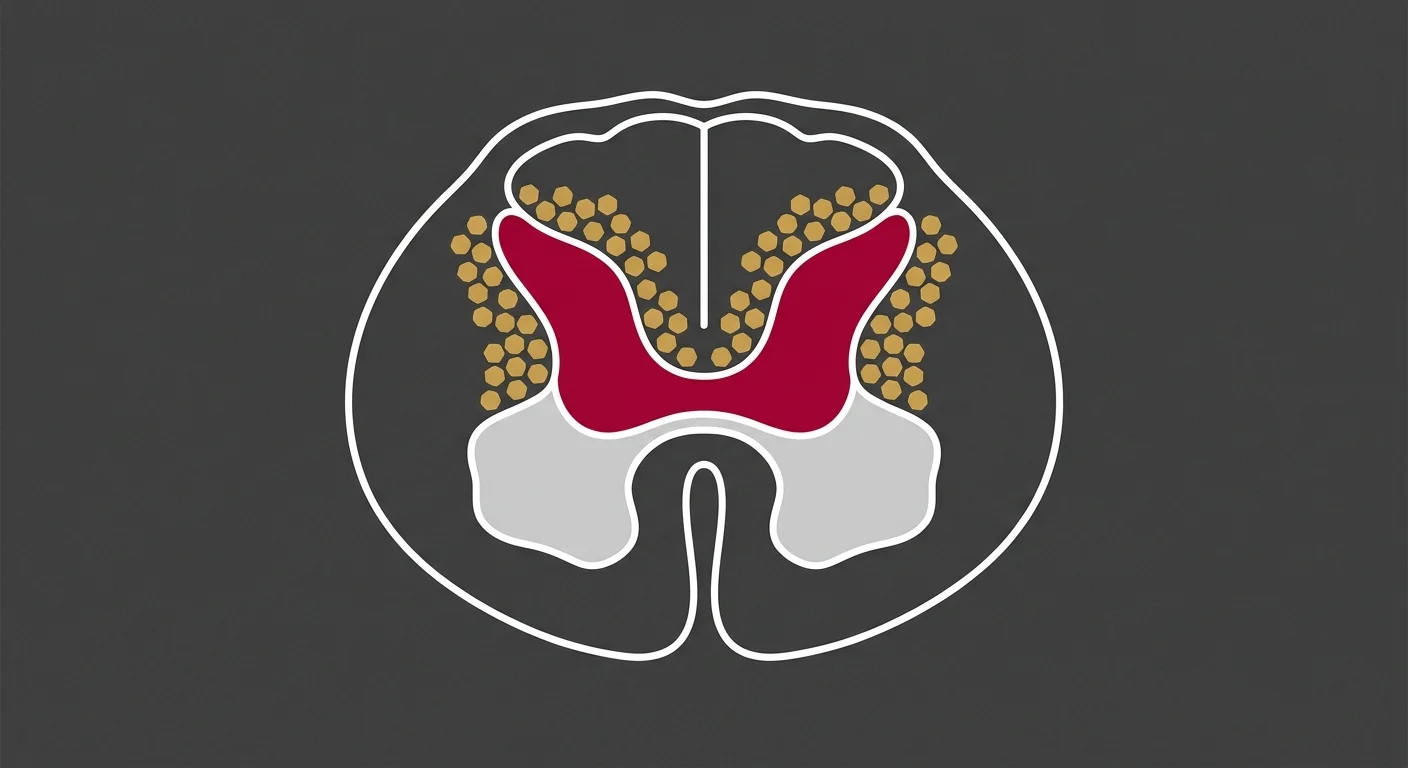
The mechanism behind this persistence is central sensitization. When pain signals fire repeatedly through the spinal cord, nociceptive neurons in the dorsal horn become hyper-responsive to normal sensory inputs. What was once a useful alarm system begins firing at stimuli that would not normally produce pain at all.
The original injury is healed. The nervous system has not gotten the message.
Glial cells — which account for roughly 70% of the cells in the central nervous system — actively release pro-inflammatory cytokines that sustain this heightened pain state. These are not signals from an injury site. They are signals from a nervous system that has been structurally and neurochemically rewired to keep producing pain on its own.
Neuropathic pain adds another layer. Healed or uninjured nerve structures can continuously misfire, sending aberrant signals to primary sensory areas of the brain. The original source of pain is completely resolved. The nervous system is still broadcasting.
This is why standard treatments aimed at the original injury site so often fail. The alarm is still screaming — not because there is danger, but because the wiring is broken.
Addressing chronic pain that outlasts its origin requires interrupting the nervous system's learned pain pattern — not managing the site where pain once began.
Last Updated: July 20, 2026
- • When the Injury Is Gone but the Pain Isn't: What's Actually Happening
- • Why Standard Medical Treatments Miss the Real Problem
- • The Chronic Pain Functional Rebirth Protocol: How Nervous System Resets Actually Work
- • Who This Is For — and Who It Isn't
- • What the Research Actually Says About Chronic Pain and the Nervous System
-
• Frequently Asked Questions About Chronic Pain After Healing
- • Why does my body still hurt if my X-rays and MRI are completely normal?
- • What is central sensitization, and can chiropractic care help resolve it?
- • How does the brain keep 'feeling' pain after the original tissue has healed?
- • What is the Chronic Pain Functional Rebirth protocol at Touch of Wellness Chiropractic?
- • Why do standard medical treatments fail to resolve chronic pain after an injury?
- • Your Nervous System Can Be Reset — But Only If Someone Starts There
When the Injury Is Gone but the Pain Isn't: What's Actually Happening
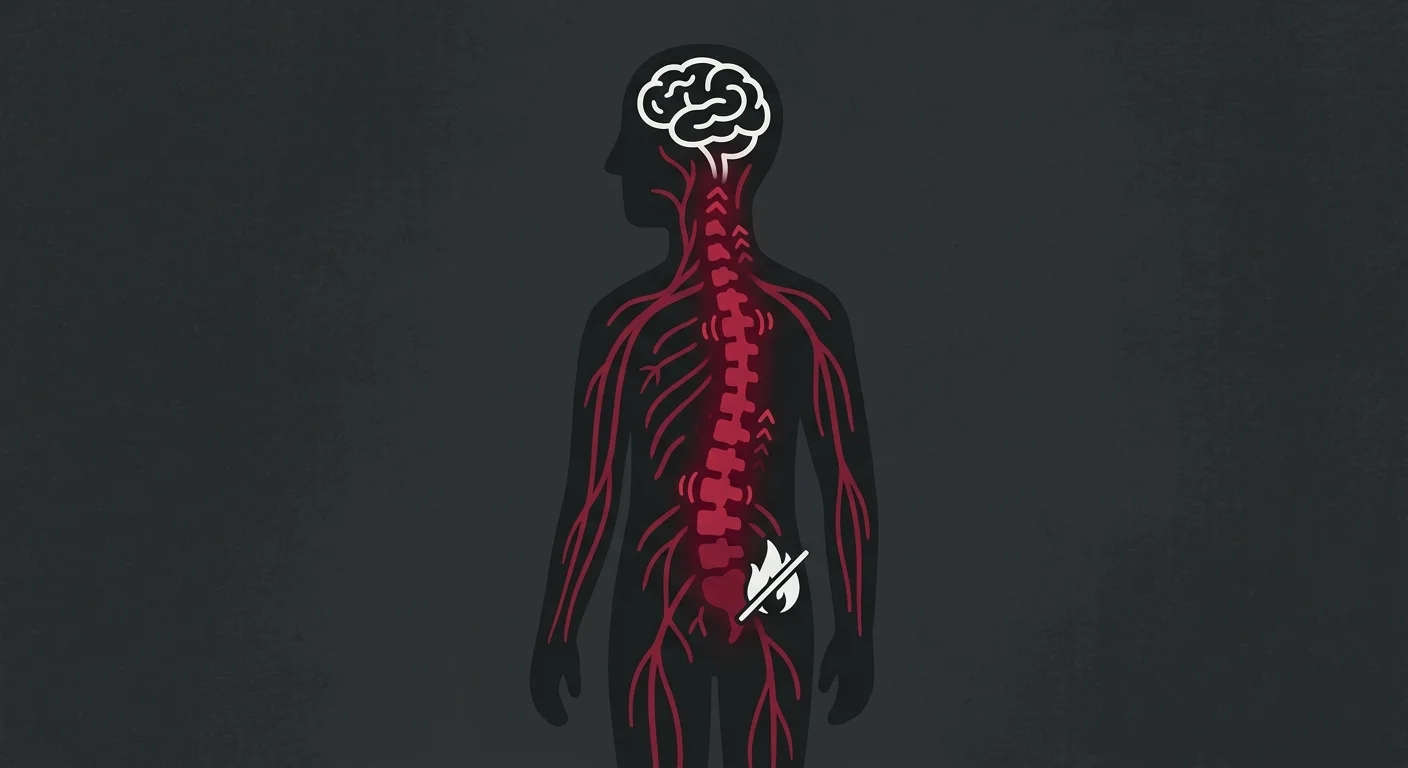
The imaging is clear. Physical therapy is done. You've been officially cleared. And the pain is still there every single morning, like it never got the memo.
That's not anxiety. It's not in your head. Your nervous system is running a program it was never told to stop.
Here's the analogy that actually fits. A smoke alarm that keeps screaming after the fire is out isn't detecting danger — it's malfunctioning. Your nervous system works exactly the same way. The original injury is gone. The alarm is still going. And the problem isn't the fire anymore. It's the wiring.
The Nervous System Becomes the Problem
Your nervous system isn't just carrying the pain signal. It's become the source of it.
When pain signals fire repeatedly through the spinal cord, the neurons that relay those signals — the nociceptive neurons in the dorsal horn — stop behaving normally. They get hyper-responsive. NIH research on central sensitization identifies this as central sensitization: the nervous system has been structurally recalibrated to amplify sensation. Inputs that wouldn't register as painful in a healthy system now trigger a full pain response. The original injury doesn't have to still be there. The wiring has already changed.
So when chiropractic care in Morton, IL stays locked on the original injury site, it's chasing a location that's no longer running the problem. The injury healed. The nervous system didn't reset. Those aren't the same thing — and treating them as if they are is exactly why chronic pain cases stay chronic.
Why Most Chronic Pain Explanations Stop Too Early
Most chronic pain explanations hit a ceiling. The disc is compressed. The nerve is irritated. The joint is inflamed. Treat the structure, close the case. That logic works — right up until the structure isn't the problem anymore. And for millions of people, it stopped being the problem a long time ago.
CDC data from 2021 puts the scale in plain terms: approximately 51.6 million U.S. adults — 20.9% of the population — were living with chronic pain. Another 6.9% were experiencing high-impact chronic pain actively interfering with work and daily life. That's not a population with unresolved injuries still in need of treatment. That's a population whose original conditions were addressed — and whose nervous systems never reset. The injury got treated. The alarm kept going.
What separates resolution from permanent management is understanding what's actually driving the signal — the learned pain pattern, the sensitized spinal cord, the brain rewired to expect pain even when there's nothing left to protect. That's where the Chronic Pain Functional Rebirth approach starts: not at the symptom site, but at the system generating the symptom.
| Stage | What the Body Is Doing | What the Patient Experiences | What Imaging Shows |
|---|---|---|---|
| Acute Injury | Tissue is damaged — muscles, tendons, joints, or nerves are physically compromised and generating legitimate pain signals | Sharp, localized pain tied directly to movement or contact at the injury site | Imaging typically confirms the structural problem — swelling, tear, disc compression, or fracture visible |
| Signal Overload | Pain signals fire repeatedly through the spinal cord, beginning to sensitize the neurons responsible for relaying those signals | Pain starts to spread or feel less predictable — it may flare without an obvious trigger and no longer maps cleanly to the original site | Imaging may still show the original injury but cannot capture the neurological pattern developing in the background |
| System Rewiring | The nervous system has been structurally recalibrated — nociceptive neurons in the dorsal horn are now hyper-responsive to normal sensory input | Ordinary touch, pressure, temperature, or movement triggers a full pain response — the brain is processing sensation as threat even when no new damage exists | Imaging is frequently normal or shows resolved injury — the structural source is gone, but the pain persists at full intensity |
| Functional Rebirth | The nervous system is actively being interrupted and recalibrated through an individualized care plan targeting the learned pain pattern, not just the original site | Pain begins to lose its grip — function returns, predictability improves, and the nervous system stops treating normal input as a crisis | Imaging remains unchanged — the visible structures are the same, but the neurological program driving the pain is being systematically addressed |
Why Standard Medical Treatments Miss the Real Problem
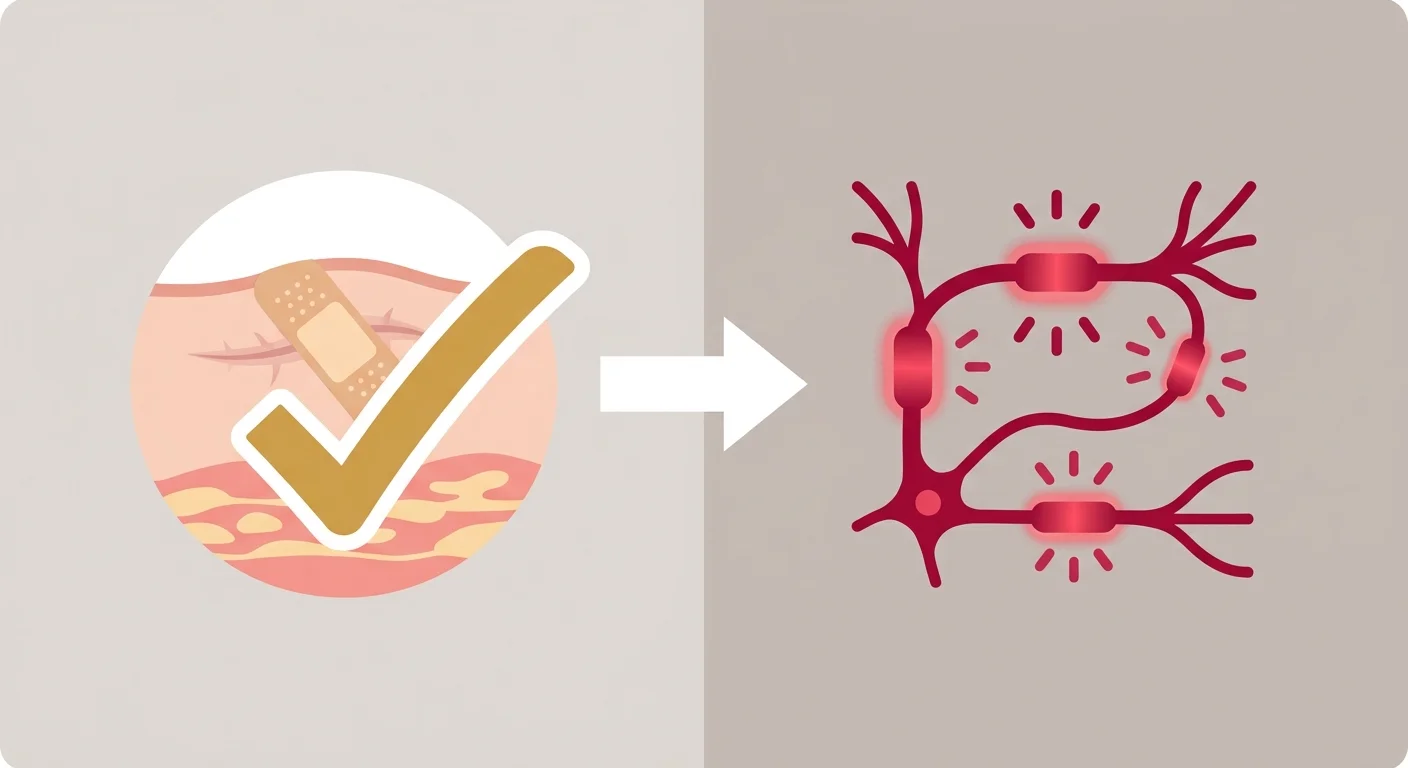
Standard medical care has one logic: find the source, treat the source, close the case. For acute injuries, that's exactly right. For chronic pain — the kind that outlasts the original injury by months or years — it's the wrong question entirely.
It's not that providers aren't trying. They're looking at the wrong place. When the nervous system has been rewired to generate pain on its own, going back to the injury site is like checking for smoke when the alarm itself is broken. There's nothing to find there. The problem moved.
Most chronic pain patients have already run the standard route. Imaging. Anti-inflammatories. Physical therapy. Maybe surgery. Some of it helped — for a while. None of it held. Because none of it touched what the nervous system had become.
Treating an Injury That No Longer Exists
Here's what actually happens. Once tissue heals, it stops generating the signal. The pathway doesn't stop. Pain now travels through first-order afferent neurons into second-order neurons in the dorsal horn — a relay that's been recalibrated to keep firing on its own schedule.
The body isn't detecting damage anymore. It's running a pattern it learned.
Healed nerve structures can keep misfiring anyway. Sending signals straight to the brain's primary sensory areas — not because there's damage, but because that's what the pathway was trained to do. The original injury is gone. The signaling pattern it left behind is not.
So when a provider goes back to the disc, the joint, the muscle — they're treating something that isn't the problem anymore. They're chasing the fire. The alarm is still going because the wiring never got fixed.
The Cookie-Cutter Protocol Problem in Chronic Pain Care
The cookie-cutter protocol problem in chronic pain care isn't about effort. It's about a bad assumption — that low-back pain is always low-back pain, that post-injury nerve symptoms follow a predictable arc, that unresolved sciatica responds the same way every time.
That assumption is what breaks the outcome.
A nervous system that's undergone central sensitization isn't the same system that came in after a fresh injury. The nociceptive neurons in the dorsal horn are hyper-responsive. An input that produces a normal reaction in a healthy nervous system produces an amplified one here.
Running the same protocol on that system doesn't reset it. It often reinforces it.
The cookie-cutter protocol is the clinical definition of failure — not because it never works, but because it was never designed for a nervous system that's learned to generate pain on its own. That's the gap standard care can't close.
Care that doesn't start with what the nervous system has actually learned to do keeps producing the same result. Temporary relief. Then right back to where the patient started.
| Treatment Approach | What It Targets | Why It Fails for Chronic Pain | What Gets Left Untreated |
|---|---|---|---|
| Imaging & Diagnosis (X-ray, MRI) | Structural damage at the original injury site | Once tissue heals, imaging shows normal results — but the nervous system's learned pain pattern remains active and invisible to imaging | Central sensitization, hyper-responsive pain pathways, and neurochemical rewiring that persist after structural resolution |
| Anti-inflammatory Medication | Localized tissue inflammation at the injury site | Reduces peripheral inflammation effectively for acute injuries — but does nothing to reset a nervous system that is now generating pain independently of any inflammatory source | The spinal cord's recalibrated pain signaling, aberrant nerve misfiring, and the brain's sustained expectation of pain |
| Standard Physical Therapy | Strength, mobility, and function at the original injury site | Restores mechanical function at the site — but cannot retrain a nervous system that has been structurally rewired to amplify sensation regardless of tissue condition | The nervous system's sensitized state, which continues producing pain signals even as the injured tissue regains full mechanical health |
| Surgery | Structural correction of the damaged tissue (disc, joint, nerve compression) | Resolves the structural source — but leaves the nervous system's learned pain pattern intact; post-surgical chronic pain is a well-recognized outcome precisely because the signaling pathway was never addressed | The neurological feedback loop the injury created, which continues operating after the structural problem has been corrected |
| Cookie-Cutter Adjustment Protocol | The presenting symptom or injury site using a fixed, repeated sequence | Applies the same intervention regardless of whether the patient's nervous system has undergone sensitization — reinforcing the existing pattern rather than interrupting it | The individualized neurological picture: what the nervous system has learned, how it has been recalibrated, and what it needs to reset |
The Chronic Pain Functional Rebirth Protocol: How Nervous System Resets Actually Work
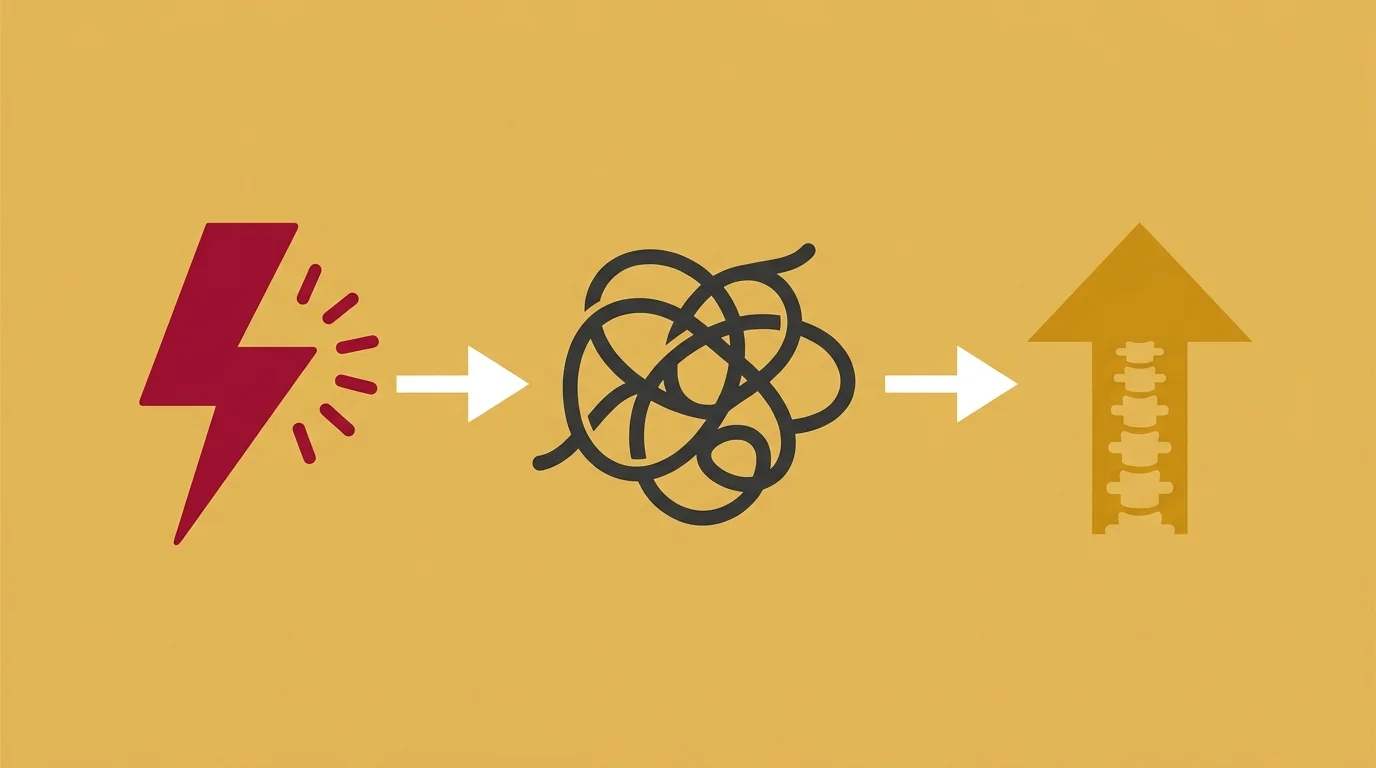
The Chronic Pain Functional Rebirth protocol isn't pain management. It's a nervous system reset — three phases, each one targeting what the nervous system has become, not where the original injury happened.
Most care plans are built around the injury. This one is built around the wiring.
Once the nervous system has been recalibrated to generate pain on its own, the injury site isn't the correct target anymore. The system running the alarm is.
The protocol moves through three phases: Signal Overload, System Rewiring, and Functional Rebirth.
Each one addresses a distinct stage in how the nervous system gets stuck — and how it gets unstuck. Each phase requires a different clinical response. None of them can be skipped.
Phase 1 — Signal Overload: What Triggers the Rewiring
Signal Overload is the window between an acute injury and the moment the nervous system stops treating that injury as temporary.
Pain signals fire repeatedly through the spinal cord. Nociceptive neurons in the dorsal horn respond — first appropriately, then compulsively. That's the hinge point. And most patients never know it's happening.
That's the rewiring trigger. Repeated high-volume signaling teaches the dorsal horn to stay activated. The system doesn't wait for a new injury to fire — it fires because it's learned to.
And the longer that input continues, the more entrenched the pattern becomes.
Here's what makes Signal Overload so hard to catch: from the outside, it looks like nothing.
Imaging is clear. Bloodwork is normal. The tissue has healed. But pain signals are still moving through first-order afferent neurons into second-order neurons in the dorsal horn — and the relay hasn't been told to stand down. That's what persistent signaling after medical clearance actually looks like at the neurological level: a system still broadcasting with nothing left to report.
Phase 2 — System Rewiring: How the Brain Locks In the Pain Loop
By Phase 2, the nervous system isn't just sensitized — it's structurally committed. The pain loop is locked in.
Glial cells make up roughly 70% of the cells in the central nervous system. And according to NIH research on neuroinflammation, they're actively releasing pro-inflammatory cytokines that sustain the heightened pain state. This isn't inflammation from an injury. It's inflammation the nervous system is generating on its own.
This is where most patients stop getting answers. They've been cleared by imaging. They've finished therapy. The original injury is resolved.
Every clinical pathway loops back to the same conclusion: nothing is wrong.
Nothing is wrong with the tissue. The nervous system is the problem. That distinction changes everything about what the care has to look like — and most providers never make it.
And that's why an acute-injury protocol produces almost nothing here.
The system isn't responding to an insult anymore. It's running a pattern. Repeating the same inputs into a nervous system that's been recalibrated to amplify them doesn't interrupt that loop. It feeds it.
Phase 3 — Functional Rebirth: What a Nervous System Reset Requires
Functional Rebirth isn't a metaphor. It's the clinical target.
The point where the nervous system stops generating pain signals independent of any ongoing injury — and starts responding proportionally to actual input again. The smoke alarm stops screaming not because someone covered it, but because the wiring has been fixed.
Getting there requires care that's individualized to where a patient's nervous system actually is — not where a protocol assumes it should be.
At Touch of Wellness Chiropractic, that means assessing the degree of central sensitization, identifying which signals the nervous system has locked in, and selecting modalities that interrupt the pattern rather than layer on top of it. Cold laser therapy is one of the tools used in this phase — specifically because it works at the cellular level, reducing neuroinflammation without adding mechanical input to an already hyper-responsive system.
The goal of every Phase 3 care plan isn't to manage what the nervous system is doing. It's to change what it does on its own.
Two patients. Same presenting complaint. Two completely different outcomes — depending entirely on whether the care targeted the pattern or just the pain.
| Protocol Phase | What Is Happening Neurologically | Clinical Goal | Modalities That Address It |
|---|---|---|---|
| Signal Overload (Phase 1) | Nociceptive neurons in the dorsal horn begin responding compulsively to repeated pain signals — even as the original tissue injury heals. The relay fires not because of new damage, but because it has been conditioned to stay active. | Interrupt the high-volume signaling pattern before the nervous system locks it in as a permanent state. Reduce the neurological load without adding mechanical stress to an already sensitized system. | Individualized chiropractic adjustment sequencing; modality selection calibrated to the patient's current sensitization level rather than a standard post-injury protocol. |
| System Rewiring (Phase 2) | The pain loop is structurally committed. Glial cells are actively releasing pro-inflammatory cytokines that sustain the heightened pain state. The nervous system is no longer responding to an insult — it is running a learned pattern independent of any ongoing tissue damage. | Break the neuroinflammatory cycle driving the locked-in signaling. Shift the nervous system out of a sustained high-alert state by targeting the cellular environment maintaining it — not just the surface symptom. | Cold Laser Therapy (cellular neuroinflammation reduction without added mechanical input); care plan reassessment checkpoints to confirm the pattern is shifting, not reinforcing. |
| Functional Rebirth (Phase 3) | The nervous system has stopped generating pain signals independently and is beginning to respond proportionally to actual sensory input again. The wiring is being recalibrated rather than simply suppressed. | Restore proportional nervous system response — the clinical endpoint where the system stops triggering on its own. The goal is not pain management; it is changing what the nervous system does without intervention. | Modality selection shifts toward reinforcing correct signaling patterns; care frequency tapers as the nervous system demonstrates sustained calibration; functional reassessment confirms the rebirth endpoint has been reached. |
Who This Is For — and Who It Isn't
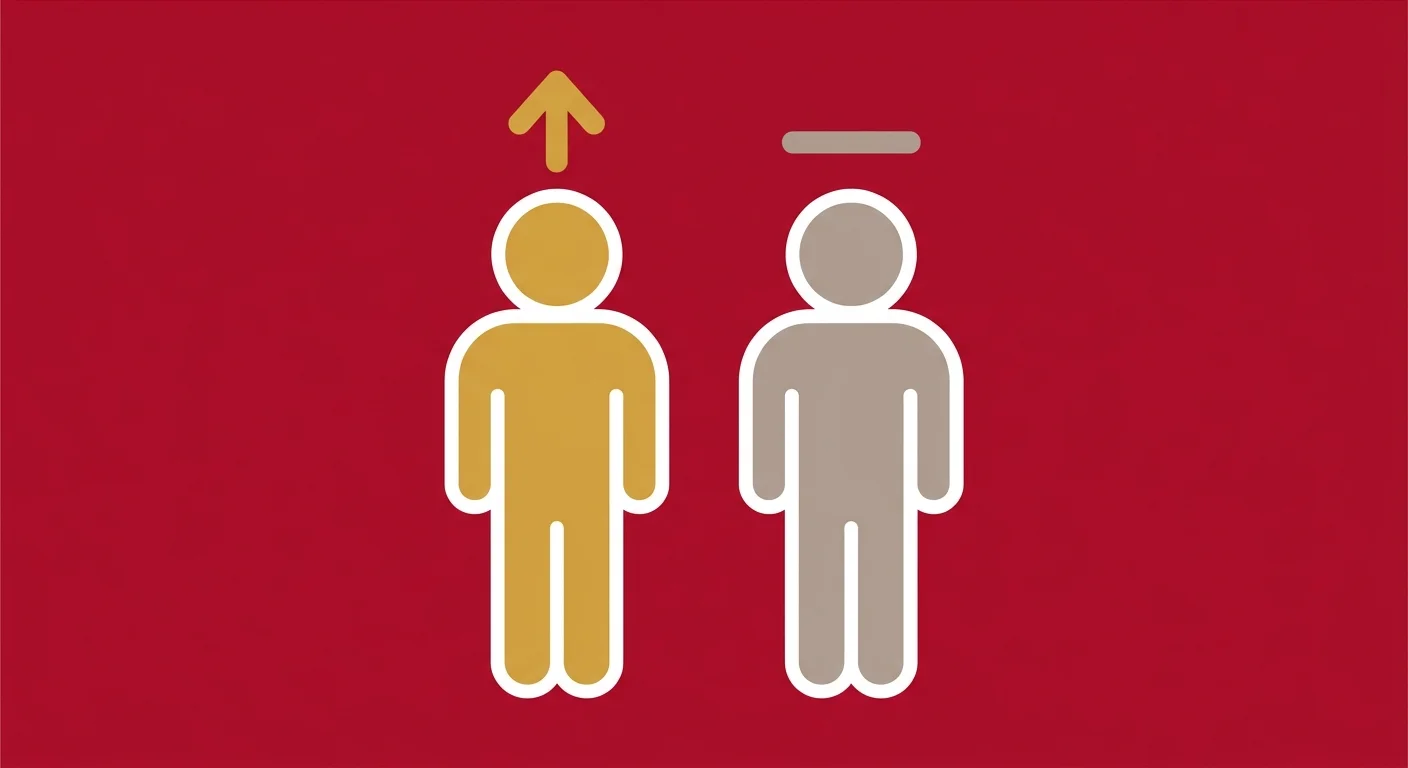
The Chronic Pain Functional Rebirth protocol wasn't designed for someone walking in on day one.
It was built for the person who's already done everything — and keeps landing in the same place.
That distinction has clinical weight.
This isn't a two-visit trial. It's a process — and it demands full commitment, not selective participation. Being honest about fit is part of being honest about care.
The Right Patient for Nervous System Care
The right patient is someone whose pain has outlasted its original cause. According to NIH's clinical threshold, chronic pain is pain that persists for 12 weeks or longer — with nervous system activity staying elevated long after the triggering event is gone.
That's the dividing line. On one side, the injury is the problem. On the other, the nervous system is. Those require completely different approaches.
They've had the imaging. They've been cleared. And then they've been handed a verdict — 'nothing is wrong' — with zero explanation for why the pain is still there.
That experience does damage. The psychological weight of being told nothing is wrong is real — patients who've been dismissed tend to arrive either over-trusting or already guarded. Both are understandable. Neither makes care easier.
This protocol also fits someone who's noticed a very specific cycle: standard care produces relief — maybe two weeks, maybe a month — and then the pain comes back, right to baseline.
That's not bad luck. That's a nervous system that hasn't reset.
It's the exact pattern that advanced shockwave therapy and the broader protocol are built to interrupt — not at the symptom level, but at the system level.
If This Doesn't Sound Like You, That's Important Information
If you're looking for a single-visit fix, stop here. This isn't it.
The nervous system didn't get rewired overnight. It won't reset that way either.
And if you need every session to mirror what a previous provider did — before this practice has run a single assessment — that's a problem before care even starts.
The assessment drives the care plan here. Not prior habits. Not another chiropractor's sequence. That's not a preference. That's the clinical standard.
And if you won't engage the full process, this protocol will underperform — not because of the approach, but because of the gap you leave in it.
Partial commitment produces partial results. Every time.
The alarm is still firing — not because there's danger, but because the wiring is broken. You don't fix that by occasionally checking the battery. You have to address the wiring. And that requires showing up for the whole job.
What the Research Actually Says About Chronic Pain and the Nervous System
None of this is theory. It's documented biology — and the research behind it is some of the most important work in modern pain science.
Neuroscience caught up to what patients were reporting — and it changed the entire clinical picture. What got labeled 'pain that won't go away' is now understood as a specific, measurable failure of nervous system regulation.
The mechanisms are real. The pathways are mapped. And once you see them clearly, what care actually has to look like stops being a mystery.
Here's what the science actually says — and why it backs every clinical decision in the Chronic Pain Functional Rebirth protocol.
Central Sensitization: The Science Behind the Stuck Signal
Central sensitization is the piece most people never get explained to them — and it's the reason chronic pain outlasts its origin. It's not a diagnosis. It's a physiological state where the nervous system has been trained to amplify input that wouldn't register as painful in a healthy system.
That distinction matters more than most providers let on. The problem isn't the injury anymore. The problem is what the injury taught the nervous system to do.
Here's how it works. Pain signals travel from the injury site through first-order afferent neurons into second-order neurons in the dorsal horn of the spinal cord. Under normal conditions, that relay quiets once the injury resolves.
But when pain signals fire repeatedly over time, the nociceptive neurons in the dorsal horn don't quiet down — they become hyper-responsive. The relay stays open. Normal sensory input starts registering as dangerous, whether anything dangerous is actually happening or not.
That's the stuck signal. The smoke alarm keeps screaming — not because there's still a fire, but because the wiring learned to default to alarm.
Neuropathic presentations make this even more pronounced. Healed or structurally uninjured nerve structures can keep misfiring — sending aberrant signals directly to the primary sensory areas of the brain, long after there's nothing left to report. The original source is gone. The signal isn't.
Glial Cells and the Inflammation That Won't Switch Off
Central sensitization explains the neuron-level breakdown. But there's another layer running in parallel — one most treatments never touch.
Glial cells make up roughly 70% of all cells in the central nervous system. They don't transmit pain signals directly — but they don't need to.
When the nervous system shifts into a chronic pain state, glial cells begin releasing pro-inflammatory cytokines that sustain and reinforce the heightened signaling environment. They keep the neurological conditions for pain active even when the original trigger is long gone.
That's why treatments aimed only at the injury site keep hitting a ceiling. The tissue healed. The glial cell inflammatory signaling didn't switch off.
You're not dealing with a localized problem. You're dealing with a system that's been chemically instructed to stay in a pain state. Interrupting that requires care directed at the system — not just the location where the pain first showed up.
| Neurological Mechanism | What It Does to the Pain Signal | How Long It Can Persist | Clinical Implication |
|---|---|---|---|
| Central Sensitization | Nociceptive neurons in the dorsal horn become hyper-responsive, interpreting normal sensory input as dangerous pain signals | Persists indefinitely once the dorsal horn neurons are trained into a hyper-responsive state — does not self-resolve without targeted nervous system intervention | Treating the original injury site alone cannot interrupt this loop — care must address the sensitized signaling pathway directly |
| Glial Cell Neuroinflammation | Glial cells — roughly 70% of all central nervous system cells — release pro-inflammatory cytokines that sustain and reinforce the chronic pain state | Continues as long as the glial inflammatory signaling environment remains active, independent of whether the original tissue injury is present | Modalities must reduce neuroinflammation at the system level — localized tissue treatments cannot reach or interrupt glial cytokine activity |
| Aberrant Neuropathic Misfiring | Healed or structurally uninjured nerve structures continue sending aberrant signals to primary sensory areas of the brain — with no active injury driving them | Can persist long after the original triggering event has fully resolved, as the misfiring pattern becomes self-sustaining within the nerve pathway | Pain that persists despite normal imaging and 'nothing is wrong' clearance is not psychological — it is a measurable neuropathic signaling failure requiring nervous system care |
| Dorsal Horn Relay Pathway | First-order afferent neurons transmit peripheral pain signals to second-order neurons in the dorsal horn, which then relay them to cortical brain regions — creating the conscious experience of pain | Under normal conditions, this relay quiets once injury resolves; in sensitized systems, the relay pathway remains open and active regardless of peripheral input | Effective chronic pain care must interrupt transmission at the relay level — not only at the peripheral site where the original signal originated |
Frequently Asked Questions About Chronic Pain After Healing
The science explains what's happening. But most patients don't arrive with questions about nociceptive neurons. They arrive with one question: why am I still in pain when every test says I'm fine?
Standard care tends to skip these questions. Here's what the clinical picture actually shows.
Why does my body still hurt if my X-rays and MRI are completely normal?
Normal imaging means the original tissue is healed. It doesn't mean the nervous system reset.
Chronic pain — defined as pain persisting for 12 weeks or longer — lives in the nervous system's signaling pathways. Not the tissue. The nociceptive neurons in the dorsal horn can become hyper-responsive, generating pain signals long after there's nothing left to detect.
The X-ray clears the structure. It can't clear the wiring.
What is central sensitization, and can chiropractic care help resolve it?
Central sensitization isn't a diagnosis. It's a physiological state — what happens when pain signals fire repeatedly and the nervous system's relay never quiets back down.
Normal sensory input starts getting read as dangerous. The system doesn't reset on its own just because the original injury is gone.
Chiropractic care, applied correctly, works to interrupt that amplification at the system level. That means reducing mechanical interference in the nervous system's primary communication pathway — not running the same protocol regardless of how the system is actually responding.
How does the brain keep 'feeling' pain after the original tissue has healed?
Healed nerve structures can still misfire. When they do, they send aberrant signals directly to the brain's primary sensory areas — signals that register as pain even when the originating tissue is intact.
The brain doesn't check whether the threat is real. It responds to the signal.
That's the stuck alarm. The fire is out. The wiring is still triggering. And until the signal changes, the brain keeps responding to something that isn't there anymore.
What is the Chronic Pain Functional Rebirth protocol at Touch of Wellness Chiropractic?
The Chronic Pain Functional Rebirth protocol is an individualized, three-phase approach to nervous system care at Touch of Wellness Chiropractic.
Phase 1 — Signal Overload — addresses the acute state of nervous system amplification. Phase 2 — System Rewiring — targets the neurological and inflammatory patterns keeping the pain state active. Phase 3 — Functional Rebirth — restores proportional signaling so the nervous system responds to actual input, not phantom threat.
Every phase is built from what you actually report. Not from what a protocol assumes you should need before anyone's looked at what your nervous system has learned to do.
Why do standard medical treatments fail to resolve chronic pain after an injury?
Standard treatments are built around the injury site. When the injury is gone, the target disappears — and the treatment runs out of road.
But chronic pain isn't a tissue problem at that point. It's a system problem. The 20.9% of U.S. adults living with chronic pain aren't there because their injuries were undertreated. They're there because care never got past the original complaint.
Treatments that quiet local inflammation don't interrupt central sensitization. They don't address the glial cell activity sustaining the neuroinflammatory environment. They don't reset signaling patterns that have been locked in for months.
That's not a failure of the patient. It's a mismatch between the tool and the actual problem.
Your Nervous System Can Be Reset — But Only If Someone Starts There
The smoke alarm doesn't stop screaming because you learned to live with the noise.
It stops because someone fixed the wiring.
That's the whole gap — between every approach that's failed you and the one that won't.
Persistent pain after an injury heals isn't a mystery. It isn't in your head.
It's a nervous system that moved through Signal Overload and into System Rewiring — without anyone catching it. Without anyone building care around what the system had actually become.
The Chronic Pain Functional Rebirth protocol exists because that stuck state is reversible. But only when care starts at the system level — not the symptom level. At Touch of Wellness Chiropractic, that's where Dr. Karen Hannah begins every single assessment. Not at the injury. At the wiring.
The choice isn't between waiting it out and trying one more thing.
It's between treating a ghost — the injury site that already healed — or addressing the system that never got the message.
The Chronic Pain Functional Rebirth protocol is a clinical answer to a clinical problem. But it only works if someone is willing to start at the right place. The alarm is still screaming — not because there's danger, but because the wiring is broken.
The alarm is still screaming — not because there's danger, but because the wiring is broken. That's not a dead end. That's exactly where this work starts. An assessment at Touch of Wellness Chiropractic begins with what you actually report. Not a protocol decided before anyone's looked at what your nervous system has learned to do. Not a care plan handed over before the evaluation is finished. If you're done treating the injury site that already healed, Book Appointment.
Copyright Touch of Wellness Chiropractic 2026
1101 W Jackson St, Suite A Morton, IL 61550
Web Design by iTech Valet