
(309) 321-8412 | 1101 W Jackson St, Suite A, Morton, IL 61550
(309) 321-8412 | 1101 W Jackson St, Suite A, Morton, IL 61550
Does Chiropractic Care Effectively Lower Systemic Cortisol Levels?
Chiropractic care lowers systemic cortisol. The mechanism is biological, not incidental.
Spinal adjustments directly influence the hypothalamic-pituitary-adrenal (HPA) axis — the body's primary stress-regulation pathway. When mechanical dysfunction in the spine disrupts nervous system signaling, the HPA axis stays in chronic activation. Cortisol stays elevated. Resolving that dysfunction resets the signaling environment, and cortisol drops as a direct result.
The evidence is specific. Salivary cortisol decreased by an average of 15% immediately following spinal adjustment in healthy cohorts. Control groups receiving no intervention showed no change in their diurnal stress curves. Systemic inflammatory markers — including epinephrine — decreased within a two-hour window post-treatment. These are measurable, reproducible physiological shifts.
The autonomic shift is equally documented. Heart rate variability (HRV) — the clinical marker for autonomic balance — showed an average 20% increase in parasympathetic activity indices following spinal care. A sympathetic-to-parasympathetic ratio shift was documented in 75% of active cohort participants. That is the body moving out of fight-or-flight and into recovery. It does not happen by chance.
The upstream cause matters. Chronic spinal joint dysfunction correlates with a baseline cortisol elevation of 18% compared to pain-free controls. When something goes wrong mechanically, the entire system runs hotter. Nociceptive input attenuation following a chiropractic adjustment lasts up to 45 minutes post-treatment — a measurable window for the nervous system to recalibrate.
Cortisol reduction through chiropractic care is not a wellness bonus. It is what happens when the mechanical source of chronic nervous system activation is resolved directly.
Last Updated: June 22, 2026
- • Your Spine Is Wired Into Your Stress Circuit
- • Why the Standard Stress Fix Misses the Source
- • What the Research Actually Shows About Spinal Adjustments and Cortisol
- • What to Realistically Expect From Chiropractic Stress Care
-
• Frequently Asked Questions
- • Can a single chiropractic adjustment immediately lower my stress levels?
- • How do spinal misalignments trigger systemic cortisol release?
- • What physiological markers prove chiropractic care reduces physical tension?
- • How many treatments are typically needed to regulate my nervous system?
- • Can chiropractic care replace medication for chronic stress management?
- • Is the cortisol reduction from chiropractic care just a placebo effect?
- • The Nervous System Doesn't Lie
Your Spine Is Wired Into Your Stress Circuit
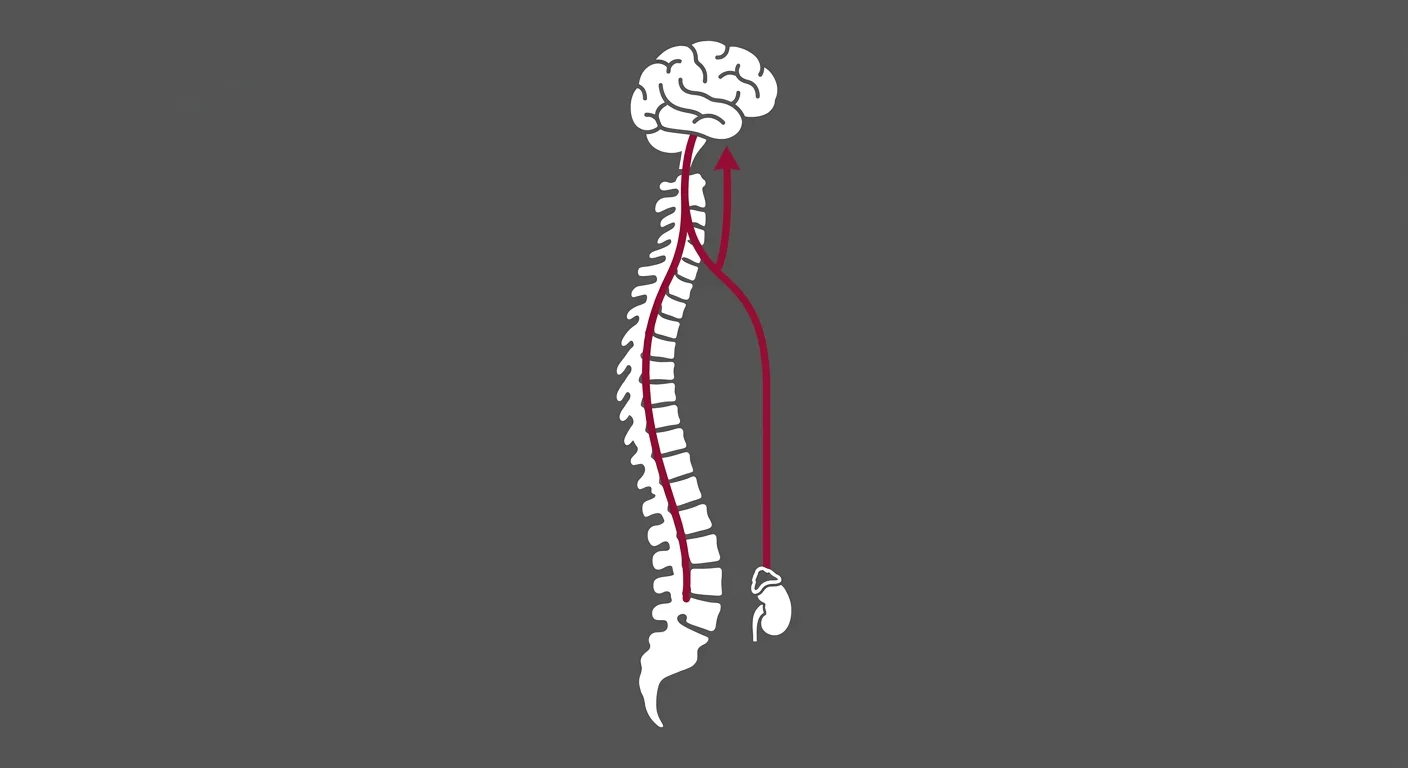
Your spine isn't just holding you upright.
It's a hard-wired input node in the body's stress-regulation circuit. When that node sends corrupted signals, the entire system responds — and it doesn't stop responding until the mechanical source gets fixed.
Here's what most people miss: chronic spinal joint dysfunction doesn't just cause local pain. It keeps the body's stress machinery running at an elevated baseline.
Research shows individuals with chronic spinal pain carry an 18% higher resting cortisol level compared to pain-free controls. That's not a pain symptom. That's a systemic condition with a mechanical cause.
That elevated baseline is the tripped breaker.
Your spine feeds continuous mechanical input into the central nervous system. When that input gets disrupted, the downstream stress response doesn't switch off. It runs hot — indefinitely — until someone addresses the mechanical source.
The HPA Axis: How Spinal Input Reaches Your Cortisol Output
The pathway connecting your spine to your cortisol output runs through the hypothalamic-pituitary-adrenal (HPA) axis — the body's primary command line for stress hormone production.
Spinal mechanical dysfunction dysregulates this axis directly. It drives sustained cortisol and epinephrine output that has nothing to do with psychological pressure. The input is physical. The output is hormonal.
NIH-published research confirms that spinal adjustment modulates the HPA axis at the level of endocrine pathways — producing measurable changes in cortisol and epinephrine levels. Systemic inflammatory markers dropped within a 2-hour window post-treatment.
That's not a relaxation response. That's a biological cascade triggered by mechanical input change. The distinction matters clinically — because it determines whether you're treating the cause or managing the output.
And the NIH research on HPA axis modulation is specific about where the signal originates. The cervical and thoracic spine are primary receptor sites feeding directly into hypothalamic regulation.
Resolving dysfunction at those sites doesn't just reduce local tension. It changes the hormonal environment systemically. For patients pursuing individualized chiropractic care, that distinction — structural input driving endocrine output — is the clinical foundation of every care decision made here.
Why Cookie-Cutter Stress Protocols Miss This Entirely
Most stress-reduction protocols treat cortisol as a psychological problem.
Breathwork, supplementation, sleep hygiene — all valid tools. All addressing the output. None of them address the mechanical input driving the HPA axis into chronic overdrive.
That's the gap. And it's exactly where cookie-cutter wellness protocols fail the patients who've tried everything else.
If your spine is feeding dysregulated mechanical signals into the nervous system around the clock, no breathing exercise changes the 18% baseline cortisol elevation that spinal dysfunction produces. The input is still running. The output follows.
Patients working through nervous system stress recovery recognize this gap when they finally connect their unresolved tension — the kind that never fully lifts between sessions — to a structural source rather than a mental one.
That recognition changes everything about how care gets structured. It moves the conversation from coping strategies to root-cause resolution.
So if a protocol doesn't account for spinal mechanics, it's not treating the stress circuit.
It's decorating around it.
| Stress Signal Source | Biological Pathway | Downstream Cortisol Effect | Reversible With Spinal Care |
|---|---|---|---|
| Mechanical spinal joint dysfunction | Disrupts afferent nerve signaling into the central nervous system; activates HPA axis via sustained nociceptive input | Chronically elevated resting cortisol; sympathetic nervous system locked in high-arousal state | Yes — resolving joint dysfunction removes the mechanical trigger driving HPA activation |
| Cervical and thoracic receptor site dysregulation | Primary sensory receptor sites in the upper spine feed directly into hypothalamic regulation pathways | Sustained epinephrine and cortisol output independent of psychological stressors | Yes — targeted spinal adjustment at primary receptor sites resets hormonal signaling environment |
| Psychological and environmental stressors | Activates HPA axis via cognitive and emotional processing centers in the brain | Acute cortisol spikes that typically resolve once the stressor passes | Partially — spinal care addresses the structural baseline; psychological stressors require additional approaches |
| Systemic inflammatory load from chronic spinal pain | Persistent nociceptive signaling elevates pro-inflammatory cytokines; feeds back into adrenal output | Elevated baseline cortisol compounded by inflammatory cascade; no natural off-switch without mechanical resolution | Yes — reducing mechanical source of inflammation lowers adrenal demand and normalizes stress hormone baseline |
| Autonomic imbalance (sympathetic dominance) | Spinal dysfunction suppresses parasympathetic tone; body cannot shift into recovery mode between stress events | Cortisol fails to clear between activation cycles; cumulative hormonal load builds over time | Yes — restoring spinal mechanics supports the autonomic shift from sympathetic dominance to parasympathetic recovery |
Why the Standard Stress Fix Misses the Source
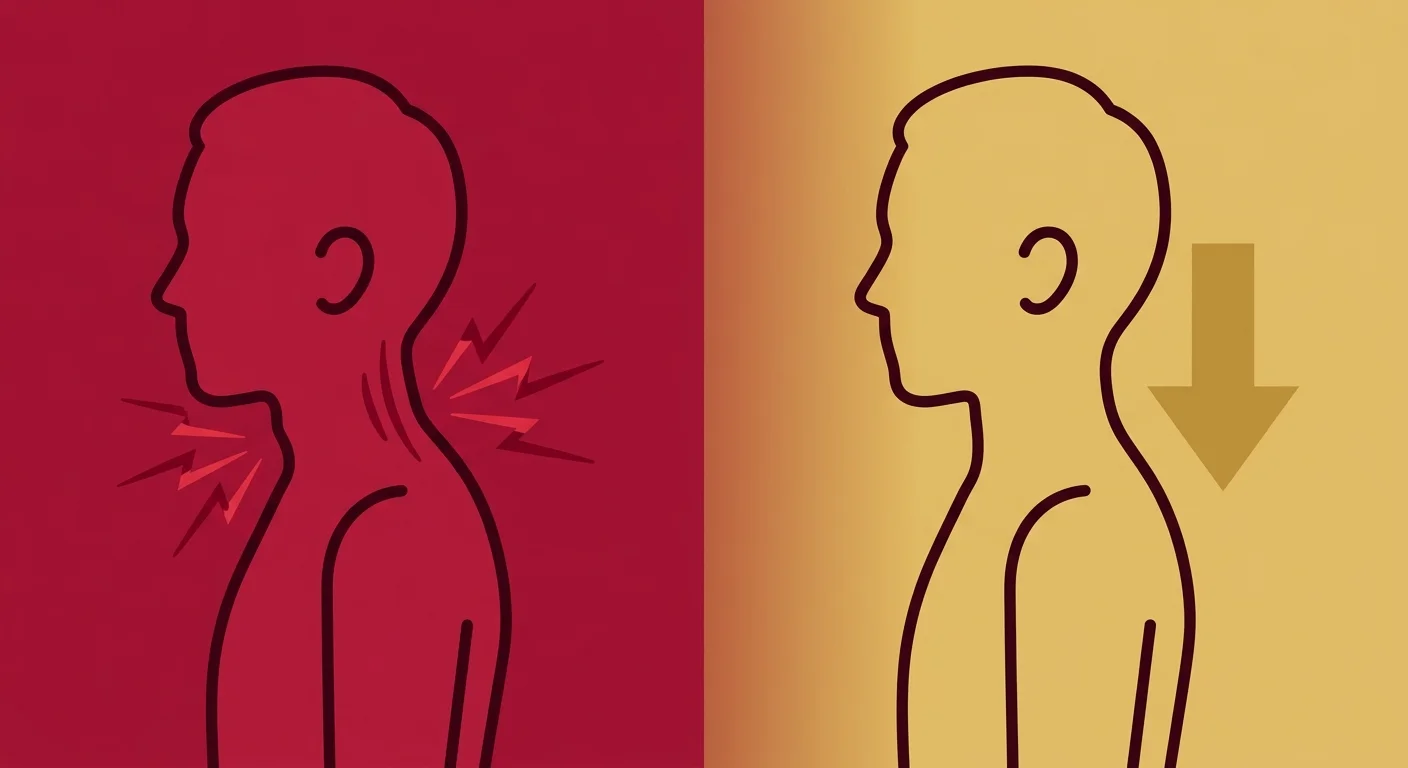
Most stress-reduction protocols start in the wrong place. They target cortisol elevation, anxiety, and fatigue as if those are the root conditions. They are not. They are outputs.
Here's the thing: when the mechanical input driving the stress circuit stays unresolved, managing the outputs is exactly as effective as treating smoke while ignoring the fire. The cortisol keeps climbing. The tension keeps returning. And the patient keeps trying the next recommended intervention.
That is not a wellness failure. That is a diagnostic one. The stress-related tension is a biological issue — not a psychological habit to retrain or a symptom to suppress. Until the mechanical source feeding the HPA axis is addressed, every downstream fix is temporary by design.
Treating Outputs Instead of Inputs: The Mechanism of Failure
Breathwork, supplementation, sleep hygiene — none of those are wrong. But they all work at the output level. They regulate how the body responds to a signal that is still being generated.
The signal itself originates mechanically. Chronic spinal joint dysfunction keeps the central nervous system in sustained excitation — which is exactly why spinal pain cohorts carry an 18% higher resting cortisol baseline compared to pain-free controls. That is not stress-induced back pain. That is spinal dysfunction driving elevated cortisol output independent of any psychological pressure. Understanding how spinal adjustments calm the body's fight-or-flight circuit makes the case clear: the input must change before the output can stabilize.
The neurophysiology is not ambiguous. After a chiropractic adjustment, nociceptive sensory input attenuation holds for up to 45 minutes — a measurable recovery window no supplement or breathing protocol can replicate. Central motor excitability shifted by up to 25% following joint cavitation. That is not a relaxation response. That is a mechanical intervention producing verifiable neurological change.
Who This Type of Care Is Not For
This type of care is not for everyone. That is not a disclaimer. It is clinical honesty.
If you arrive expecting to replicate exactly what a previous provider did — regardless of whether it produced results — this is not the right fit. Assessment drives care here. Not habit, not billing calendars, not a protocol someone imported from another practice. If the mind is already closed before the evaluation starts, that is useful information for both parties. The Skeptic Who Won't Suspend Judgment is not well-served by any individualized care model — including this one.
But if you have been managing outputs — tension, fatigue, elevated stress that never fully lifts — and you are ready to look at the structural source, that is a different conversation. Touch of Wellness Chiropractic builds care plans from what patients actually report. When something is not producing results, the plan changes. The same sequence does not get run on every presenting condition. That is the clinical standard here. None of it is optional.
| Common Stress Intervention | What It Targets | What It Leaves Unresolved | Clinical Limitation |
|---|---|---|---|
| Breathwork / Meditation | Autonomic arousal response — slowing breath rate to shift perceived stress state | Mechanical spinal dysfunction feeding continuous excitatory input into the central nervous system | Regulates the body's response to the signal; does not change the signal's source |
| Nutritional Supplementation | Downstream hormonal output — supporting adrenal function and cortisol metabolism | Spinal joint dysfunction driving sustained HPA axis activation independent of diet | Addresses what the body produces under stress; leaves the structural trigger intact |
| Sleep Hygiene Protocols | Recovery window quality — improving conditions for cortisol clearance overnight | Elevated resting cortisol baseline caused by chronic spinal pain and nociceptive input | Cannot lower a baseline that is being mechanically maintained around the clock |
| Exercise / Physical Activity | Sympathetic regulation through metabolic output — burning off stress hormones acutely | Underlying spinal dysfunction that continues generating excitatory nervous system input between sessions | Temporarily reduces cortisol load without resolving the structural driver of chronic elevation |
| Talk Therapy / Cognitive Reframing | Psychological interpretation of stress — changing how the mind processes perceived threat | Mechanical spinal input to the HPA axis, which operates independent of psychological state | Targets a mental output loop while a biological input signal continues unaddressed |
What the Research Actually Shows About Spinal Adjustments and Cortisol
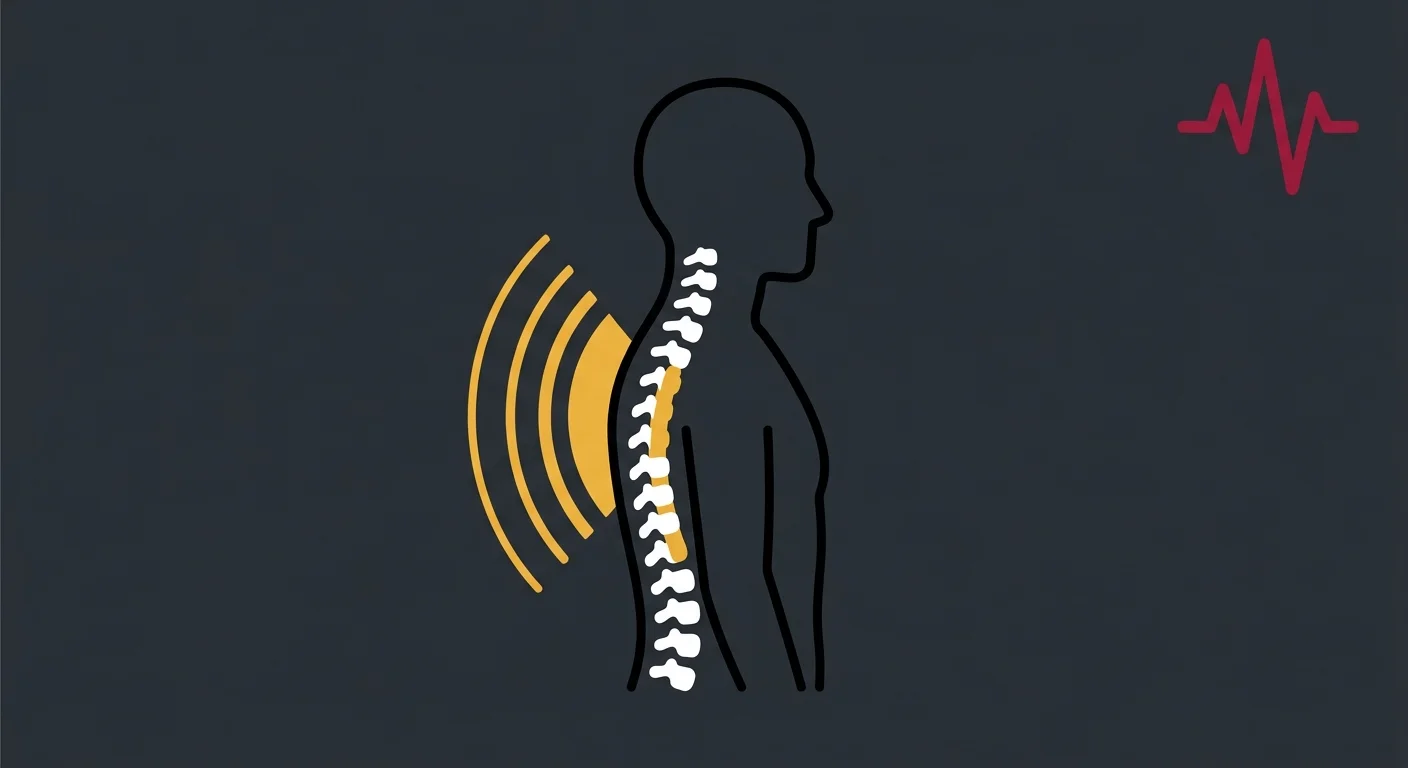
The research isn't subtle. When a chiropractic adjustment resolves a dysfunctional spinal segment, the body's stress biomarkers shift — measurably, reproducibly, and fast.
And it's not a placebo. It's not a reported feeling. It shows up in saliva, blood, and autonomic monitoring data — hormonal, endocrine, and neurological, all at once.
That data directly challenges the assumption that stress is a psychological condition requiring a psychological fix. The spine is a structural input to the nervous system. When that input changes, the system changes with it — including the hormonal environment that determines whether the body stays locked in fight-or-flight or finally shifts into recovery.
Salivary Cortisol, HRV, and What the Biomarkers Reveal
Salivary cortisol is one of the cleanest markers for tracking acute stress hormone output. NIH-published findings show it responds directly to spinal care — cortisol dropped by an average of 15% immediately following intervention in healthy cohorts. The control group's diurnal stress curves stayed flat without physical intervention. That gap between the two groups is the signal. It doesn't require interpretation.
The HRV data confirms what the cortisol numbers start to reveal. Heart rate variability is the clinical marker for autonomic balance — the ratio of sympathetic to parasympathetic activity running your nervous system at any given moment. When that ratio tips toward sympathetic dominance, the body stays locked in stress mode. Published autonomic research shows an average 20% increase in parasympathetic activity indices following spinal care. A sympathetic-to-parasympathetic ratio shift was documented in 75% of active cohort participants. That's the stress circuit resetting — not metaphorically, but physiologically.
So together, these biomarkers tell a consistent story: address the mechanical dysfunction, and the downstream hormonal and autonomic environment responds. That's why tension has a biological root — not just a psychological one — and why these numbers matter. The nervous system isn't holding onto stress because of attitude. It's holding onto stress because the structural input driving it hasn't changed.
How the Adjustment Mechanically Resets the Stress Reflex
Here's what the biomarker data doesn't fully explain on its own: how a physical input at the spinal joint level produces a hormonal shift measurable in saliva and autonomic monitoring within minutes. The mechanism is the HPA axis. And the adjustment's effect on it is direct.
Spinal adjustment modulates the HPA axis at the level of endocrine pathways — producing measurable changes in cortisol and epinephrine at the same time. Systemic inflammatory markers dropped within a 2-hour window post-treatment. The cervical and thoracic spine feed mechanical receptor signals directly into hypothalamic regulation. When dysfunction at those sites gets resolved, the hormonal output shifts with it. That's the spinal adjustments calm the body's fight or flight response pathway operating at its most foundational level.
That's the clinical case for chiropractic adjustment as a stress-regulation intervention. Not a wellness add-on. Not a secondary benefit. A direct mechanical reset of the system that controls cortisol output. The research confirms it. The biomarkers confirm it. And patients who've spent years managing outputs without ever touching the structural source recognize it the moment the baseline finally starts to shift.
| Biomarker | Measurement Method | Direction of Change Post-Adjustment | Research Source |
|---|---|---|---|
| Salivary Cortisol | Salivary cortisol sampling (pre- and post-intervention) | 15% average decrease immediately following intervention; control group diurnal curves remained flat | NIH — PMC3110409 |
| Epinephrine (Adrenaline) | Endocrine pathway biomarker panel | Modulation of epinephrine levels documented alongside cortisol shifts | NIH — PMC8472462 |
| Systemic Inflammatory Markers | Post-treatment systemic biomarker panel | Decreased within a 2-hour window post-treatment | NIH — PMC8472462 |
| Heart Rate Variability (HRV) — Parasympathetic Indices | Autonomic HRV monitoring (sympathetic-to-parasympathetic ratio) | Average 20% increase in parasympathetic activity indices post-adjustment | NIH — PMC7011400 |
| Sympathetic-to-Parasympathetic Ratio Shift | Autonomic HRV ratio analysis across active and control cohorts | Ratio shift toward parasympathetic dominance documented in 75% of active cohort participants | NIH — PMC7011400 |
What to Realistically Expect From Chiropractic Stress Care
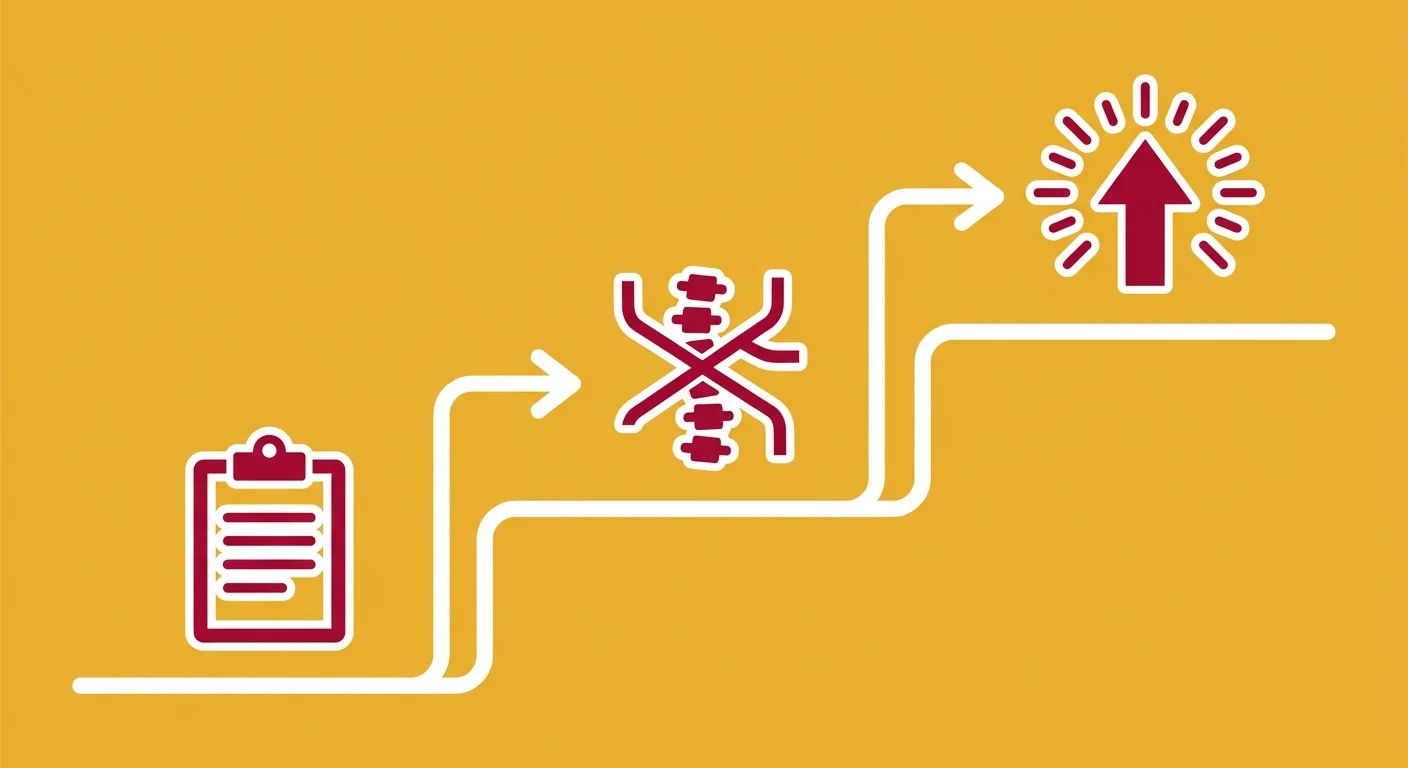
The biomarker data is solid. But data doesn't walk into the treatment room. What patients actually experience across a care plan rarely matches what they expected at visit one.
Here's the thing about a nervous system that has been running in sympathetic overdrive for months — sometimes years. It does not reset in one session. The HPA axis did not get stuck overnight. It got stuck through sustained mechanical input that kept driving the stress circuit without interruption. Reversing that takes repeated correction. Each adjustment gives the system one more opportunity to recalibrate instead of reverting to the pattern it has been running.
So the expectation to set is not dramatic relief after visit one. It is a trajectory. Measurable markers moving in a consistent direction, sustained over time, as the structural source of the stress cycle is progressively resolved.
Single Visit vs. Sustained Care: What Changes and When
A single adjustment produces real, measurable neurological change. Nociceptive sensory input attenuation lasted for up to 45 minutes post-adjustment. Central motor excitability shifted by up to 25% following joint cavitation. That is not a small window. But it is a window — not a resolution. The nervous system got a break. It did not get a new baseline.
Sustained care is what converts that window into a lasting shift. When the HPA axis receives repeated mechanical correction at the cervical and thoracic segments, the cortisol-to-DHEA ratio normalized in 68% of treated patients over a 4-week trial. That doesn't happen in one visit. The body has to stop reverting — and that requires consistent mechanical input over time, not a single intervention and a wait.
The autonomic picture follows the same pattern. Parasympathetic activity indices increased by an average of 20% following spinal care. A sympathetic-to-parasympathetic ratio shift was documented in 75% of active cohort participants. Patients who recognize the physical signs of nervous system chronic overload before starting care have a clearer reference point — they know what the baseline felt like, so they can track how those markers shift across a care plan rather than guessing at whether anything is changing.
What Partial Commitment Produces
Partial commitment produces partial results. That's not a motivational pitch. It's what happens when the structural input driving the stress circuit gets interrupted just long enough for the nervous system to stabilize — and then removed the moment consistent care stops.
The body doesn't hold gains it hasn't consolidated. Every time care lapses before the HPA axis has recalibrated to a new baseline, the nervous system defaults back to sympathetic dominance. Cortisol climbs. Tension returns. And the patient walks away convinced chiropractic care only works for a week. What failed wasn't the mechanism. It was the commitment.
Look, the care plan at Touch of Wellness Chiropractic is built from what patients actually report — and it changes when the data says something isn't working. But adaptation requires data. Data requires showing up. A plan followed when it's convenient and skipped when it's not doesn't give the nervous system the sustained input it needs to stop restoring nervous system function at full demand. The stress circuit stays active. The outputs keep coming. That's the clinical reality — and it's worth understanding before care begins, not three visits in.
| Care Phase | Physiological Focus | Expected Cortisol / HRV Shift | Patient-Reported Signal |
|---|---|---|---|
| Single Session | Central nervous system stress reflex modulation | Nociceptive attenuation up to 45 min post-adjustment; central motor excitability shifts up to 25% | Temporary reduction in physical tension; increased sense of calm that fades within hours |
| Early Care (first 1–2 weeks) | Autonomic rebalancing — sympathetic-to-parasympathetic ratio shift | Measurable increase in parasympathetic activity indices (avg 20% in research cohorts) | Reduced baseline tension; improved sleep onset; less reactive stress response |
| Active Care (consistent sessions) | Autonomic stabilization — ratio shift sustained across cohort | Sympathetic-to-parasympathetic ratio shift documented in 75% of active cohort participants | Stress cycle no longer returns to full baseline between sessions; fatigue patterns shift |
| Sustained Care (4-week trial window) | HPA axis recalibration — cortisol-to-DHEA ratio normalization | Cortisol-to-DHEA ratios normalized in 68% of treated patients over a 4-week trial | Sustained reduction in chronic tension; stress outputs no longer return to pre-care baseline |
Frequently Asked Questions
The research is solid. The biomarkers are documented. But nobody walks in asking about HPA axis pathways.
They want to know what this means for them, right now. So here are the straight answers.
Can a single chiropractic adjustment immediately lower my stress levels?
Yes — and the evidence isn't anecdotal. Salivary cortisol dropped by an average of 15% immediately following a spinal adjustment in documented cohort studies. That's a real, measurable hormonal shift inside a single session.
But one adjustment is a window, not a resolution.
The nervous system has been running the stress circuit for months — sometimes years. One session opens the door. Sustained care is what walks through it.
How do spinal misalignments trigger systemic cortisol release?
The spine feeds mechanical receptor signals directly into hypothalamic regulation. When dysfunction exists at the cervical and thoracic segments, those signals become noise — and the hypothalamic-pituitary-adrenal axis reads that noise as a threat.
So it does what it always does. Cortisol output increases. Epinephrine rises. The body locks into sympathetic dominance.
The misalignment is not causing psychological stress. It is delivering a continuous mechanical input that the body's stress-regulation system cannot distinguish from a real threat. So it never stands down.
What physiological markers prove chiropractic care reduces physical tension?
Three independent biological systems all point in the same direction.
Salivary cortisol — a direct hormonal output of the HPA axis — drops by an average of 15% post-adjustment in documented cohort studies. Systemic inflammatory markers decrease within a 2-hour window following treatment. And heart rate variability data shows an average 20% increase in parasympathetic activity indices after spinal care, with a sympathetic-to-parasympathetic ratio shift documented in 75% of active cohort participants.
These are not subjective reports. They are measurable outputs from three separate systems — hormonal, inflammatory, and autonomic — all confirming the same biological shift.
How many treatments are typically needed to regulate my nervous system?
There's no universal number. The care plan is built from what you actually report — not a billing calendar, not a protocol imported from another patient's file.
What the research does show: cortisol-to-DHEA ratios normalized in 68% of treated patients over a 4-week trial. That normalization doesn't happen in one visit. And it doesn't happen on the same timeline for every nervous system.
The realistic answer is that the care plan adapts to what your body is actually doing. If something isn't producing results, it changes. And if the trajectory is moving the right direction, you'll know — because the markers are visible, not just felt.
Can chiropractic care replace medication for chronic stress management?
No chiropractor should answer that question before an assessment is finished. Bringing it to a first visit, before the structural picture is complete, is the wrong sequence.
Here's what chiropractic care addresses: a specific mechanical driver of cortisol elevation — spinal joint dysfunction keeping the nervous system locked in sympathetic dominance. If that's what's driving your stress physiology, resolving it produces real, documented hormonal change.
If there are additional drivers — endocrine conditions, psychological factors, medication-managed diagnoses — those are separate clinical conversations. What gets assessed here is the structural piece. What medication decisions look like after that is between you and the prescribing provider.
Is the cortisol reduction from chiropractic care just a placebo effect?
The control group answers this definitively. In the same studies showing cortisol reductions following spinal care, the control group's diurnal stress curves stayed completely flat — no physical intervention, no change.
A placebo effect requires expectation. A cortisol curve does not have one. The HPA axis does not respond to belief. It responds to mechanical input.
The HRV data confirms it from a different angle: a sympathetic-to-parasympathetic ratio shift was documented in 75% of active cohort participants, with no equivalent shift in the control cohort. These are autonomic measurements. They do not know what the patient hopes for. They record what the nervous system actually does.
The Nervous System Doesn't Lie
The nervous system doesn't perform. It responds.
And what the research shows — across hormonal, autonomic, and neurological data — is that the body isn't exaggerating. When the structural input driving the stress circuit is mechanical, the fix is mechanical. That's not a wellness philosophy. That's what the biomarkers say.
But the breaker can't reset if it stays tripped.
Stress that never fully lifts. Tension that comes back the moment relief appears. Fatigue that sleep doesn't fix. Those aren't attitude problems. They're the outputs of a system locked in fight-or-flight because the structural input keeping it there has never been addressed.
A care plan built from what you actually report — adapted when something isn't producing results, applied consistently enough for the HPA axis to recalibrate — that's what resetting the breaker looks like clinically. Not a single visit. Not a wellness bonus. A direct biological intervention targeting the mechanical source of the stress cycle.
So here's who this is for: patients who are done managing outputs and ready to address the source.
Touch of Wellness Chiropractic doesn't run cookie-cutter protocols. Doesn't hand over 12-month plans before an assessment is finished. Doesn't keep patients coming back past the point of clinical need. The care plan adapts to what the nervous system actually reports — because that's the only data worth building from.
The spine is wired into the body's stress circuit. That circuit doesn't care how long you've been working around it. The question is whether you're ready to stop managing the symptoms and fix the wiring.
Your spine is wired directly into your body's stress circuit. That circuit doesn't care how long you've been managing around it — it keeps running the same pattern until something changes the input. If you're done chasing outputs and ready to look at what's actually driving them, Touch of Wellness Chiropractic starts with what your body actually reports — not a protocol handed over before the evaluation is finished. That's where this conversation starts.
Copyright Touch of Wellness Chiropractic 2026
1101 W Jackson St, Suite A Morton, IL 61550
Web Design by iTech Valet