
(309) 321-8412 | 1101 W Jackson St, Suite A, Morton, IL 61550
(309) 321-8412 | 1101 W Jackson St, Suite A, Morton, IL 61550
What Are the Physical Signs Your Nervous System Is in a State of Chronic Overload?
The physical signs of a chronically overloaded nervous system are not vague or psychological. They are measurable, structural, and systemic.
When the body is locked in a sustained stress response, the autonomic nervous system shifts into sympathetic dominance and stays there. That shift produces concrete, documentable changes throughout the body.
Chronic sympathetic overdrive reduces heart rate variability and elevates resting heart rates even during periods of no active stress. Cortisol and adrenaline continue secreting in loops, directly impairing digestion and fragmenting deep-stage sleep. Muscle tension accumulates as a biological guarding response. Headaches and digestive disturbance follow as the body holds a threat posture it cannot release. Autonomic strain from sustained daily stress correlates directly with chronic musculoskeletal disorders and persistent structural tension throughout the spine and surrounding tissue.
Fatigue that does not respond to rest is a primary clinical indicator of autonomic overload — not a sleep deficit. The system is not recovering because it has not downregulated. The parasympathetic branch, responsible for recovery, repair, and digestion, is being suppressed by continuous sympathetic output. Vagus nerve activity and parasympathetic signaling are essential to breaking that cycle — they are the mechanism by which the body reduces muscle hypertonicity and restores homeostatic balance.
The most common physical signs of nervous system overload include persistent neck and back tension that returns after temporary relief, chronic headaches with no clear origin, disrupted or non-restorative sleep, unexplained fatigue, digestive irregularity, and a heightened startle response or persistent sense of internal pressure. These are not separate problems. They are outputs of a single system that has been running in overdrive long enough to produce structural and physiological consequences.
Passive rest does not reset an overloaded nervous system. When the breaker has tripped, individual switches do nothing. Addressing the structural pathway sustaining the sympathetic loop — specifically the spinal relationship to nervous system output — is what produces lasting change.
Last Updated: June 22, 2026
- • What Chronic Nervous System Overload Actually Does to Your Body
- • The Physical Signs You're Already in Overload
- • Why Rest Alone Doesn't Reset an Overloaded Nervous System
- • What Actually Breaks the Chronic Overload Cycle
-
• Frequently Asked Questions
- • What are the most common physical signs of nervous system overload?
- • Why doesn't standard rest or sleep heal a chronically stressed nervous system?
- • How does chiropractic care help regulate a system stuck in fight-or-flight?
- • Can unexplained chronic fatigue be a sign of autonomic nervous system overload?
- • How long does it take to reset and heal an overloaded nervous system?
- • Your Nervous System Won't Reset on Its Own
What Chronic Nervous System Overload Actually Does to Your Body
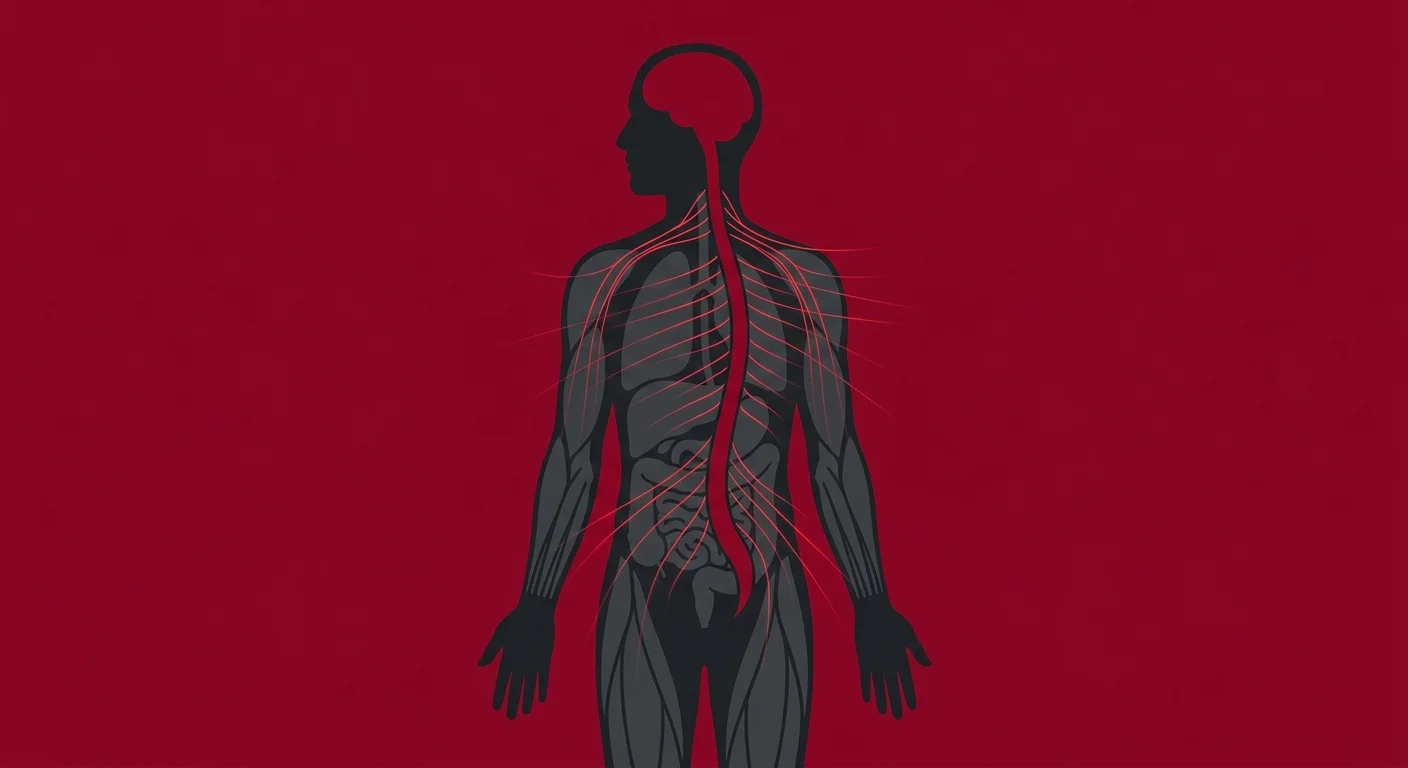
Think about a building's electrical system.
When the load gets too high, the breaker trips. Flipping individual switches does nothing. The whole system stays stuck until someone resets the breaker itself.
That's not a metaphor for feeling overwhelmed. That's exactly what happens inside a body that's been running in sympathetic overdrive long enough.
Chronic nervous system overload is that tripped breaker.
Not a bad week. Not everyday stress. A state where the autonomic nervous system has locked into sympathetic dominance and lost its way back. Every organ, every muscle, every recovery process runs downstream of that stuck switch.
So the symptoms that seem unrelated? They're not.
They're the same system failing in different directions. Until you understand the loop — structurally, physiologically — none of the standard fixes make sense. Because none of them are aimed at the right target.
The Sympathetic Survival Loop Explained
The sympathetic nervous system was built for short-duration threats.
It spikes cortisol and adrenaline. Elevates heart rate. Shunts blood to the muscles and shuts down digestion — because none of that matters when survival is the only priority.
The problem is a body that never gets the signal that the threat is over. So the whole system keeps running. Not because it's broken. Because it's doing exactly what it was designed to do — indefinitely.
When that state becomes chronic, NIH-documented research confirms it produces a clinically measurable decrease in heart rate variability and sustained elevations in resting cardiovascular output.
The body isn't resting between stressors. It's running at a baseline that was designed for emergencies.
And the longer it holds that position, the harder it becomes for the parasympathetic branch — the recovery system — to break through.
Cortisol and adrenaline keep secreting in loops. That's why deep-stage sleep breaks down and digestion becomes unreliable.
Both are parasympathetic functions. The sympathetic state actively suppresses both — not as a side effect, but as part of its design.
This is exactly what makes nervous system stress recovery different from standard stress management. Standard interventions address the output. They don't address the loop.
Why the Cookie-Cutter Stress Narrative Misses the Point
Here's the standard advice: rest more, sleep more, worry less.
It's not wrong. It's just incomplete in a way that keeps people stuck for years.
That narrative treats stress as an emotional experience with physical side effects.
But when the nervous system has been running in sympathetic overdrive long enough, peer-reviewed endocrine research shows the body undergoes measurable structural changes — continuous cortisol secretion loops, direct inhibition of parasympathetic digestion, fragmented deep-stage sleep architecture.
These aren't side effects. They're system-level failures. Telling someone to breathe more deeply doesn't reset a system that's structurally locked.
Cookie-cutter stress advice applies the same template to every person — regardless of where their system is actually stuck.
That's the same failure mode as running the same adjustment sequence on every patient without assessing the individual first. The template isn't the problem. Applying it without looking at the actual system is.
Chiropractic care in Morton, IL at Touch of Wellness Chiropractic is built on a systems-level clinical lens — because no two nervous systems fail in exactly the same way, and the assessment always comes before the plan.
| Body System | Normal Function | What Chronic Overload Does | Clinical Consequence |
|---|---|---|---|
| Cardiovascular System | Heart rate variability shifts fluidly in response to activity and recovery; resting heart rate returns to baseline between demands | Resting heart rate stays chronically elevated; heart rate variability flattens and loses responsiveness even during non-stressful periods | The body cannot distinguish rest from threat — cardiovascular output runs at emergency levels around the clock |
| Endocrine System | Cortisol and adrenaline release in short, targeted bursts tied to specific stressors, then clear from the system | Cortisol and adrenaline secrete in continuous loops regardless of active stressor presence | Sleep architecture fragments, digestion becomes unreliable, and recovery processes that require low-cortisol conditions cannot complete |
| Musculoskeletal System | Muscles engage for effort and release fully at rest; spinal tissue maintains normal tone between physical demands | Muscles remain in a guarding state — contracted, braced, and unable to fully release — producing chronic tension accumulation in the spine and surrounding tissue | Persistent neck and back tension, recurring headaches, and structural tightness that returns even after temporary manual relief |
| Digestive System | Parasympathetic signaling governs digestion — motility, enzyme secretion, and absorption operate on a normal rhythm | Sympathetic dominance actively suppresses parasympathetic digestive function, slowing or disrupting normal gut processes | Bloating, irregularity, and digestive disturbance that tracks alongside stress states rather than diet changes |
| Sleep and Recovery | Deep-stage sleep cycles run uninterrupted, allowing cellular repair, nervous system consolidation, and hormonal reset | Sympathetic output suppresses the parasympathetic conditions required for deep-stage sleep entry and maintenance | Non-restorative sleep — hours logged but no recovery produced; fatigue persists regardless of time in bed |
| Autonomic Regulation (Vagus Nerve) | The vagus nerve carries parasympathetic signals that downregulate muscle tone, reduce internal pressure, and restore homeostatic balance after stress | Sustained sympathetic dominance suppresses vagal tone, reducing the body's ability to self-regulate and exit the threat response | Heightened startle response, persistent sense of internal pressure, and a nervous system that cannot self-correct without structural intervention |
The Physical Signs You're Already in Overload
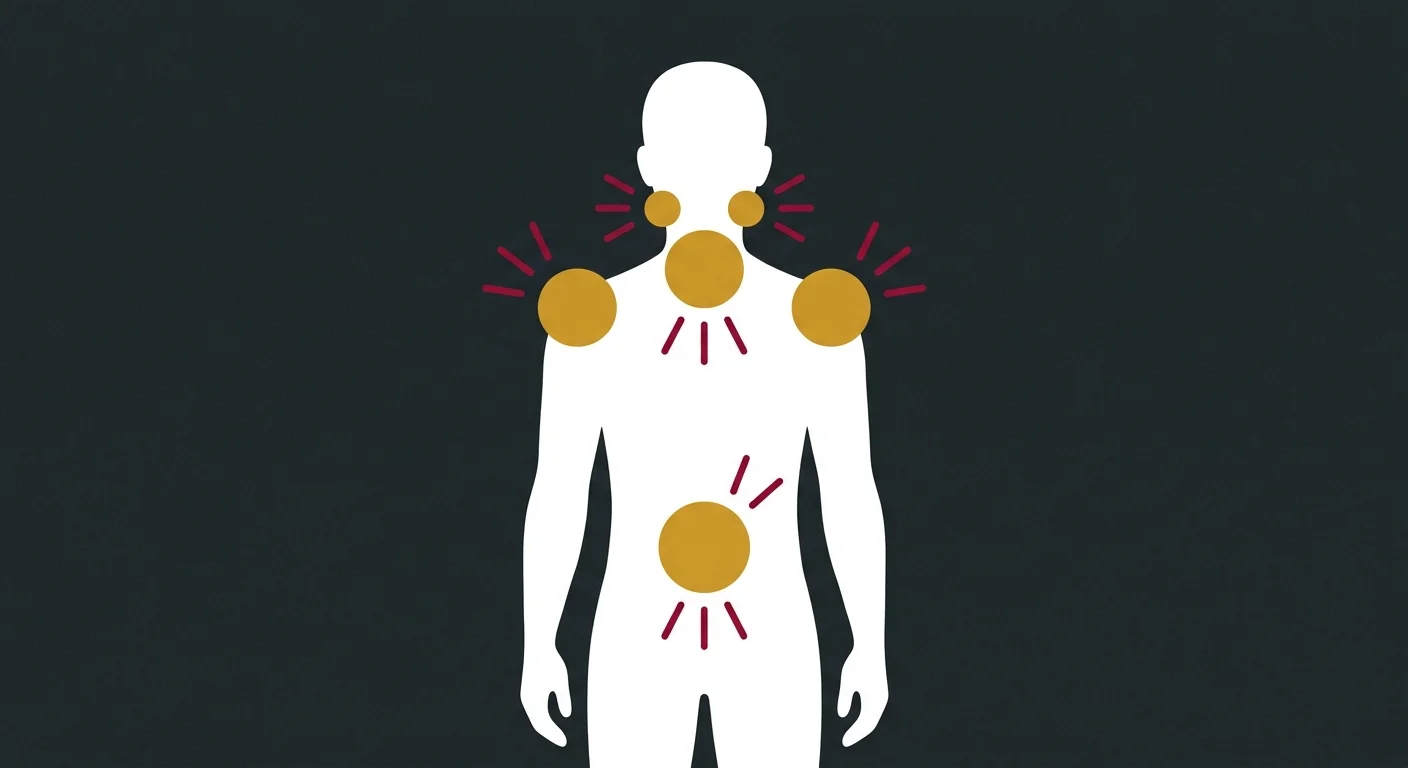
Most people can name every symptom. Tight neck. Constant headaches. Sleep that never restores.
What they can't name is why those symptoms keep returning. Because they're treating each one as its own problem — when every single one is an output of the same stuck system.
That distinction changes everything. This isn't soreness. It's structure. A body locked in a biological guarding posture it doesn't know how to release — and CDC documents the link between that sustained autonomic strain and chronic musculoskeletal disorders throughout the spine.
And that's why rest doesn't fix it. Why rest alone won't resolve an overloaded system is the most important thing to understand here — because the structural pathway sustaining the sympathetic loop is still in place.
The breaker hasn't been reset. Every symptom being treated individually is downstream of that one stuck switch.
Musculoskeletal Signals: When Your Muscles Won't Let Go
Muscle tension that keeps coming back after temporary relief isn't a tension problem.
It's a nervous system problem wearing the costume of a muscle problem.
Here's what's actually happening. When the body stays in sympathetic dominance, the muscles along the spine activate as part of a protective bracing response. That's not a malfunction — it's the system doing exactly what it was designed to do.
The problem is it never stops. The muscles don't release because the signal to release never arrives. The parasympathetic branch that would send that signal is being suppressed. And the CDC documents a direct link between that sustained autonomic strain and chronic musculoskeletal disorders throughout the spine.
The result is neck tension that won't clear with stretching. Low-back stiffness that returns within days of feeling better. Shoulder tightness with no obvious mechanical cause.
These are not separate musculoskeletal complaints. They are the same body in the same survival posture — expressed in different locations.
Sleep, Digestion, and the Hidden Signs Most People Miss
Disrupted sleep and digestive irregularity are two of the clearest signs that the autonomic nervous system has lost the ability to downregulate.
They are also two of the most consistently dismissed.
The WHO identifies muscle guarding, digestive distress, and headache triggers as primary systemic stress responses. Not incidental findings. Not coincidences.
They are the body broadcasting that parasympathetic function is being actively suppressed. Digestion and deep-stage sleep are both parasympathetic processes. When the sympathetic branch is running the show, neither one works correctly.
So the patient who can't fall asleep despite exhaustion, whose digestion has been unreliable for months, who wakes up feeling like they never rested — that's not three problems.
That's one system reporting the same failure through three different channels. Treating each one separately leaves the root cause completely untouched.
This Isn't the Right Fit for Every Patient
Starting with a full assessment of what the nervous system is actually doing — and building care from there — isn't the right fit for every patient.
That's worth saying directly.
If you're showing up with a list of what your previous provider did and need that sequence replicated before the assessment is even finished — this isn't the right starting point.
If you want one visit to clear everything, the work required here isn't what you're looking for. If following a clinical lead built from your actual symptoms and your actual history isn't something you're willing to do, the individualized care model at Touch of Wellness Chiropractic won't serve you the way it should.
The patients who get real results here have already run the standard model dry.
They're done treating symptoms. They're ready for someone who looks at the system.
| Physical Sign | What It Signals in the Nervous System | Commonly Mistaken For | Why That Misread Stalls Recovery |
|---|---|---|---|
| Persistent neck and upper back tension that returns after temporary relief | Chronic sympathetic activation triggering a spinal guarding response the body cannot release on its own | Poor posture or overuse injury | Targeting the muscle directly leaves the nervous system signal driving the tension completely intact — the tension returns because the cause was never addressed |
| Chronic headaches with no clear structural origin | Sustained muscle hypertonicity along the cervical spine and suboccipital region driven by prolonged sympathetic output | Dehydration, eye strain, or sinus pressure | Treating the headache as an isolated event misses the systemic pattern — the head pain is a downstream output, not the starting point |
| Non-restorative sleep — exhausted but unable to fall or stay asleep | Parasympathetic suppression blocking the downregulation the nervous system requires to enter deep-stage sleep cycles | Poor sleep hygiene or screen exposure | Sleep interventions work on the environment, not the autonomic state — if the system is locked in sympathetic dominance, the environment change produces no lasting shift |
| Unexplained chronic fatigue unresolved by rest | Impaired recovery signaling from persistent sympathetic output preventing true physiological restoration between stressors | Burnout, anemia, or thyroid dysfunction | Lab-normal results send patients back to waiting — the autonomic mechanism driving the fatigue goes unexamined and the exhaustion continues |
| Digestive irregularity — bloating, inconsistent motility, appetite disruption | Active suppression of parasympathetic digestive function by a nervous system running in sustained survival mode | Dietary sensitivity or gut bacteria imbalance | Dietary adjustments address the digestive channel while the sympathetic override driving the suppression stays in place — the irregularity cycles back regardless of what the patient eats |
| Heightened startle response or persistent sense of internal pressure | Autonomic baseline shifted so far into sympathetic dominance that the nervous system registers ordinary input as threat-level stimulation | Anxiety disorder or caffeine sensitivity | Managing anxiety symptoms pharmacologically or behaviorally does not restore the autonomic baseline — the threshold for perceived threat stays low and the internal pressure continues |
Why Rest Alone Doesn't Reset an Overloaded Nervous System
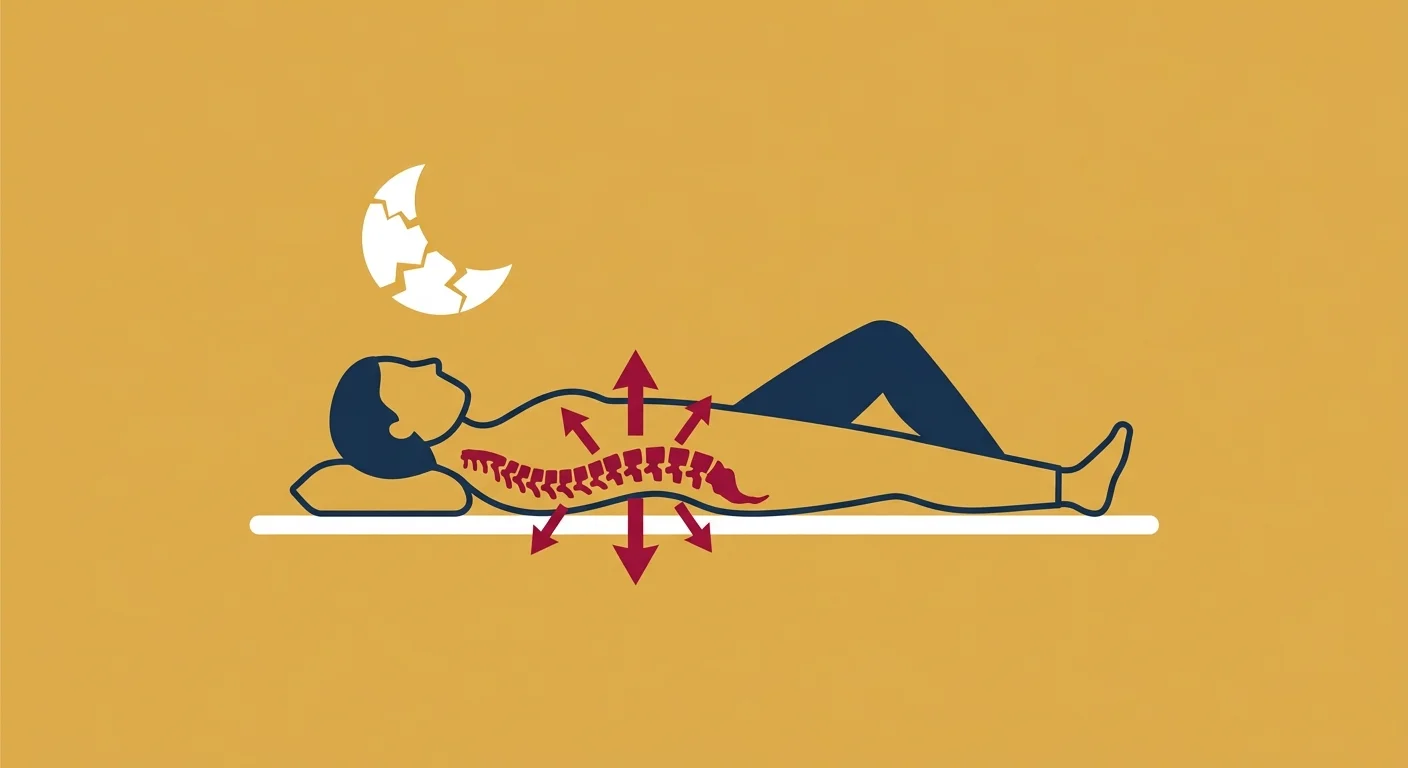
Rest feels like the right answer. The body is wrecked, the signals are loud, and slowing down makes sense. But rest doesn't reach a nervous system that's structurally locked in fight-or-flight.
The breaker has tripped. Lying down, taking a weekend off, getting eight hours of sleep — those are switches. They address the load. They don't touch the system that's stuck.
Passive recovery works when the autonomic nervous system can still shift into parasympathetic mode on its own. But Harvard Medical School research documents what happens when it can't — continuous cortisol and adrenaline loops that fragment deep-stage sleep and shut down parasympathetic digestion. The recovery system isn't waiting for permission at that point. It's been blocked. Rest opens a door the system can't walk through.
The Problem With Passive Recovery
The failure of passive recovery isn't a motivation problem. It's a structural one.
When the sympathetic nervous system has been running long enough, it doesn't idle between demands. The cortisol secretion loops Harvard Medical School research documents — the same ones that fragment sleep architecture and suppress digestive function — keep firing with no active stressor present. The body has locked in a baseline built for emergencies. And it runs that baseline all day, every day, whether there's a threat or not.
So the person who meditates, exercises, and eats clean but still wakes up unrested every morning isn't doing recovery wrong. The parasympathetic branch responsible for overnight repair is being actively suppressed. Not because they're stressed in that moment. Because the structural pathway sustaining the sympathetic loop is still in place — and nobody's addressed it.
That's the gap passive recovery can't close. Cold Laser Therapy services can support tissue recovery as part of a broader care plan. But without addressing the structural driver of the sympathetic lock, surface-level interventions produce surface-level results. The pattern returns.
What Unexplained Fatigue Is Actually Telling You
Unexplained fatigue is one of the most dismissed symptoms in this pattern — and one of the most clinically significant. Patients describe tiredness that sleep doesn't fix. Exhaustion with no clear cause. A heaviness that never fully lifts. What they're experiencing is a direct signal of autonomic overload — not a sleep deficit, not a nutrition gap, not a willpower problem.
The body is burning enormous energy just to maintain a survival state it can't exit. Nothing's left for restoration. Because restoration requires parasympathetic dominance — and that state is being blocked.
When fatigue doesn't respond to rest, the nervous system is telling you the problem isn't input — it's infrastructure. More sleep won't fix a system that can't use sleep the way it's designed to. That's the entire reason root-cause care starts with the nervous system. Not the symptom list.
| Recovery Approach | What It Addresses | What It Misses | Result for a Locked Nervous System |
|---|---|---|---|
| Sleep / Rest | Reduces active stressor load in the moment | Does not reset the structural pathway sustaining sympathetic overdrive | Temporary relief followed by the same exhaustion — the system can't use the recovery window it's given |
| Stress Management Techniques (breathing, meditation, walks) | Calms conscious stress perception and surface tension | Does not address the autonomic baseline the body has locked in as its new normal | Reduced subjective stress with no change in underlying sympathetic dominance or physical guarding patterns |
| Exercise | Expends accumulated physical energy and temporarily improves mood signaling | Does not restore parasympathetic dominance or release chronic spinal guarding driven by nervous system output | Muscle soreness layered on top of existing tension; recovery between sessions remains impaired |
| Dietary Changes / Supplementation | Supports cellular function and reduces inflammatory load at a systemic level | Does not address the structural driver keeping the sympathetic loop active | Marginal improvement in energy or digestion without resolving the root signal suppressing parasympathetic function |
| Massage Therapy | Releases surface-level muscle tension and improves local circulation temporarily | Does not correct the neurological signal sustaining chronic guarding at the spinal level | Tension returns within days because the nervous system continues sending the same protective bracing signal |
| Root-Cause Structural Assessment and Individualized Nervous System Care | Identifies and addresses the specific structural pathway sustaining sympathetic overdrive | Nothing — this is the intervention that targets the breaker, not the switches | Parasympathetic function is no longer blocked; the body can use rest, sleep, and recovery the way it was designed to |
What Actually Breaks the Chronic Overload Cycle
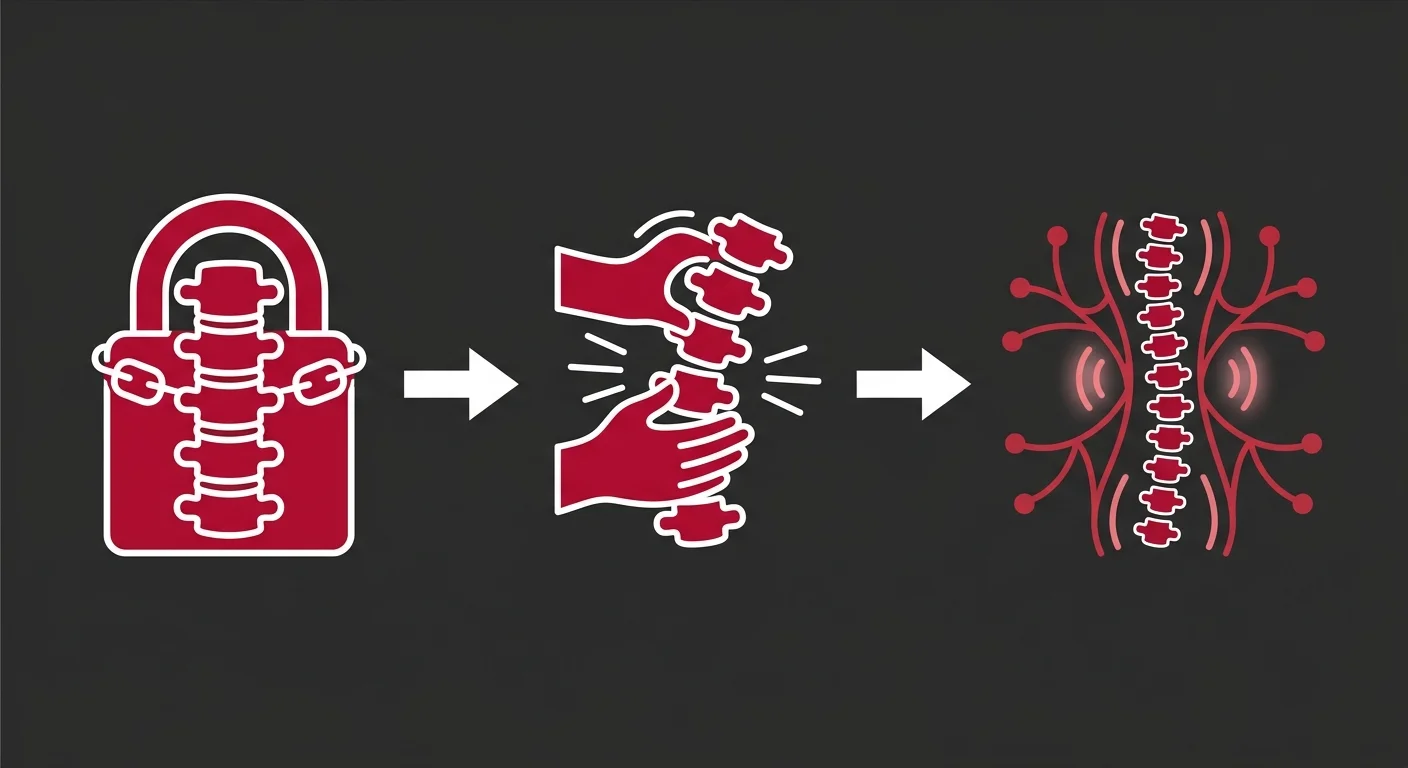
The breaker doesn't reset itself.
That's the part every passive recovery approach skips. And it's the entire distance between managing symptoms and resolving what's driving them.
When the nervous system has been locked in sympathetic overdrive long enough to alter HRV, push resting cardiovascular output higher, and build chronic musculoskeletal guarding — that structural pathway is still in place.
Rest removes the demand. It doesn't remove the wiring.
What breaks the cycle is addressing the spine.
The autonomic nervous system routes its signals through that physical structure. The survival loop isn't just a stress response — it's a structural state. Structural states require structural intervention.
How Structural Realignment Interrupts the Survival Loop
Here's what most people don't think about: the spine isn't structural decoration. It's the primary conduit the nervous system uses to communicate between the brain and every major organ system.
When segments of that conduit are misaligned, communication breaks down. The autonomic nervous system then defaults to the one state it knows how to run under dysfunction — sympathetic dominance. Not because it's overreacting. Because it's working with bad input.
Chiropractic adjustment at the structural level interrupts that default. There's a direct, measurable neurological event happening — not a theoretical benefit, not temporary tension relief.
The adjustment changes the input the nervous system receives from the spine. That's what spinal adjustments do to the fight-or-flight response — change the input, and the system responds differently. That's not a philosophical claim. That's the mechanism.
CDC research links workplace stress and autonomic strain directly to persistent musculoskeletal disorders and structural tension throughout the spine. Correcting the structural driver of that tension isn't primarily about pain relief.
It's about removing the signal that's been telling the nervous system to stay locked in a guarding posture it was never designed to hold long-term. The guarding is the response. The signal is the problem.
The Role of the Vagus Nerve and Parasympathetic Recovery
The parasympathetic branch — responsible for repair, restoration, and recovery — can't do its job while the sympathetic branch is running at override. Those two states don't run simultaneously.
The switch between them depends on vagus nerve function. And vagus nerve activity correlates directly with decreased muscle hypertonicity. That's not a wellness talking point. That's anatomy.
That's what most passive recovery approaches miss entirely.
Taking a break, sleeping more, meditating — these reduce stress inputs. They don't restore parasympathetic signaling if the structural interference suppressing vagal tone is still in place. You can't breathe your way past a blocked nerve pathway. The pathway has to be cleared first.
So the person who meditates, exercises, eats clean, and still wakes up exhausted and tight — that's not a willpower problem. That's a structural one.
The vagus nerve isn't blocked by behavior. It's blocked by structure. And structure is addressed at the spine.
What a Root-Cause Assessment Actually Looks Like
A root-cause assessment doesn't start with the chief complaint. It starts with the system driving the chief complaint.
That means evaluating spinal positioning, identifying where structural interference exists, and understanding what signals are being routed incorrectly — before any care decision gets made. The complaint is a symptom. The assessment is for the cause.
At Touch of Wellness Chiropractic, the assessment drives the care plan. Not a standard protocol. Not a billing calendar.
What you actually report, what your presentation actually shows, and what the spine is actually doing — those three inputs build the plan. Clinical shockwave therapy can support structural recovery where chronic tension has created tissue-level dysfunction, but it sits inside a plan built from a real assessment — never in place of one.
And when something isn't producing results after a few visits, the plan changes. Not after a 12-week block. Not at a scheduled check-in. When the data says change, it changes.
That's Dr. Karen Hannah's systems-level approach in practice — care that stays responsive to what the nervous system is actually doing, not what a template assumed it would do six weeks in advance.
| Intervention Type | Mechanism of Action | Addresses Root Cause? | Typical Timeline for Nervous System Response |
|---|---|---|---|
| Rest and Sleep | Removes active stressor load; allows body to idle | No — structural pathway sustaining sympathetic loop remains intact | Temporary relief; symptoms return when demands resume |
| Stress Management and Mindfulness | Reduces cognitive arousal; lowers perceived stress inputs | No — does not address spinal or structural interference with vagal tone | Modest short-term improvement; insufficient when structural driver is present |
| Exercise and Movement | Promotes circulation and endorphin release; temporarily shifts autonomic tone | No — cannot correct structural misalignment suppressing parasympathetic signaling | Helpful as supportive care; not sufficient as standalone intervention for chronic overdrive |
| Cold Laser Therapy | Supports tissue-level recovery and reduces localized inflammation | No — addresses downstream tissue damage, not the structural root driving the loop | Supports recovery within a broader care plan; not a standalone reset mechanism |
| Chiropractic Adjustment at the Structural Level | Corrects spinal misalignment interrupting nervous system communication; restores vagal pathway integrity | Yes — directly targets the structural interference sustaining sympathetic dominance | Begins shifting autonomic state as structural input to the nervous system changes; response is individualized |
| Individualized Root-Cause Care Plan | Combines structural assessment, spinal correction, and adaptive clinical response based on real-time nervous system feedback | Yes — evaluates and addresses the full system driving the chief complaint, not just symptom presentation | Sustained improvement as structural pathway clears and parasympathetic function is restored over the course of care |
Frequently Asked Questions
These aren't edge cases. They're the questions that stay unanswered after every standard visit.
Here's what the research and clinical reality actually show.
What are the most common physical signs of nervous system overload?
The most common signs are the ones patients write off as unrelated to each other. Muscle tension that won't release between stressors. Headaches that come back with no clear trigger. Digestive distress — bloating, irregularity, nausea — with no identified cause. Fatigue that sleep doesn't touch. A resting heart rate that runs elevated without exertion.
None of those are separate problems. They're the same system reporting the same failure through different outputs. That's the distinction the standard model keeps missing.
Why doesn't standard rest or sleep heal a chronically stressed nervous system?
Rest removes the demand. It doesn't remove the wiring.
When the sympathetic nervous system has been running long enough, the structural pathway sustaining the loop is still in place — regardless of how much sleep the patient gets. Parasympathetic recovery — the kind that actually repairs tissue and restores function — requires vagus nerve signaling to move without interference. If that pathway is structurally compromised, more rest doesn't fix it. It gives the body more time to stay stuck.
How does chiropractic care help regulate a system stuck in fight-or-flight?
The spine is the physical conduit the autonomic nervous system routes its signals through. When spinal segments are misaligned, the nervous system defaults to sympathetic dominance — the only state it can reliably hold under structural dysfunction.
A chiropractic adjustment changes the input the nervous system receives from the spine. Vagus nerve activity drives the parasympathetic response and correlates directly with reduced muscle tension. That activity depends on a clear structural pathway. Correct the structural interference and you restore that pathway.
The fight-or-flight loop doesn't get talked out of existence. It gets structurally interrupted.
Can unexplained chronic fatigue be a sign of autonomic nervous system overload?
Yes — and it's one of the most clinically significant signs that gets dismissed the fastest.
Unexplained chronic fatigue is a direct indicator of autonomic nervous system overload, driven by persistent sympathetic output that blocks the body's recovery signaling. The body is spending enormous energy maintaining a survival state it cannot exit. There is nothing left for restoration.
When fatigue doesn't respond to rest, the nervous system is reporting an infrastructure problem. Not a sleep deficit. Not a discipline problem. The breaker has tripped — and more sleep is just another switch.
How long does it take to reset and heal an overloaded nervous system?
Any provider who gives you a specific number on the first visit hasn't finished the assessment.
What's true is this: the longer the structural driver has been in place, the more the body has normalized a baseline it was never designed to hold. A care plan built from a real assessment — not a template — identifies where the structural interference is, tracks how the nervous system responds, and adjusts from there.
The goal at every step is resolution. When something isn't producing results, the plan changes. That's the clinical standard — not a concession.
Your Nervous System Won't Reset on Its Own
The breaker has tripped. Every symptom this article named — the muscle guarding, the sleep that never restores, the fatigue that rest doesn't touch, the headaches that come back without warning — traces to the same place. The nervous system has been locked in sympathetic overdrive long enough that it can't find its way back on its own. Passive recovery doesn't reach that. It never did.
What resets the breaker is addressing the spine. That's the physical conduit the autonomic nervous system uses to route every signal that decides whether the body repairs itself or guards itself. That's not theoretical — it's the mechanism. And it's why individualized, root-cause chiropractic care starts at the structure, not the symptom list. At Touch of Wellness Chiropractic, Dr. Karen Hannah's systems-level assessment finds the structural interference driving the sympathetic lock and builds a care plan around what's actually happening — not what a protocol assumed it would be.
The body doesn't normalize dysfunction slowly. It normalizes it completely — until a baseline built for emergencies becomes the only baseline it knows. If you've been resting, managing, and waiting, and the pattern keeps returning, the structural pathway is still intact. The breaker hasn't been reset. That's the only conversation left worth having.
The pattern doesn't fix itself by waiting. If you want to know what's structurally driving it — not mask it, not outlast it — a real assessment is where that answer starts.
Copyright Touch of Wellness Chiropractic 2026
1101 W Jackson St, Suite A Morton, IL 61550
Web Design by iTech Valet