
(309) 321-8412 | 1101 W Jackson St, Suite A, Morton, IL 61550
(309) 321-8412 | 1101 W Jackson St, Suite A, Morton, IL 61550
Nervous System Stress Recovery vs. Standard Stress Management: What Your Body Actually Needs
Standard stress management doesn't fix the biological problem. It manages how stress feels.
Nervous system stress recovery is the process of returning the body's autonomic nervous system from chronic sympathetic activation — fight-or-flight — back to parasympathetic dominance, where rest, repair, and regulation can actually occur. Medications, breathing techniques, and cognitive coping strategies address the perception of stress. They don't correct the underlying biological state sustaining it.
When the body stays under chronic stress, the sympathetic nervous system doesn't switch off. It floods the body with cortisol and epinephrine, driving up heart rate and blood pressure, elevating glucose in the bloodstream, and altering immune system responses. Over time, that sustained activation produces measurable physical consequences — systemic muscular tension, cardiovascular strain, and structural musculoskeletal disorders that won't resolve with rest or medication alone.
The furnace never stops running.
Chiropractic adjustments address this biological state directly. Research demonstrates that spinal adjustments produce measurable changes in autonomic nervous system activity, including significant increases in parasympathetic output as measured by heart rate variability. Cervical spinal adjustments activate the parasympathetic nervous system, decreasing heart rate and shifting the body's autonomic balance toward a relaxed state. These aren't subjective outcomes — they're documented physiological changes in how the nervous system functions.
Medications prescribed for stress-related symptoms temporarily suppress those symptoms without altering the physical spinal and neurological pathways generating them. The biological problem stays active beneath the pharmacological suppression. Autonomic dysregulation directly elevates cortisol biomarkers, and that dysregulation can be modified through physical therapies that address the nervous system structurally.
Nervous system stress recovery, approached through chiropractic care, targets the structural drivers of sympathetic dominance rather than masking what those drivers produce. One approach manages how stress feels. The other works to restore how the body physiologically responds to it.
Last Updated: June 22, 2026
- • What Standard Stress Management Actually Does to Your Body
- • How the Spine Physically Holds Your Stress Response
- • How Chiropractic Adjustments Restore Autonomic Balance
- • Who This Approach Is — and Isn't — For
-
• Frequently Asked Questions
- • How do spinal adjustments calm the body's fight-or-flight response?
- • Why do medical stress relief medications fail to provide long-term biological restoration?
- • How does nervous system stress recovery differ from standard stress management?
- • Can chiropractic adjustments lower high cortisol levels caused by chronic stress?
- • What are the physical symptoms that indicate my nervous system is stuck in fight-or-flight?
- • The Nervous System Doesn't Reset on Its Own
What Standard Stress Management Actually Does to Your Body
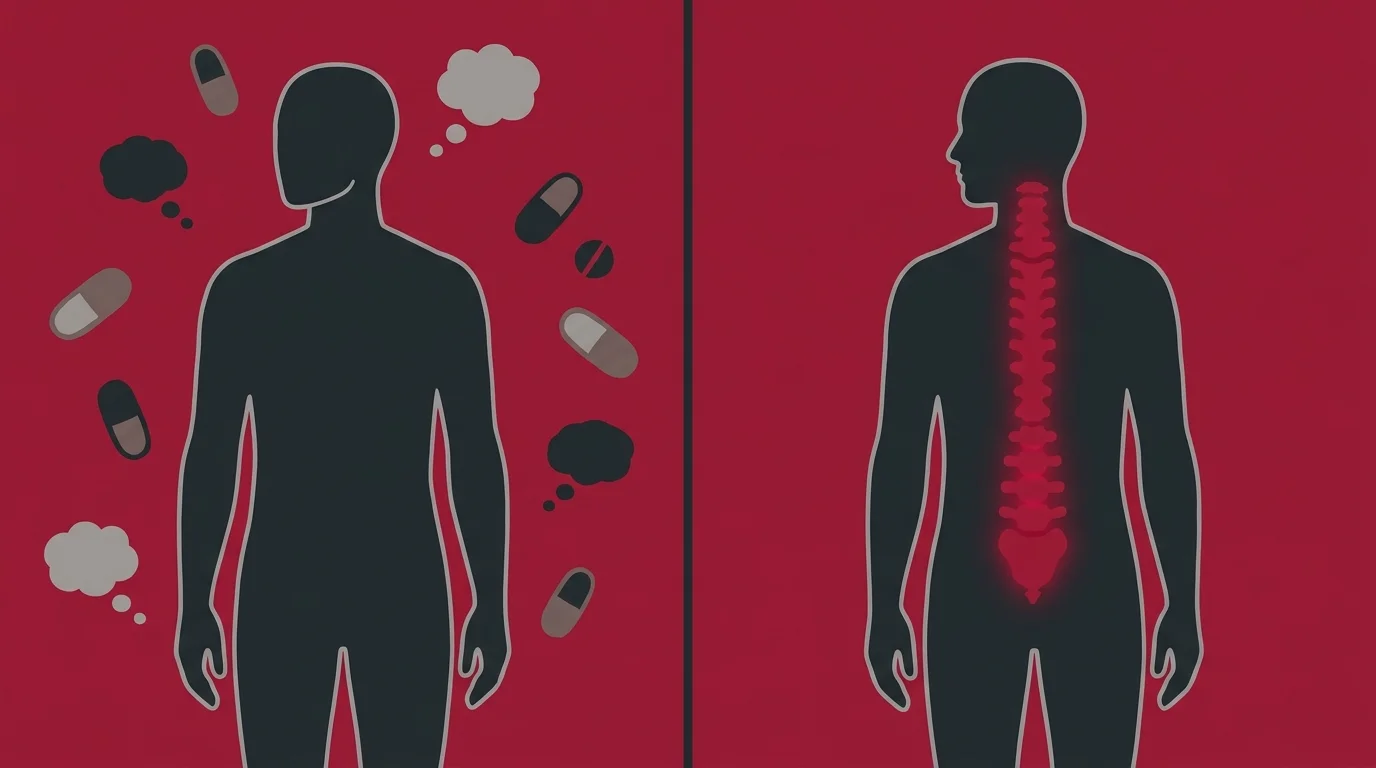
Standard stress management adjusts the display. It doesn't touch the furnace.
Breathing exercises, cognitive reframing, journaling, guided meditation — these are real tools. They change how stress feels in the moment. But not one of them alters the physical state your nervous system is locked into.
That distinction matters more than most people realize. When the sympathetic nervous system is chronically activated, NIH research confirms the body floods with cortisol and epinephrine — heart rate spikes, blood pressure climbs, glucose surges in the bloodstream, and immune function shifts. That's not a perception problem. That's a biological state running underneath every coping strategy you're attempting.
So when coping strategies stop working, that's not a willpower problem. The body's physical stress architecture hasn't changed. The furnace never stopped running — the display just reads differently.
Why Medication and Coping Mechanisms Don't Fix the Physical Problem
Medications make this gap impossible to ignore. Benzodiazepines do exactly what they're designed to do — they chemically suppress stress symptoms. But they don't restore the nervous system regulation that broke down in the first place. The spinal and neurological pathways driving the overactivation are still there. Still firing. Still running the same loop.
Cognitive coping works by the same logic. It's a downstream intervention. Changing the thoughts doesn't reset the physical state producing the tension, the broken sleep, the headaches, or the low-back pain that flares every time a deadline hits.
That's not a criticism of those tools. That's just an honest description of what they reach — and what they don't.
And here's what rarely gets said out loud: the physical problem compounds. Sustained cortisol and epinephrine overload builds systemic muscular tension and cardiovascular strain over time. That architecture doesn't resolve on its own.
Chiropractic care in Morton IL addresses that architecture directly — not by managing how stress feels, but by restoring the physical pathways that determine how the body responds to it. That's a different category of intervention entirely.
| Approach | What It Targets | What It Leaves Untouched | Typical Outcome |
|---|---|---|---|
| Breathing exercises / meditation | Perceived stress and emotional response in the moment | Chronic sympathetic nervous system activation; physical spinal and neurological pathways sustaining fight-or-flight | Temporary relief from acute stress symptoms; baseline biological stress state unchanged |
| Cognitive coping strategies (therapy, reframing, journaling) | Thought patterns and emotional interpretation of stressors | Systemic muscular tension, cardiovascular strain, and autonomic dysregulation driving physical symptoms | Improved stress perception and emotional resilience; underlying physical stress architecture remains active |
| Prescription medications (benzodiazepines, sedatives) | Symptom expression — anxiety, tension, sleep disruption | Physical spinal and neurological pathways generating the overactivation; biological nervous system regulation left unrestored | Chemical suppression of symptoms while the causative biological state continues running beneath the surface |
| Lifestyle modifications (exercise, diet, sleep hygiene) | Secondary physiological contributors to stress load | Structural spinal factors trapping the autonomic nervous system in sympathetic dominance | Meaningful but partial improvement; structural drivers of chronic fight-or-flight not directly addressed |
| Chiropractic adjustment (nervous system approach) | Physical autonomic pathways and spinal structure sustaining sympathetic dominance | Nothing — targets the root architecture, not the downstream symptoms | Documented shifts in autonomic balance toward parasympathetic dominance; biological stress state directly addressed |
How the Spine Physically Holds Your Stress Response
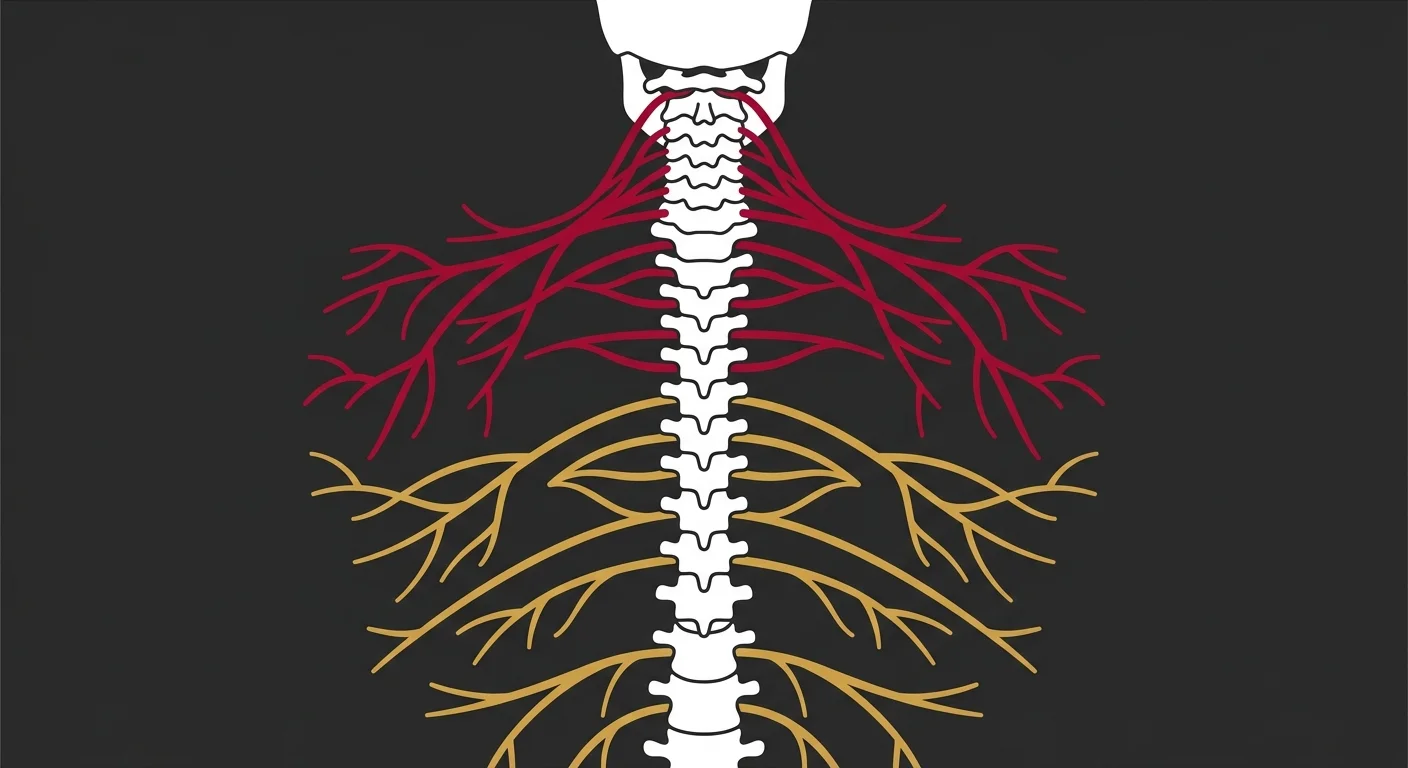
Your spine isn't just holding you upright. It's the physical housing of your nervous system — the channel your brain uses to run every organ, muscle, and tissue in your body.
Here's the thing — chronic stress doesn't just live in your head. It lives in your spine. The thoracic and cervical vertebral segments connect directly to the sympathetic nerve ganglia that fire the fight-or-flight response. Spinal tension and subluxation don't just cause local pain. They can physically lock the nervous system into sympathetic overdrive — keeping cortisol and epinephrine elevated long after the stressor is gone.
That's exactly what standard stress management walks right past. Breathing exercises reach the mind. Medication suppresses the signal. But neither addresses the structural reason the signal won't shut off. Once you understand how spinal adjustments calm fight-or-flight, the gap between managing symptoms and restoring function becomes impossible to ignore.
The Sympathetic-Parasympathetic Imbalance You Can Feel
The autonomic nervous system runs on a dial, not a switch. One end is sympathetic dominance — the accelerator. The other is parasympathetic dominance — the brake. In a regulated system, those two states balance each other. Stress hits the accelerator, the stressor clears, the brake engages, and the body recovers. That's how it's supposed to work.
But chronic stress jams the accelerator down. Cortisol and epinephrine flood the system. Heart rate climbs. Blood pressure follows. And the parasympathetic system never gets the signal to take over. CDC findings confirm that sustained sympathetic overload is a recognized driver of painful musculoskeletal disorders — the physical body breaking down under a stress load it can't clear.
That imbalance isn't abstract once you know what to look for. It's the tension that won't release no matter how much you stretch. It's the sleep that breaks at 3am even when you're running on empty. It's the low-grade headache parked behind your eyes every afternoon, or the low back that flares every time your workload spikes. Those aren't separate problems. They're one problem wearing different masks.
Where Cookie-Cutter Protocols Fail Stress Patients
Most practices running a cookie-cutter adjustment protocol on stress patients are solving the wrong problem. They're treating the tight neck and the shoulder tension — the surface symptoms — without ever assessing the autonomic state underneath. That's not a care plan. That's a template applied where a clinical evaluation belongs.
So the patient gets adjusted, feels better for two days, and the tension comes back. Because the spinal pattern driving their sympathetic overdrive hasn't changed. Autonomic dysregulation directly elevates cortisol biomarkers — and without addressing the structural contributors to that dysregulation, the cycle repeats. Visit after visit. Month after month. Nothing changes because nothing was assessed.
At Touch of Wellness Chiropractic, the assessment drives the care plan — not the diagnosis code, not the protocol that worked on the last patient with a similar complaint. Stress patients present differently. Their nervous systems are in different states. A provider who doesn't assess for that before adjusting isn't delivering nervous system care. They're delivering mechanical care with a nervous system label on it.
| Physical Symptom | System Being Disrupted | What's Actually Happening | Why It Persists Without Spinal Care |
|---|---|---|---|
| Chronic muscle tension that won't release — even with rest or stretching | Sympathetic nervous system / musculoskeletal system | Sustained sympathetic activation keeps muscles in a physiological state of readiness — the body can't fully release tension because the nervous system hasn't signaled safety | Standard interventions address the muscle directly but not the neurological signal keeping it contracted; tension returns as soon as the next stressor hits |
| Poor sleep despite exhaustion | Autonomic nervous system / parasympathetic recovery pathway | The parasympathetic 'rest and digest' state required for deep sleep can't fully engage while sympathetic overdrive remains physically active in the spinal nervous system | Sleep aids and breathing techniques may reduce the perception of wakefulness but don't restore the parasympathetic dominance the body needs to enter restorative sleep cycles |
| Recurring headaches — especially tension-type, behind the eyes or across the base of the skull | Cervical spine / autonomic nerve ganglia | Spinal tension and subluxation in the cervical and upper thoracic segments restrict normal nerve communication and perpetuate localized muscular contraction patterns | Without addressing the structural contributors in the cervical spine, the headache pattern resets even after temporary relief from medication or massage |
| Low-back pain that flares with stress spikes — not just physical activity | Thoracic and lumbar spine / sympathetic nerve chain | The thoracic vertebral segments are anatomically linked to the sympathetic ganglia — chronic spinal tension in this region physically reinforces the fight-or-flight loop and concentrates strain in the lower back | Treating the low-back pain as an isolated musculoskeletal issue ignores the autonomic driver; the pain recurs every time the nervous system re-engages the same sympathetic pattern |
| Elevated cortisol that doesn't normalize between stressors | Hypothalamic-pituitary-adrenal (HPA) axis / autonomic nervous system | Autonomic dysregulation keeps the physiological feedback loop that governs cortisol release in an overactive state — cortisol stays elevated because the system driving its release hasn't been reset | Cognitive coping strategies and medication address downstream cortisol effects; without restoring structural autonomic balance, the upstream signal continues producing elevated output |
How Chiropractic Adjustments Restore Autonomic Balance
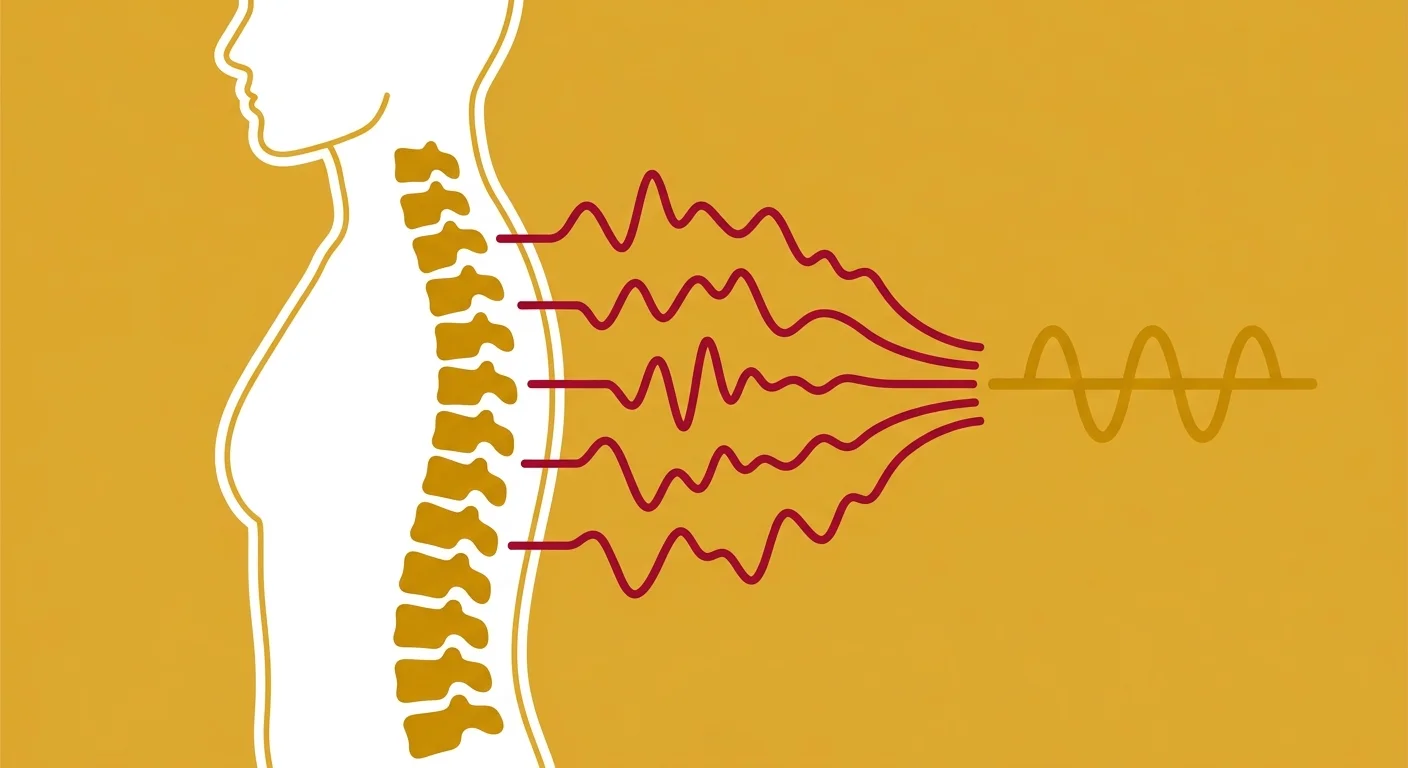
Here's the thing — a chiropractic adjustment isn't just moving a vertebra. It's sending a direct signal to the autonomic nervous system. NIH-published research confirms that spinal adjustments produce measurable changes in autonomic activity, including significant increases in parasympathetic output tracked through heart rate variability. That's not a subjective feeling of relaxation. That's a documented physiological shift in how the nervous system is actually running the body.
Cervical adjustments are where it gets clinically specific. Published NIH findings show that cervical spinal adjustment activates the parasympathetic nervous system — decreasing heart rate and shifting the LF/HF ratio toward a relaxed autonomic state. That's the brake finally engaging. For someone whose body has been locked in sympathetic overdrive for months, that shift isn't minor. It's the furnace getting a real signal to slow down — not just the thermostat reading differently.
And that autonomic shift doesn't stop at heart rate. Nervous system dysregulation directly elevates salivary cortisol biomarkers — and that dysregulation responds to physical therapies that address the nervous system structurally. For people who've hit a ceiling with symptom management, understanding the gap between that approach and biological restoration changes the entire conversation about what recovery actually requires. Complementary care like individualized massage therapy can support the process. But the adjustment is what resets the underlying autonomic architecture.
Heart Rate Variability as a Stress Recovery Benchmark
Most people have never heard of heart rate variability. That's a problem. It's one of the most reliable windows into how well the autonomic nervous system is actually functioning.
HRV measures the variation in time between each heartbeat. High HRV means the body is switching fluidly between sympathetic and parasympathetic states — responsive, regulated, able to recover. Low HRV means the nervous system is stuck. Usually locked into sympathetic dominance, unable to fully engage the parasympathetic brake. Spinal adjustments produce a significant increase in parasympathetic activity as measured by RMSSD — one of the primary HRV markers. That's the autonomic system moving in the right direction.
So when someone reports sleeping better, feeling less reactive, or noticing that neck tension isn't returning as fast between visits — that's not placebo. That's what improved autonomic regulation feels like from the inside. The LF/HF ratio shifting toward a relaxed autonomic state isn't an abstract data point. It's what the body experiences as the actual ability to recover. HRV gives us a way to track that objectively. And it makes clear why addressing the nervous system structurally produces outcomes that cognitive coping strategies simply can't reach on their own.
| Intervention Type | Effect on Sympathetic Nervous System | Effect on Parasympathetic Nervous System | Evidence Source |
|---|---|---|---|
| Spinal Adjustment (General) | Reduces sympathetic overactivation through neuromodulatory effects on the autonomic nervous system | Produces significant increase in parasympathetic activity (RMSSD) as measured by heart rate variability | NIH / NCBI (factClaim_02) |
| Cervical Spinal Adjustment | Shifts the LF/HF ratio away from sympathetic dominance toward a relaxed autonomic state | Activates the parasympathetic nervous system to decrease heart rate | NIH / NCBI (factClaim_03) |
| Physical / Manual Therapy (Structural) | Addresses autonomic dysregulation that sustains elevated cortisol biomarkers | Modifies salivary cortisol levels by restoring nervous system regulation | PubMed (factClaim_05) |
Who This Approach Is — and Isn't — For
Not everyone who walks through that door belongs here.
That's not a judgment. It's honest. The patients who get real traction here are the ones whose stress has crossed a line — it's not a mood problem anymore. It's a body problem. Sleep is broken. Pain keeps returning. Nothing they've already tried is holding.
The CDC recognizes chronic workplace stress as a primary driver of musculoskeletal disorders. So the patients who belong here are often the ones who've already been told their physical symptoms are stress-related — then handed a therapist referral and sent home.
That's not wrong. But it's incomplete.
When stress has locked the nervous system into sympathetic overdrive, cognitive support doesn't reach what's physically happening. The problem isn't upstream of the conversation. It's embedded in the spine.
But here's who this isn't for — and it's worth saying directly.
If you're arriving with a list of what your last provider did and need it replicated before the assessment is finished, this isn't the right fit. Assessment drives the care plan here. Not habit, not preference, not what worked on someone else's body.
If you expect one visit to undo months of nervous system dysregulation, that expectation won't survive contact with clinical reality. And if your skepticism runs deep enough that no clinical recommendation gets a fair trial — that's useful information for both of us. Better to name it before we start than waste both our time.
What a Nervous System Stress Recovery Plan Actually Looks Like
It starts with an assessment. Not a protocol.
The goal is understanding what's driving your nervous system into sympathetic overdrive — not running the same adjustment sequence that worked on the last patient with a vaguely similar complaint.
Stress patients present differently. Their autonomic states are different. A care plan built without that assessment isn't nervous system care. It's mechanical care with a different label on it.
Here's the thing — the tension you're carrying isn't just mental.
The structural basis of stress-driven tension is biological. The nervous system physically encodes chronic threat responses in the spine. That's what a care plan at Touch of Wellness Chiropractic is built around: identifying the specific spinal contributors to your autonomic dysregulation and addressing them in a sequence matched to what your body is actually doing.
Not what the diagnosis code says it should be doing.
And when something isn't producing results after a few visits, it changes.
That's not a concession. That's the clinical standard.
Medications mask the signal without restoring the regulation underneath it. Cookie-cutter protocols repeat themselves without adjusting. A care plan that doesn't evolve when the patient isn't responding isn't a care plan — it's a billing cycle.
The willingness to stop, reassess, and pivot isn't a weakness. It's the whole point.
| Patient Profile | Stress Pattern | What the Care Plan Addresses | Expected Engagement |
|---|---|---|---|
| Chronic stress with physical symptoms | Recurring tension, poor sleep, and pain that spikes with workload — stress has crossed from emotional into structural | Spinal contributors to sympathetic overdrive; autonomic regulation; the physical patterns locking the nervous system in fight-or-flight | Full assessment before care begins; active participation in the care plan between visits; willingness to follow a clinical lead |
| Post-medication plateau | Medications reduced acute symptoms but haven't restored underlying regulation — the tension keeps returning | The biological nervous system pathways that chemical agents suppress but don't reset; structural drivers of dysregulation | Openness to a different model; understanding that biological restoration takes more than one or two visits |
| Dismissed or incomplete diagnosis | Told symptoms are stress-related; referred to therapy; physical complaints left without a structural explanation | Root-cause identification of what's driving nervous system dysfunction; care built from what the patient actually reports | Sustained engagement with the care plan; trust in the assessment process rather than arriving with a preset protocol |
| One-visit expectation (not a fit) | Expects complete resolution from a single adjustment; not willing to engage a care plan | Nothing — this model requires clinical sequencing and reassessment over time, not a single-session fix | Not applicable — partial commitment produces partial results, and this model doesn't accommodate it |
| Protocol replicator (not a fit) | Arrives needing the exact adjustment sequence from a previous provider; unwilling to undergo a fresh assessment | Nothing until assessment is complete — the care plan follows the clinical picture, not prior habit or preference | Not applicable — assessment is always the starting point here, without exception |
Frequently Asked Questions
Good. Now let's get into the questions that actually matter.
Most of the doubts that show up here are about the mechanism. How does an adjustment actually change the nervous system? Does cortisol actually respond? Do these symptoms even qualify? Here's what the evidence says — no softening, no qualifications.
How do spinal adjustments calm the body's fight-or-flight response?
A spinal adjustment isn't just a joint movement. It sends a direct neurological signal to the autonomic nervous system.
Research confirms it: spinal adjustments produce measurable increases in parasympathetic output, tracked through RMSSD — the heart rate variability marker that shows the body's brake system actually engaging. Not a feeling. A documented physiological shift.
Cervical adjustments get even more specific. Published findings show they decrease heart rate and shift the autonomic balance toward a relaxed state — pulling the body out of sympathetic overdrive. That's not relaxation in any soft sense. That's the furnace finally receiving a signal it hasn't gotten in months.
Why do medical stress relief medications fail to provide long-term biological restoration?
Because they suppress the signal. They don't restore the system generating it.
Standard stress medications quiet the symptoms of autonomic dysregulation — temporarily. But the spinal contributors keeping the nervous system locked in fight-or-flight? Still there. Still active.
The furnace keeps running. The display just reads lower.
Nervous system dysregulation that's physically encoded in the spine can't be chemically resolved. It needs a structural intervention that reaches the autonomic pathways directly — not a chemical layer sitting on top of them.
How does nervous system stress recovery differ from standard stress management?
Standard stress management works at the level of perception. It teaches you to respond differently to the signal. That's not nothing — but it doesn't touch the autonomic nervous system structurally.
Here's what that means in biological terms: chronic sympathetic activation floods the body with cortisol and epinephrine, increasing heart rate, blood pressure, and systemic physical tension. Cognitive tools don't reverse that state. They change how you interpret it while it's still happening.
Nervous system stress recovery addresses why the body is still generating a threat response even when the cognitive mind knows the threat is gone. Targeted chiropractic care restores the physical pathways governing autonomic regulation — not how stress feels, but what's producing it.
Can chiropractic adjustments lower high cortisol levels caused by chronic stress?
Not directly — and that distinction matters.
But here's the connection: autonomic nervous system dysregulation directly elevates cortisol biomarkers. When the nervous system is stuck in sympathetic dominance, cortisol stays elevated. When structural care restores autonomic regulation, that dysregulation begins to resolve.
The adjustment isn't targeting cortisol specifically. It's addressing the nervous system state driving cortisol elevation in the first place. It's not a cortisol treatment. It's a structural intervention that changes the biological conditions producing elevated cortisol.
What are the physical symptoms that indicate my nervous system is stuck in fight-or-flight?
The clearest sign is tension that won't release between visits — or snaps back the moment pressure builds again.
Sleep that won't stay fixed. Recurring pain that spikes with stress but doesn't trace to any obvious structural injury. Headaches that track with high-demand periods. A jaw that won't unclench.
Chronic sympathetic activation produces real physical consequences — elevated cortisol, increased heart rate, systemic musculoskeletal tension that compounds over time. If your body is carrying those symptoms and standard interventions haven't moved the needle, that's not a mood problem. That's your nervous system telling you the furnace is still running.
The Nervous System Doesn't Reset on Its Own
The nervous system doesn't reset because you decided to think differently. It doesn't reset because you took a week off. It resets when the structural contributors to its dysregulation are actually addressed.
That's the gap standard stress management steps right over. Every time. It adjusts the display. It never touches the furnace.
Spinal adjustments produce documented, measurable changes in autonomic nervous system activity — increases in parasympathetic output, a real shift in the body's balance away from overdrive. That's not a theory about relaxation. That's the furnace finally getting a signal it hasn't received in months.
For someone whose body has been locked in sympathetic overdrive long enough to produce broken sleep, recurring pain, and tension that won't let go — that signal isn't a better number on the display. It's the beginning of actual recovery.
So if you've run the standard path — and you're still carrying the same tension, the same disrupted sleep, the same low-grade pain that spikes the moment pressure builds — the question isn't whether stress is real. It's whether what you've been doing is reaching the system that's generating it.
At Touch of Wellness Chiropractic, that's where every assessment starts: the nervous system, not the symptom list. Because you can manage the display forever. The furnace never stops running.
The only question left is whether you're ready to address what's actually keeping it on.
The furnace never stops running — until something actually reaches it. At Touch of Wellness Chiropractic, the assessment starts with your nervous system. Not a symptom checklist. Not a protocol recycled from whoever came in before you. What you actually report drives what happens next. If you want to know whether your nervous system is what's been running the whole show, Book Appointment — and let the assessment do what the standard path didn't.
Copyright Touch of Wellness Chiropractic 2026
1101 W Jackson St, Suite A Morton, IL 61550
Web Design by iTech Valet