
(309) 321-8412 | 1101 W Jackson St, Suite A, Morton, IL 61550
(309) 321-8412 | 1101 W Jackson St, Suite A, Morton, IL 61550
How Spinal Adjustments Calm the Body's Fight or Flight Response
Spinal adjustments calm the fight-or-flight response by removing physical interference along the sympathetic nerve pathways that run the length of the spine.
The spine is not structural scaffolding. It is the circuit board that routes every autonomic signal the brain sends to every organ, gland, and tissue in the body. When mechanical pressure builds against those pathways — through misalignment, joint restriction, or accumulated structural stress — the body's alarm system gets stuck in the on position. And it stays there. Rest doesn't fix it. Breathing exercises don't fix it. Stress management doesn't fix it. Because none of those address the physical source of the signal.
The mechanism is structural. When the spinal channel is compressed or irritated, the brain receives a continuous incoming signal of threat. A targeted chiropractic adjustment removes that compression. It restores mechanical motion to the affected joint and breaks the irritation cycle that has been keeping the alarm running.
The physiological response is measurable. After a spinal adjustment, the body shifts toward parasympathetic activity — the recovery state — with documented increases in heart rate variability and a mean post-treatment decrease in resting heart rate of 2.5 beats per minute. Salivary cortisol, a direct biomarker of physiological stress, drops by an average of 22.7% within 30 minutes of treatment. Systolic blood pressure decreases by an average of 8 mm Hg immediately following targeted adjustment. These are not subjective reports of feeling calmer. These are objective, measurable changes in how the body functions.
Fight-or-flight is not a mindset problem. It is a nervous system state that, when chronic, is maintained by physical factors the nervous system cannot resolve on its own. Passive relaxation strategies work within the system as it is currently running. A chiropractic adjustment changes the structural conditions the system is running under. That distinction determines whether someone gets temporary relief — or finally gets to flip the switch back.
Last Updated: June 22, 2026
- • What Fight or Flight Actually Does to Your Body
- • Why the Spine Is the Control Panel for Your Stress Response
- • Why the Spine Is the Control Panel for Your Stress Response
- • What a Targeted Spinal Adjustment Actually Does to the Nervous System
- • How to Tell If Your Nervous System Is Actually Resetting
-
• Frequently Asked Questions
- • How exactly do spinal adjustments affect my nervous system?
- • What does it feel like when the body exits fight or flight mode?
- • How many chiropractic sessions are needed to calm chronic stress?
- • Can spinal adjustments help with anxiety and panic attacks?
- • How does Touch of Wellness Chiropractic's approach differ from standard stress management?
- • Your Nervous System Has Been Waiting Long Enough
What Fight or Flight Actually Does to Your Body
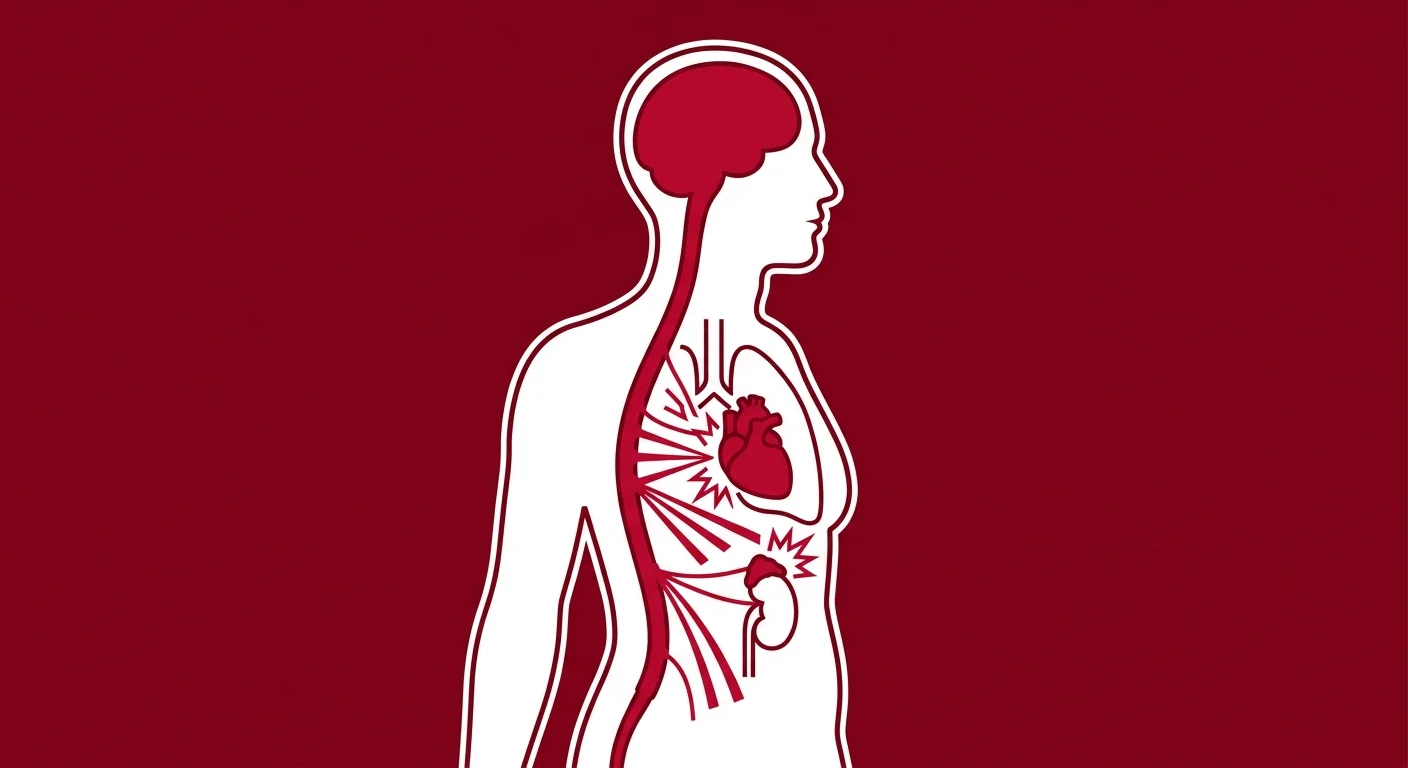
You already know what it feels like. The heart that won't slow down. The jaw you're clenching at 2 a.m. The exhaustion that still can't get you to sleep.
Here's the thing: this system was built for a short window. Switch on. Do the job. Switch off. That's the whole design. But the spine — the circuit board routing every autonomic signal in your body — can physically hold that switch open. And when it does, the alarm doesn't fade. It runs.
When structural pressure builds along the sympathetic nerve pathways in the spine, the off switch stops working. The brain keeps receiving a threat signal. The alarm stays on. Breathing exercises don't reach that. Meditation doesn't reach that. Even the most disciplined lifestyle overhaul doesn't touch the underlying structural condition — which is exactly why nervous system stress recovery requires a physical solution, not just a behavioral one.
The Alarm System That Was Never Meant to Stay On
Fight-or-flight isn't chaos. It's precision engineering. A real threat triggers an exact cascade: stress hormones flood the bloodstream, blood reroutes to the muscles, focus sharpens to a point. Everything else — digestion, immune response, cellular repair — shuts off. The body doesn't need those systems in the next 90 seconds. It needs to survive.
That shutdown is intentional. It's a trade-off the body was built to make once, briefly, and then exit. Not for weeks. Not for months. Not for years.
But when mechanical irritation along the sympathetic chain keeps feeding the brain a low-grade threat signal, the body never gets to exit. The alarm just runs. NIH research measured this directly — skin conductance levels, a hard marker of alarm-system activity, drop by up to 15% immediately after targeted spinal intervention. That's not relaxation. That's the body being structurally permitted to stop running at full alarm — because the physical input driving it finally changed.
The Physical Cost of Chronic Sympathetic Overdrive
A nervous system stuck on high alert doesn't stay quiet in the background. It rewrites the operating conditions for every system that depends on recovery to function.
Sleep breaks down first. The parasympathetic state required for deep, restorative sleep can't establish itself when the alarm is still firing. Digestion slows. Immune regulation turns erratic. Muscle tension accumulates in the neck, shoulders, and low back — not because of psychological stress in some abstract sense, but because the nervous system is physically holding the body in a state of readiness it never gets to release.
This is what most standard approaches walk right past. They work inside the alarm state as it's currently running. They don't change the structural conditions producing it. Spinal adjustments reduce the mechanical pressure along the sympathetic trunk that is sustaining the overload — restoring homeostatic neural flow and changing how the central autonomic network processes incoming signals. The circuit board stops shorting. And the system finally has a structural reason to power down.
| Body System | Acute Fight or Flight Response | Chronic Activation Consequence |
|---|---|---|
| Cardiovascular | Heart rate and blood pressure spike to push oxygen to the muscles | Sustained elevation strains the heart, raises baseline blood pressure, and increases cardiovascular load over time |
| Digestive | Digestion slows or halts — the body redirects resources away from non-essential functions | Chronic suppression leads to irregular motility, nutrient absorption problems, and persistent gut discomfort |
| Immune | Inflammatory response activates to prepare for potential injury | Prolonged activation dysregulates immune function, increasing susceptibility to illness and slowing tissue repair |
| Musculoskeletal | Muscles tense throughout the neck, shoulders, and back to prepare for action | Sustained tension accumulates as chronic pain, joint restriction, and postural dysfunction that compounds over time |
| Sleep | The body suppresses melatonin and restorative processes to maintain alertness | The parasympathetic state required for deep sleep cannot establish — sleep quality deteriorates and recovery deficits build |
| Hormonal | Cortisol and adrenaline flood the system to fuel the immediate survival response | Chronically elevated stress hormones disrupt mood regulation, energy levels, and long-term endocrine balance |
Why the Spine Is the Control Panel for Your Stress Response
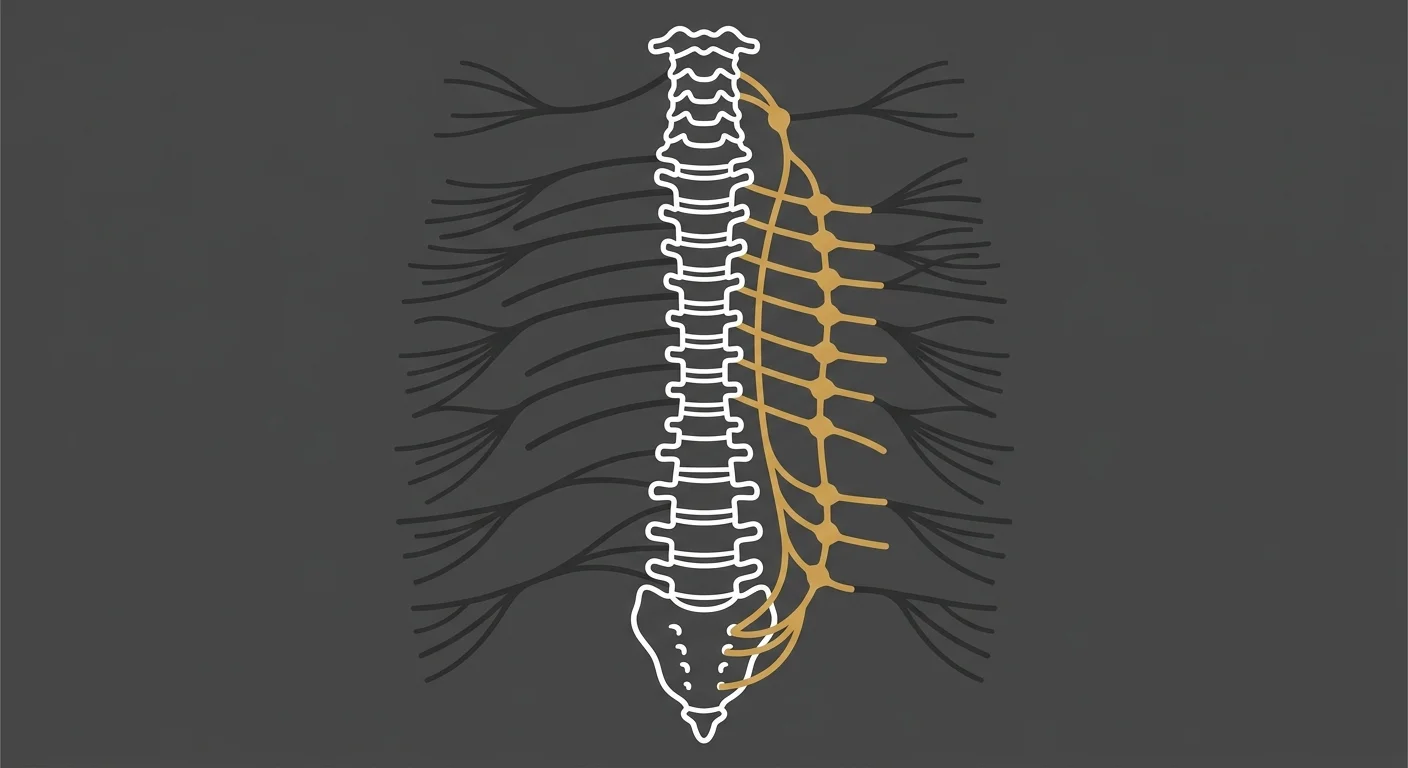
The spine isn't scaffolding. It is the circuit board the brain uses to route every autonomic signal in the body — every command that tells the heart how fast to beat, the gut when to digest, the immune system when to finally stand down.
And that communication runs both directions. Signals travel down from the brain to direct organ function. Signals travel back up, reporting on conditions throughout the body. When the structural channel carrying those signals gets mechanically compressed or irritated, the signal distorts. The brain responds to the distorted version — not to what's actually happening in the body.
This is why no breathing technique resolves a structurally driven stress response. The problem isn't how you're thinking about the threat. The problem is in the circuit board. And the circuit board is physical.
The Sympathetic Trunk Runs Right Next to Your Vertebrae
Here's the piece most people never hear: the sympathetic nerve chain — the physical wiring of your alarm system — runs directly alongside the vertebral column.
It isn't buried deep, safely insulated from structural pressure. It sits immediately adjacent to the vertebrae. That means any joint restriction, postural shift, or accumulated compression in the spine has a direct line to the nerves controlling how alarmed your body is running right now. Spinal adjustments reduce that mechanical irritation along the sympathetic trunk — restoring homeostatic neural flow and changing how the central autonomic network processes the signals it's receiving.
That proximity is the whole story. It's why chiropractic care in Morton, IL produces effects that go well beyond a sore back. Structural intervention reaches places that breathing exercises and relaxation strategies simply cannot touch.
Mechanical Interference and the Nervous System Signal Chain
When a vertebral segment loses normal mechanical motion, it doesn't just create local pain. It creates a low-grade, continuous irritation at the exact location where the sympathetic chain is exposed. The brain reads that irritation as an unresolved threat signal. So it keeps the alarm running.
The alarm stays on — not because the person is anxious or lacks coping skills. It stays on because the structural input feeding the nervous system hasn't changed. Nothing in the mental or emotional toolkit touches that. Spinal adjustments directly enhance vagal tone, elevating the physiological markers tied to restorative sleep and digestion — the exact functions the body shuts down when the alarm is still running.
So the path from chronic alarm to actual recovery isn't psychological. It's mechanical. Remove the interference. Restore the signal. The nervous system knows what to do once the structural reason to stay alarmed has been cleared.
| Spinal Region | Sympathetic Nerves Served | Stress Symptom When Compressed |
|---|---|---|
| Cervical (Neck) | Nerves serving the head, jaw, eyes, and upper shoulder girdle | Chronic tension headaches, jaw clenching, disrupted sleep onset, neck stiffness that won't release |
| Upper Thoracic (Upper Back) | Nerves serving the heart, lungs, and upper airways | Elevated resting heart rate, shallow breathing patterns, persistent chest tightness under stress |
| Mid Thoracic (Mid Back) | Nerves serving the stomach, liver, and adrenal glands | Digestive disruption, cortisol dysregulation, mid-back pain that intensifies during high-stress periods |
| Lower Thoracic (Lower Back Transition) | Nerves serving the kidneys, small intestine, and lower digestive tract | Bloating, irregular digestion, lower back tension that accumulates without a clear postural cause |
| Lumbar (Low Back) | Nerves serving the large intestine, bladder, and lower extremities | Pelvic tension, leg heaviness, disrupted elimination patterns, low back pain that worsens under prolonged stress |
| Sacral (Base of Spine) | Nerves serving reproductive organs and pelvic floor | Pelvic floor tension, hip tightness, difficulty fully releasing physical tension even during intentional rest |
Why the Spine Is the Control Panel for Your Stress Response
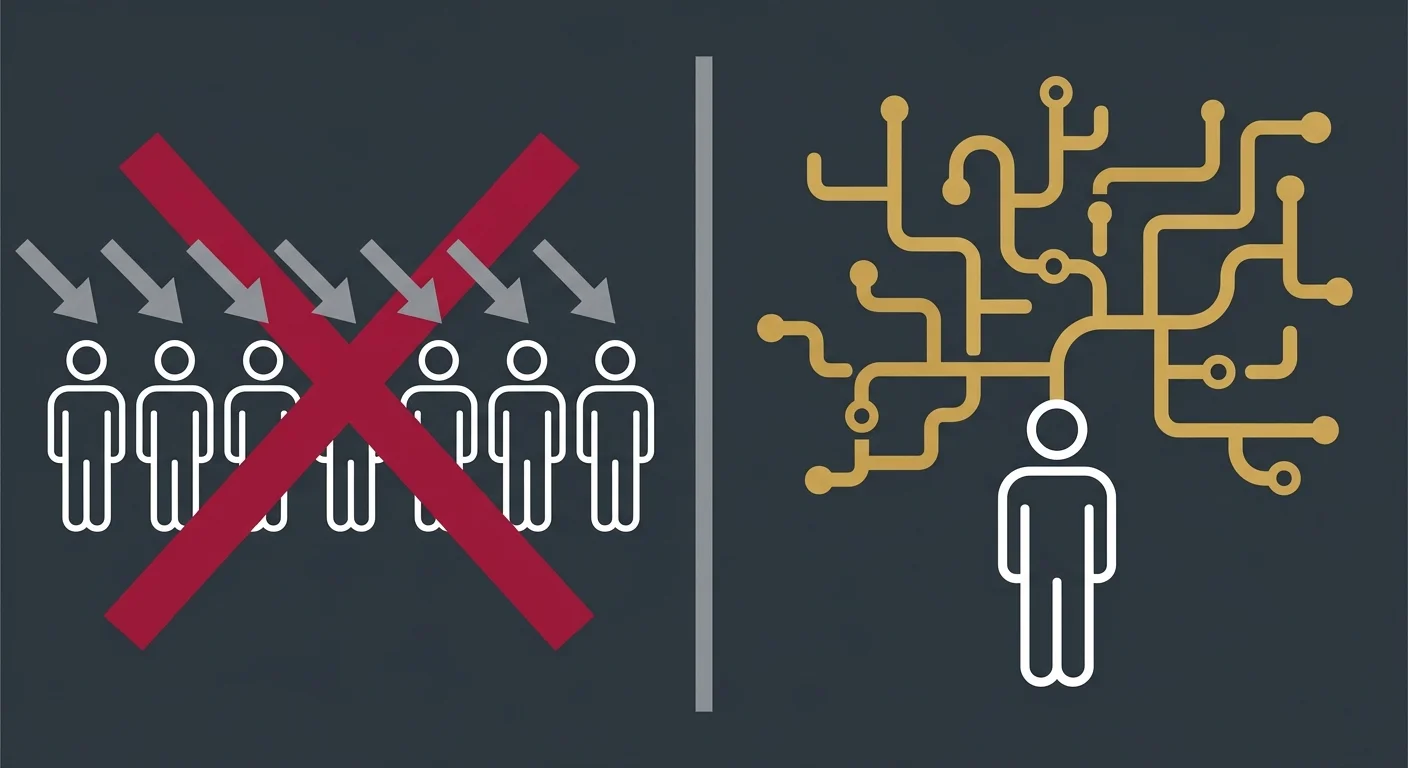
The spine isn't scaffolding. It's the circuit board the brain uses to route every autonomic signal in your body — every command telling your heart how fast to beat, your gut when to digest, your immune system when to finally stand down.
When that circuit board is mechanically compromised, the signals distort. And the body runs on the distorted version. NIH-documented findings confirm that spinal manipulative therapy produces a statistically significant shift toward parasympathetic dominance — measurably increasing heart rate variability parameters. That's not a relaxation response. That's a structural reason for the body to stop running on high alert.
That shift doesn't come from breathing differently. It comes from removing the physical interference that was shorting the circuit.
The Cookie-Cutter Adjustment Problem
Here's the problem most patients never name — but almost every one of them has lived it. The previous provider ran the same sequence every single visit. Didn't matter what the patient reported. The routine didn't change.
A fixed protocol doesn't treat you. It treats a diagram of you.
And a diagram can't tell you which segments are restricting autonomic signal flow in your specific body right now. It can't account for how long the irritation has been building, or which part of the sympathetic chain is the actual problem. The protocol just runs. Whether it's hitting the right target or not.
So what happens? The alarm quiets — briefly. Enough temporary relief to keep coming back. But the structural interference was never actually cleared, so nothing stays down.
They come back in with the same complaint. The care plan continues. The root cause doesn't move. That's not a bad outcome. That's the model working exactly as designed — for the practice, not the patient.
Spinal adjustments enhance vagal tone and raise the physiological markers tied to restorative sleep and digestion. But that only happens when the adjustment targets the segments actually generating the interference.
Take that specificity away and you're back to the template. Which is exactly why patients who've cycled through that system have come to distrust standard stress management approaches — not because they didn't try hard enough, but because nothing they tried addressed the structural source.
Who This Approach Is Not Built For
This approach is built for patients who are willing to follow a clinical lead. The assessment drives the plan. Not the other way around.
If you're coming in with a list of what your last chiropractor did — and you need that replicated before the assessment even starts — that's the wrong fit. The care plan at Touch of Wellness Chiropractic is built from what your nervous system is actually doing right now. Not from another provider's habit.
If that requires negotiation before the first session is finished, we won't serve each other well. That's not a harsh statement. It's just the truth said early enough to matter.
If you want to show up, follow the clinical process, and give the assessment an honest run — that's where this conversation starts.
But if you need the outcome guaranteed before the first visit is finished, or if your mind is already closed before we've looked at anything, the structure of this practice won't change to accommodate that. That's not a judgment. It's just honest.
What a Targeted Spinal Adjustment Actually Does to the Nervous System
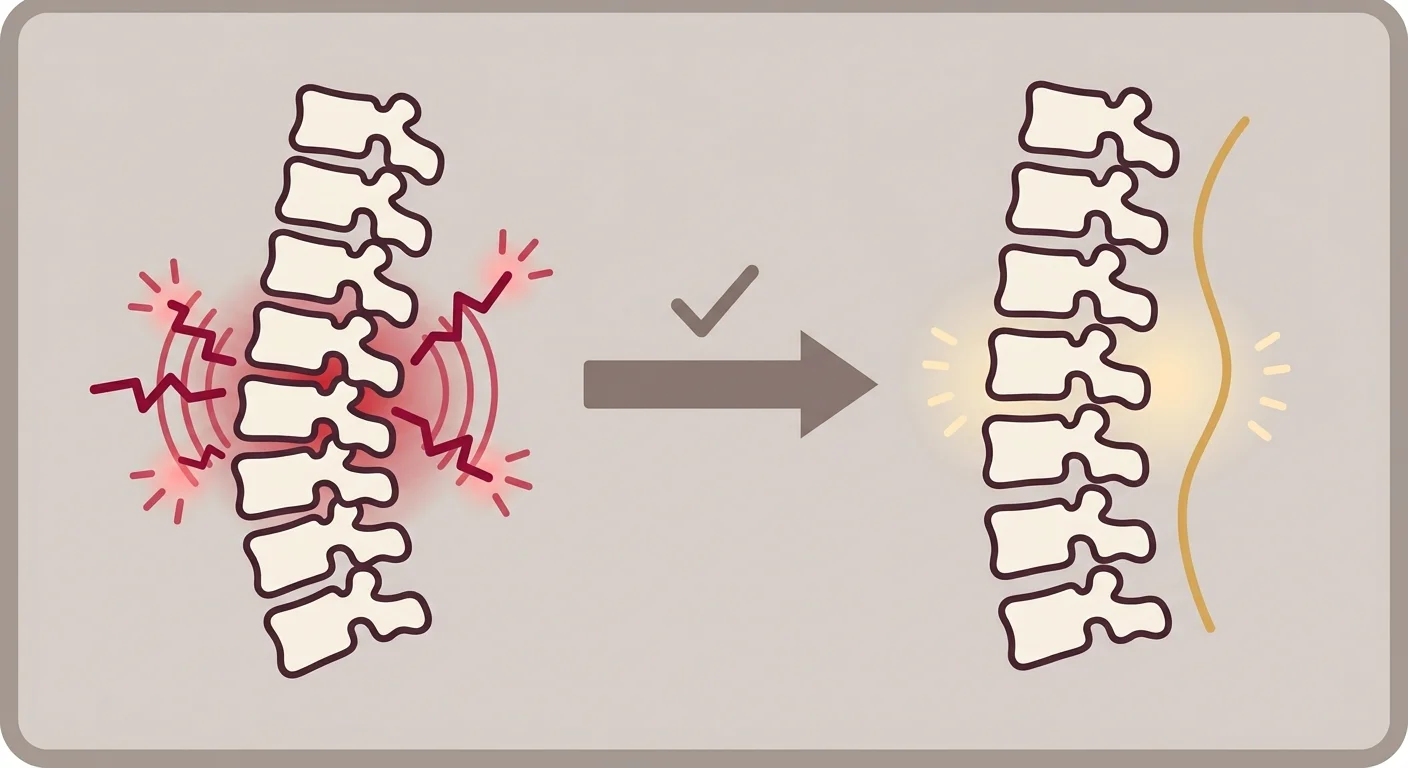
Here's what actually changes when the right segment gets a targeted adjustment: the body finally has a structural reason to stand down.
That's not a metaphor. The alarm isn't quieted by breathing or mindset work. It's quieted when the physical interference sustaining it is removed.
A chiropractic adjustment targeting the specific vertebral segment generating mechanical irritation doesn't just relieve local tension. It changes what the brain is receiving from the sympathetic chain. And the body responds to that changed input immediately.
And the effects aren't abstract. They're measurable — and they show up fast, in the exact systems the alarm had been holding hostage.
The Shift From Alarm to Recovery Mode
The shift from alarm to recovery isn't a gradual process that takes weeks to register. NIH clinical data confirms that targeted spinal adjustments trigger measurable reductions in salivary cortisol — the body's primary stress biomarker — by an average of 22.7%.
That change happens within 15 to 30 minutes of the adjustment. Not days later. Not after a full care plan. Within the same visit.
Salivary amylase — another direct marker of the alarm response — downregulates in the same window. The evidence on whether chiropractic care lowers systemic cortisol consistently points to the same conclusion: clear the structural interference, and the biochemistry follows.
That's not the body deciding to relax. That's the body's chemistry responding to a changed structural input.
That's the circuit finally flipping back. Not because the patient chose to relax. Because the physical input keeping the alarm open was removed — and without it, the nervous system returned to the state it defaults to when nothing is structurally forcing it to stay alarmed.
What the Research Measures After a Precise Adjustment
The research doesn't stop at stress hormones. It tracks the cardiovascular signature of what recovery actually looks like — and the numbers are specific.
Spinal adjustments produce a statistically significant shift toward parasympathetic activity, with measurably increased heart rate variability. Resting heart rate drops by a mean of 2.5 beats per minute post-treatment.
And according to NIH-verified findings, systolic blood pressure lowers by an average of 8 mm Hg immediately after a targeted adjustment — with concurrent stabilizing effects on diastolic pressure.
Heart rate variability is the clinical gold standard for measuring the nervous system's capacity to shift between alarm and recovery. When it rises, the body is no longer locked in.
When blood pressure drops in the same window, the cardiovascular system is following the nervous system's lead — settling into the recovery state it had been structurally held out of. That's not relaxation. That's the circuit board coming back online.
Not a mindset shift. A structural one.
| Biomarker | Direction of Change Post-Adjustment | What It Signals |
|---|---|---|
| Heart Rate Variability (HF Power) | Increases significantly | The nervous system is shifting out of high-alert mode and regaining the ability to move between alarm and recovery states |
| Resting Heart Rate | Decreases by a mean of 2.5 beats per minute | The cardiovascular system is following the nervous system's lead — no longer sustaining the output load of a body stuck in alarm |
| Salivary Cortisol | Drops by an average of 22.7% within 15–30 minutes | The body's primary stress biomarker is falling — a direct biological signal that the alarm response is winding down |
| Salivary Amylase | Downregulates within 15 to 30 minutes post-adjustment | A second direct marker of the alarm response is clearing — confirming the cortisol drop is not an isolated reading |
| Systolic Blood Pressure | Lowers by an average of 8 mm Hg immediately post-adjustment | The cardiovascular system is registering the structural clearance — pressure drops because the nervous system is no longer commanding a high-output alarm state |
| Diastolic Blood Pressure | Concurrent stabilization following adjustment | The full blood pressure picture stabilizes — not just the top number — confirming a systemic autonomic shift, not a localized or transient effect |
How to Tell If Your Nervous System Is Actually Resetting
Feeling better after an adjustment is real. But feeling better isn't the same as recovering.
Conflating the two is exactly how people end up in the same cycle six weeks later — surprised, frustrated, and right back where they started.
The alarm system doesn't announce when it's stepping back. It's quieter than that. The systems it had been suppressing start coming back online — and you notice them not because they announce themselves, but because things you'd stopped expecting start working again.
Sleep deepens. Digestion normalizes. The background physical tension that had become so familiar it stopped registering as tension starts to ease. That's not a mood shift. That's the body redistributing resources it had been holding in reserve for an emergency that never arrived.
Those are the signals worth tracking. Not "I felt relaxed for an hour." Not "the pain was less on the way home."
The real question is whether the body is staying down between sessions. That's the line between temporary relief and the nervous system genuinely achieving Nervous System Stress Recovery in Morton, IL.
Observable Recovery Signals That Matter Clinically
Sleep is usually the first honest indicator. When the alarm is running, the body treats sleep as a liability. It keeps arousal elevated, compresses deep sleep cycles, and leaves you waking up exhausted — even after eight hours.
When the structural interference is cleared and the nervous system shifts toward recovery, sleep changes. Not slightly. Noticeably. That's not the body deciding to relax. That's the body no longer receiving a structural reason to stay on guard through the night.
Skin conductance is one of the markers researchers use to track this shift objectively. Thoracic spinal adjustment causes skin conductance levels to drop by up to 15% immediately post-intervention — the physiological signature of the alarm response stepping back.
And it doesn't reverse within minutes. What follows is a sustained inhibitory phase. That's what allows the body to stop burning resources on high-alert maintenance and redirect them toward tissue repair, immune function, and actual recovery. The difference between those two outcomes is structural.
The cardiovascular system confirms the same shift. Systolic blood pressure drops by an average of 8 mm Hg immediately following a targeted adjustment, with concurrent stabilizing effects on diastolic pressure. Resting heart rate drops by a mean of 2.5 beats per minute post-treatment.
These aren't placebo effects. They are the cardiovascular system responding to a structural input that finally told the nervous system the threat has cleared. People comparing Nervous System Stress Recovery vs. standard stress management often find these objective markers more convincing than anything they could put into words.
The Difference Between Temporary Relief and Structural Recovery
Temporary relief feels like recovery. That's the problem. It's convincing enough to stop the patient from asking whether the improvement is actually holding — which is the only question that matters.
The question isn't whether the appointment helped. The question is whether the nervous system held the improvement — or reset back to baseline within 48 hours.
Salivary cortisol drops by an average of 22.7% within 15 to 30 minutes of a targeted adjustment. But that reduction only persists when the structural interference generating the alarm signal has actually been cleared. If the mechanical irritation is still present, cortisol follows the structural input back up. The patient is back where they started before the next session even arrives.
Structural recovery looks different. The improvement carries. Sleep stays improved — not just the night of the adjustment. The background tension that had been running at a constant low level stops returning at the same intensity between visits.
The body isn't fighting to maintain a temporary state. It's operating from a new baseline. That's what it means to flip the switch back — not flipped for a session, but held there because the structural reason to stay alarmed has been removed.
Complementary support like Massage Therapy can help the body sustain that new baseline. But only after the structural clearance is in place. Without it, soft-tissue work is managing a symptom the structure is still producing.
| Recovery Signal | Temporary Suppression Pattern | Structural Reset Pattern |
|---|---|---|
| Sleep quality | Feels more rested the night of the adjustment; returns to broken or shallow sleep within 1–2 days | Sleep depth improves and holds — fewer wake-ups, more consistent recovery across the week |
| Baseline tension level | Muscle tension eases immediately after the session but rebuilds to the same chronic level before the next visit | Background tension gradually decreases between sessions — the body stops returning to its previous high-alert default |
| Pain response between visits | Symptoms reduce for 24–48 hours, then climb back to pre-appointment levels on a predictable cycle | Intensity and frequency of symptoms progressively decrease — the floor keeps dropping, not just the peaks |
| Digestive function | No noticeable change — digestion remains irregular, sluggish, or reactive regardless of appointment frequency | Digestion begins to regulate as the body exits high-alert mode and redirects resources toward restorative functions |
| Resting heart rate and blood pressure | Values may dip immediately after the adjustment but return to elevated baseline within hours | Cardiovascular indicators begin trending downward across sessions — the body is settling into a new structural baseline |
| Stress threshold | Daily stressors trigger the same outsized physical response — tight chest, shallow breathing, rapid heart rate | The body's reaction to ordinary stress becomes proportionate — the alarm system no longer fires at full intensity for low-level inputs |
Frequently Asked Questions
But understanding the mechanism doesn't automatically close the gap. Here are the questions that tend to do that.
These are the ones worth answering honestly.
How exactly do spinal adjustments affect my nervous system?
The sympathetic chain — the nerve network running your alarm response — runs directly alongside the vertebral column. When a spinal segment loses normal mechanical motion, it creates a continuous low-grade irritation at that site. The brain reads that as an unresolved threat. So the alarm keeps running.
A chiropractic adjustment removes the mechanical interference at the source. Once the structural input changes, the nervous system stops receiving the instruction to stay on high alert.
That's not a theory. It's measurable. Spinal adjustments produce a statistically significant increase in heart rate variability — the clinical standard for tracking whether the nervous system can actually move between alarm and recovery. Resting heart rate drops by a mean of 2.5 beats per minute post-treatment. Salivary cortisol falls by an average of 22.7% within 15 to 30 minutes of an adjustment.
Not relaxation. The structural input changed — and the body responded to what it was actually receiving.
What does it feel like when the body exits fight or flight mode?
It doesn't feel like a switch flipping. It feels like an absence.
The background tension that had become so constant it stopped registering as tension begins to ease. Sleep deepens. The jaw unclenches. That level of physical vigilance you've been carrying — the one that felt like just how you are — turns out not to be your baseline at all.
Exiting high alert is less of an event and more of a recalibration. The alarm stops suppressing recovery functions. Digestion, sleep, and tissue repair come back online. Research tracking vagal tone following spinal adjustment shows the physiological markers associated with restorative sleep and digestion rise as the body exits chronic alarm.
The most reliable signal that something real is happening: the improvement carries between sessions. Sleep stays better — not just the night of the adjustment. That's the difference between temporary relief and the nervous system actually holding a new baseline.
How many chiropractic sessions are needed to calm chronic stress?
There's no universal number. Any provider who gives you one before completing a clinical assessment is working from a billing calendar — not your nervous system.
What the research confirms is that measurable change begins immediately. Cortisol drops within 15 to 30 minutes of a targeted adjustment. Heart rate variability shifts toward recovery parameters post-treatment. The structural interference doesn't take months to respond — but how deep it runs, how long it's been present, and how the body has been compensating around it determines how many sessions are needed before the improvement holds on its own.
The honest answer: the care plan is built from your clinical picture — and it changes when the clinical picture changes. The goal is always to reach the point where the body no longer needs the session to maintain what it gained from the last one. That's the target. Not a visit count someone else decided before they knew anything about your spine.
Can spinal adjustments help with anxiety and panic attacks?
Anxiety and panic are outputs. The alarm system stuck in the on position is the input sustaining them. Chiropractic adjustment works on the structural input — not on the psychological experience directly, but on the physical interference keeping the nervous system in the state where anxiety and panic are the predictable result.
When the structural irritation along the sympathetic chain is cleared and vagal tone increases, the body's capacity to exit alarm mode improves. Systolic blood pressure drops by an average of 8 mm Hg immediately following a targeted adjustment — the cardiovascular system settling out of the high-alert posture that anxiety lives inside. That's a measurable shift in the physiological environment anxiety operates in.
This isn't a replacement for appropriate mental health care. But for patients whose anxiety has a significant physical component — whose body is generating alarm signals the mind is then interpreting — addressing the structural input isn't optional. It's foundational. You can't think your way out of a circuit that's physically shorted.
How does Touch of Wellness Chiropractic's approach differ from standard stress management?
Standard stress management works on the output. Breathing, meditation, relaxation programs — they're asking the mind to override an alarm the body is still generating from a structural source. They can reduce the experience of stress in the moment. They can't clear the mechanical interference producing the signal.
At Touch of Wellness Chiropractic, the assessment starts with what the nervous system is actually doing — not with a protocol applied to a chief complaint. Dr. Karen Hannah's Zoology background means the nervous system gets evaluated as a biological system with interconnected inputs. Not as a list of symptoms to be managed in isolation.
The difference is structural. When the physical source of the alarm signal is identified and cleared through precise spinal adjustment, the body's chemistry follows — cortisol drops, heart rate variability rises, cardiovascular output stabilizes. Soft-tissue work, relaxation strategies, and recovery support all become more effective once the structural interference is removed.
Without that clearance, they're managing a symptom the structure is still producing. That's the gap every standard approach walks right past — and it's why patients who've tried everything else are still looking for an answer.
Your Nervous System Has Been Waiting Long Enough
The alarm doesn't stay on because your body wants to suffer.
It stays on because nothing has changed the structure running it. Breathing exercises work on the output. A chiropractic adjustment works on the input. That's the gap every passive approach misses — and it's why none of them hold.
Remove the interference. The nervous system stops getting the instruction to stay on high alert. Not for a session. Not until next week. The circuit board finally has a reason to flip the switch back.
Here's the thing. The spine isn't scaffolding.
It's the circuit board routing every autonomic signal the brain sends to every organ, gland, and system in the body. When mechanical interference builds along that circuit, the alarm runs hot. Indefinitely. And nothing passive changes that input.
Precise spinal adjustment removes the interference. The body's chemistry follows. Cardiovascular output follows. Recovery capacity follows. All of it traces back to one structural fact: when the physical reason to stay alarmed is cleared, the nervous system does exactly what it was designed to do. It powers down.
At Touch of Wellness Chiropractic, Dr. Karen Hannah's systems-biology background means the nervous system gets assessed as a system — not as a running list of complaints managed one visit at a time.
If your body has been running on high alert long enough that it stopped feeling like a problem and started feeling like a personality — that's not who you are. That's a structural issue that hasn't been addressed yet.
The question isn't whether you've tried enough. The question is whether anything you've tried actually changed the input. Until the interference is cleared, nothing shifts. But when it is — that's when you finally flip the switch back.
If stress has been your default setting long enough that it feels normal — it isn't. That's your nervous system stuck in a state it was never meant to hold permanently. The only way to know what's driving it is to actually look at the structure. Book Appointment and find out what's been keeping the alarm on.
Copyright Touch of Wellness Chiropractic 2026
1101 W Jackson St, Suite A Morton, IL 61550
Web Design by iTech Valet