
(309) 321-8412 | 1101 W Jackson St, Suite A, Morton, IL 61550
(309) 321-8412 | 1101 W Jackson St, Suite A, Morton, IL 61550
Can Chiropractic Care Help With Mental Clarity and Cognitive Focus?
Chiropractic care improves mental clarity and cognitive focus by reducing the autonomic stress load that suppresses prefrontal cortex function.
The spine is the primary pathway of the central nervous system — not simply a structural column. When spinal joints become dysfunctional, they act as persistent physical stressors that push the nervous system into sustained sympathetic arousal. That arousal consumes the metabolic energy that would otherwise power executive thinking, decision-making, and mental clarity.
The autonomic nervous system balances two states: sympathetic activation — fight-or-flight — and parasympathetic recovery — rest and rebuild. Unresolved spinal tension holds the body in sympathetic dominance, and cognitive bandwidth shrinks as a result. Chiropractic adjustments shift this autonomic balance. Research documents measurable improvements in parasympathetic activity of up to 15% to 28%, as measured through heart rate variability. Higher parasympathetic tone is directly linked to stronger executive cognitive performance and mental flexibility.
The neurological mechanism goes deeper than autonomic balance. Spinal adjustment of dysfunctional joints alters sensorimotor integration and produces measurable changes in prefrontal cortex activity. Targeted mechanical stimulation of spinal structures also alters somatosensory evoked potentials — evidence that cortical processing changes in response to spinal adjustment. These are neuroplastic changes with clinical research to support them.
The standard pain-relief model of chiropractic care misses this entirely. Patients treated for neck pain or back discomfort frequently report clearer thinking, reduced brain fog, and steadier focus — without understanding why. The reason is consistent: the nervous system's stress load has decreased, and the prefrontal cortex has reclaimed the metabolic resources it needs to function. Treating spinal dysfunction as a neurological issue — not merely a structural one — is the mechanism through which chiropractic care produces cognitive benefits.
Last Updated: June 22, 2026
- • Your Brain Is Not the Problem — Your Nervous System Is
- • How Spinal Adjustments Affect Brain Function
- • What the Research Actually Shows
- • Who This Care Model Is — and Isn't — For
- • What a Nervous System-Focused Care Plan Actually Looks Like
-
• Frequently Asked Questions
- • How can adjusting the spine improve mental clarity?
- • Is there scientific evidence connecting chiropractic adjustments to brain function?
- • How many sessions are needed to feel a difference in cognitive focus?
- • Can chiropractic care help lower brain fog caused by chronic stress?
- • What makes the nervous system stress recovery model different from standard pain-relief chiropractic?
- • The Nervous System Runs Everything — Including Your Focus
Your Brain Is Not the Problem — Your Nervous System Is
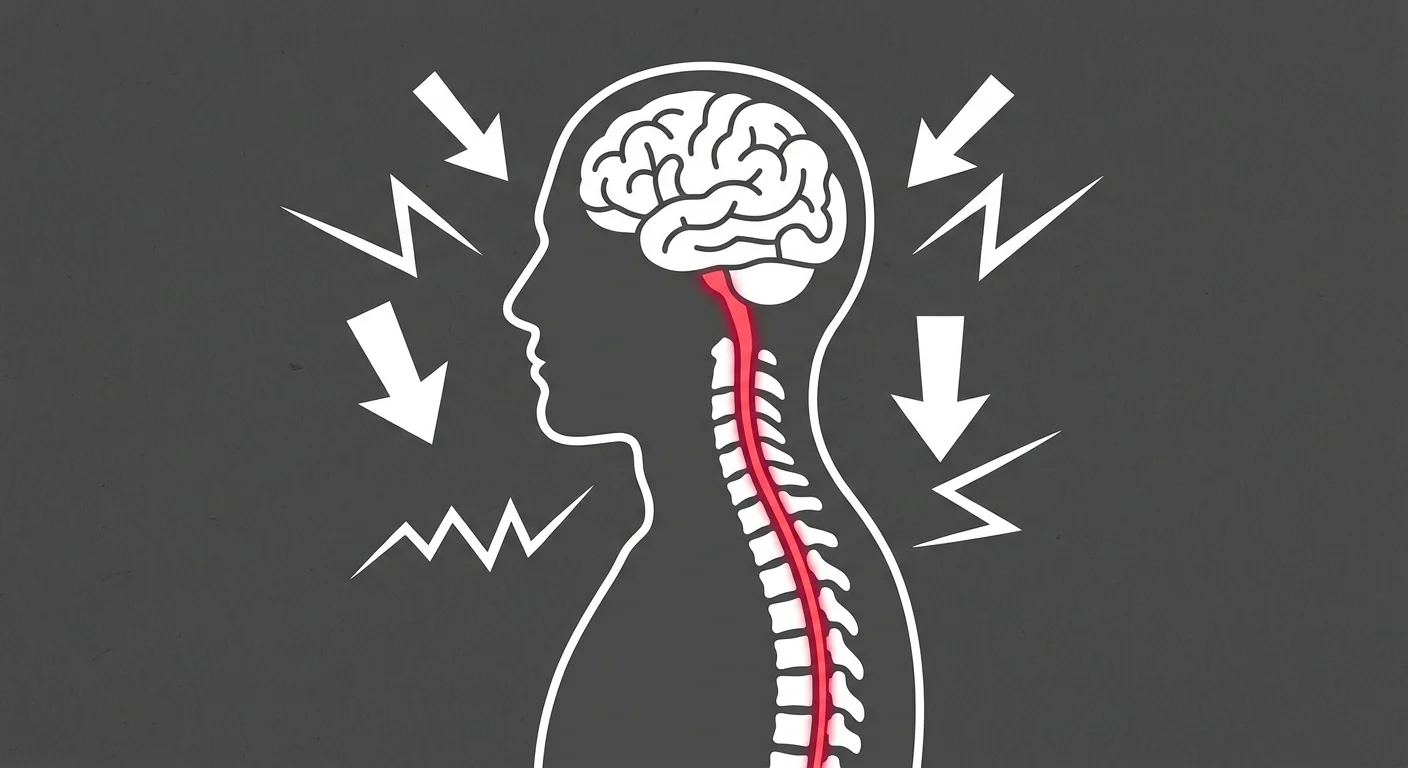
Brain fog isn't a brain problem. It's a nervous system load problem. That distinction changes everything about how you fix it.
And it doesn't announce itself as a nervous system problem. It shows up as foggy thinking, lost words, and the inability to concentrate past noon. It shows up as the sense that your mind isn't working the way it used to.
So you try more sleep. Less caffeine. A new supplement. Those aren't wrong answers — they're just aimed at the symptom. The actual driver keeps running in the background.
That driver is often spinal. Sustained joint dysfunction acts as a continuous physical stressor — one your brain doesn't consciously register as danger, but your autonomic nervous system responds to as exactly that.
So it keeps the stress system elevated. It pulls metabolic resources away from executive function. It leaves the prefrontal cortex running on whatever's left over after threat management gets its cut.
What Brain Fog Is Actually Telling You
Brain fog is your nervous system's energy accounting. Too much is going to threat management. Not enough is left for thinking clearly.
That accounting shifts the moment the autonomic stress load comes down. When the sympathetic system stops burning resources on unresolved spinal tension, those resources go somewhere — and where they go is exactly where you need them.
Decision-making sharpens. Focus holds longer. The afternoon mental wall starts arriving later. Then less often. Then it stops being a daily event.
If you've been working through nervous system stress recovery in Morton and cognitive symptoms are still hanging around even after the pain has improved — that's the missing piece. Pain quieting down doesn't mean the structural stress load has reset.
Spinal dysfunction has to be addressed at the structural level to fully release the autonomic pressure it's been generating. The ache can fade. The load stays until you clear it.
The Cookie-Cutter Protocol Problem
Here's the thing about the standard chiropractic model: it runs the same sequence on every patient. What you're presenting doesn't change what you receive.
Walk in with neck tension, walk in with cognitive fatigue, walk in with autonomic overload that's been building for years — you get the same protocol. That protocol is built around a pain-relief outcome, not a nervous system outcome.
When those two things happen to overlap, it looks like a success. When they don't, the patient is told to keep coming back and wait.
Individualized chiropractic care starts from a different premise. The care plan is built from what's actually driving the symptoms — including autonomic dysregulation and its cognitive downstream effects.
Not from a billing template. Not from a standard sequence that ignores nervous system load. From what the patient actually reports.
If a protocol isn't changing the autonomic picture, repeating it isn't persistence. It's the clinical definition of not paying attention.
The spine runs the whole system. Treating it like a pain generator and nothing more is exactly how patients end up in the same chair two years later — still foggy, still tired, still wondering what they're missing.
| Symptom | Standard Pain-Relief Interpretation | Nervous System Load Interpretation |
|---|---|---|
| Brain fog and difficulty concentrating | Mental fatigue from poor sleep, stress, or dehydration — address with rest and lifestyle changes | Prefrontal cortex running on depleted metabolic resources because the sympathetic system is consuming them to manage unresolved spinal tension |
| Afternoon energy crash and inability to focus past midday | Blood sugar fluctuation or burnout — address with diet or reduced workload | Autonomic stress load peaking as the nervous system exhausts its compensatory resources; sympathetic overdrive draining executive bandwidth |
| Losing words mid-sentence or struggling to retrieve information | Age-related cognitive decline or early memory issues — monitor and manage | Sympathetic dominance suppressing parasympathetic recovery states that allow efficient neural processing and memory consolidation |
| Persistent mental fatigue despite adequate sleep | Sleep quality problem — address with sleep hygiene protocols or supplementation | Nervous system never reaching true rest-and-recover state because the structural stressor driving sympathetic arousal has not been resolved |
| Heightened anxiety or inability to mentally shift gears | Psychological or emotional stress response — address with behavioral strategies | Autonomic dysregulation from sustained spinal joint dysfunction keeping the threat-detection system activated regardless of actual environmental stressors |
| Reduced decision-making capacity under normal workloads | Overwhelm or lack of organizational systems — address with productivity strategies | Executive prefrontal cortex function degraded because metabolic energy has been redirected to threat management driven by unresolved nervous system load |
How Spinal Adjustments Affect Brain Function
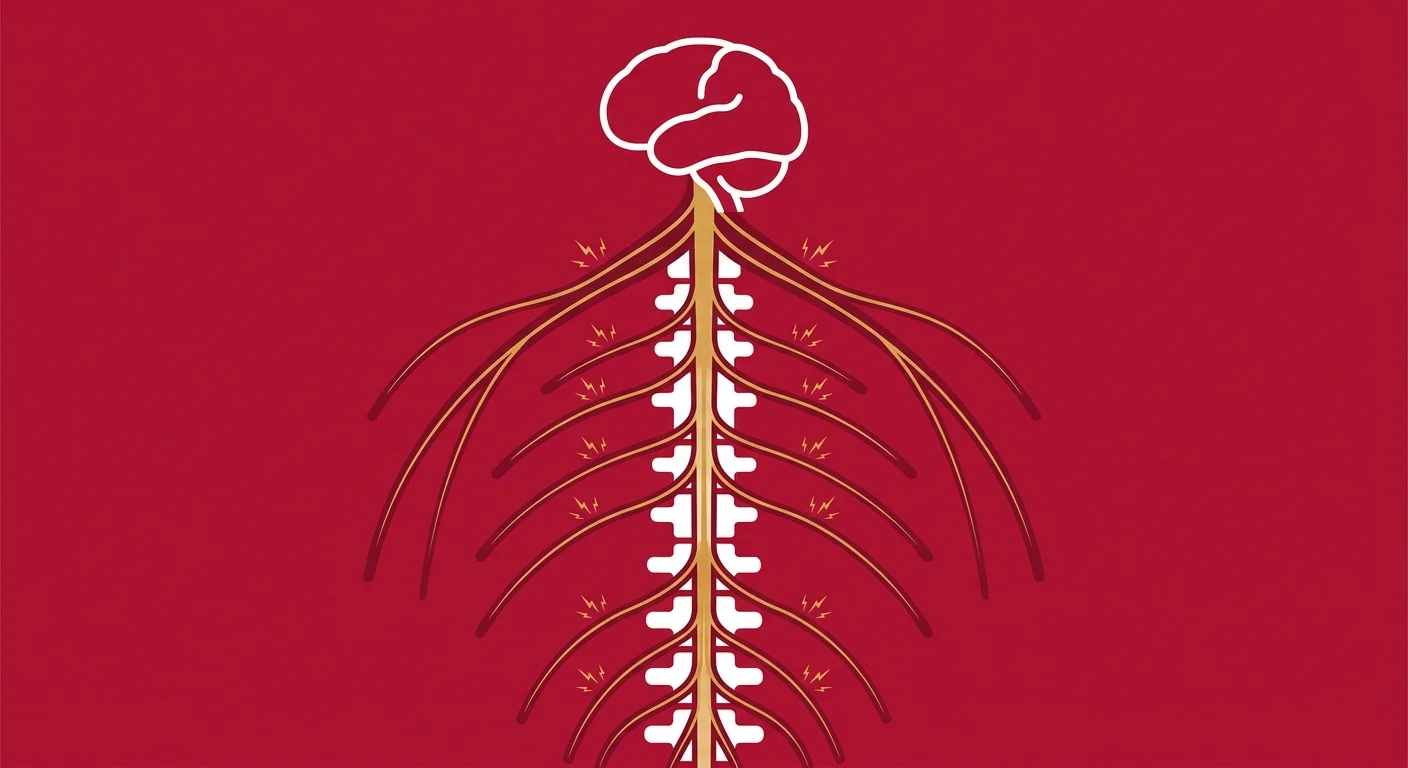
Most people assume chiropractic adjustments work on structure. That's not wrong — it's incomplete. The structure is the pathway. What the adjustment actually works on is everything running through it.
When a dysfunctional spinal joint is adjusted, the effects don't stay local. NIH research confirms that spinal manipulation of dysfunctional joints alters sensorimotor integration and produces measurable changes in prefrontal cortex activity. That's not a pain pathway. That's the part of your brain running focus, decision-making, and executive control.
Treat the spine like a pain generator and you'll miss everything downstream — including why cognitive function degrades when spinal dysfunction goes unaddressed.
Sensorimotor Integration and the Prefrontal Cortex
Here's the thing about sensorimotor integration — it's not just a motor function. It's how your nervous system maps body position and movement, then translates that input into coordinated output. And it directly shapes how your brain allocates attention and processing bandwidth.
When a spinal joint becomes dysfunctional, the sensory signal it sends upstream turns noisy and unreliable. The brain compensates — it has to. But compensation isn't free. That metabolic cost comes directly out of prefrontal cortex function. Focus, decision-making, clarity — they're paying the tab.
Adjusting the dysfunctional joint clears the signal. The compensation load drops. The prefrontal cortex — the part of your brain running focus, planning, and mental clarity — gets back the metabolic resources it had been diverting to manage the dysfunction. That's the mechanism. Not abstract. Measurable.
Autonomic Balance: From Fight-or-Flight to Think-and-Recover
The autonomic nervous system doesn't run a neutral setting. It's always calibrating — either spending metabolic resources on threat response or recovering them through rest. Spinal dysfunction keeps the stress signal running. So the system can't shift. It stays in fight-or-flight. And cognitive performance is the first thing that pays the price.
A chiropractic adjustment interrupts that cycle. It removes a persistent physical stressor the autonomic system has been responding to — sometimes for months, sometimes for years. When the stressor is gone, the system can finally shift. Sympathetic dominance decreases. Parasympathetic recovery begins. The metabolic energy that was funding the stress response becomes available for thinking again.
That shift isn't a side effect. It's the reason mental clarity and energy after stress recovery becomes physiologically possible — a measurable change in how the nervous system is operating, not just a feeling.
Heart Rate Variability as a Clinical Signal
Heart rate variability — the variation in time between heartbeats — is one of the most reliable clinical windows into autonomic balance. High variability means the nervous system shifts fluidly between states. Low variability means it's stuck. And a system stuck in sympathetic overdrive isn't building cognitive bandwidth — it's burning it.
NIH-published clinical data shows chiropractic adjustments produce measurable shifts in autonomic balance — parasympathetic activity improving by up to 15% to 28% as measured through heart rate variability. That's not a subjective report of feeling better. That's a quantifiable change in how the nervous system is functioning. And it's exactly the kind of shift that restores cognitive bandwidth.
| Autonomic State | Effect on Cognitive Resources | Clinical Marker | Chiropractic Relevance |
|---|---|---|---|
| Sympathetic Dominance (Fight-or-Flight) | Metabolic energy diverted away from executive function; prefrontal cortex runs on reduced resources | Reduced cognitive bandwidth; brain fog; impaired decision-making | Spinal joint dysfunction acts as a continuous stressor that sustains sympathetic activation — chiropractic adjustment removes that stressor |
| Parasympathetic Recovery (Rest-and-Recover) | Metabolic resources restored to executive function; prefrontal cortex operates at full capacity | Improved focus, mental clarity, and sustained attention | Chiropractic adjustments shift autonomic balance toward parasympathetic dominance — restoring the metabolic resources cognition requires |
| Autonomic Balance Shift Post-Adjustment | Parasympathetic activity improves by up to 15% to 28%; sympathetic load decreases; cognitive resources reallocated | Heart rate variability increase — a direct clinical measure of autonomic recovery | Heart rate variability is the clinical window into autonomic state; measurable shifts confirm the adjustment is producing a neurological — not just structural — change |
| Prefrontal Cortex Under Dysfunction Load | Sensorimotor integration degrades; prefrontal cortex activity diminishes as the brain compensates for noisy spinal signals | Decline in sensorimotor integration; measurable changes in prefrontal cortex activity | Spinal manipulation of dysfunctional joints directly alters prefrontal cortex activity — addressing the neurological source, not just the structural symptom |
| Prefrontal Cortex Post-Adjustment | Sensorimotor signal clears; compensation load drops; metabolic resources return to executive function | Restored sensorimotor integration; prefrontal cortex activity normalizes | Spinal manipulation of dysfunctional joints prevents the 20% decline in sensorimotor integration that degrades cognitive performance |
What the Research Actually Shows
Most people blame brain fog on lifestyle. Bad sleep. Too much screen time. Not enough of whatever the last health article told them to do.
The research disagrees.
Peer-reviewed studies don't describe chiropractic care as a pain treatment with accidental cognitive side effects. They describe it as a direct neurological intervention — one that produces measurable changes in cortical processing, autonomic balance, and executive function.
That's a different claim. And it's backed by evidence that doesn't leave room for dismissal.
NIH research on spinal neuroscience makes one thing clear: spinal structures aren't passive mechanical parts. They're active input channels to the brain. When joint dysfunction disrupts those channels, the upstream effects reach further than most practitioners are willing to admit.
The prefrontal cortex isn't insulated from what happens in the spine. It's downstream from it.
Cortical Processing Changes After Adjustment
Here's what the clinical literature actually shows. Targeted mechanical stimulation of spinal structures alters somatosensory evoked potentials — and those SEPs confirm that cortical processing itself changes in response to spinal adjustment.
SEPs aren't subjective. They're measured electrical responses. And they shift after adjustment in ways that confirm the nervous system is reorganizing how it processes information.
Spinal adjustment of dysfunctional joints prevents a measurable decline in sensorimotor integration and produces significant changes in prefrontal cortex activity. The prefrontal cortex is where focus lives. It's where decisions get made, where attention is allocated, and where the cognitive bandwidth you need to function at a high level actually comes from.
When the spinal input feeding that system is noisy, distorted, or missing entirely — cortical output reflects it.
These are neuroplastic changes. Not temporary relief. Not placebo. Not structural repositioning that happens to feel better.
The cortex is physically reorganizing its processing patterns in response to what's happening in the spine. That's the research. That's the mechanism. And it's why treating spinal dysfunction as a neurological issue — not merely a pain complaint — changes what outcomes are actually possible.
Vagal Tone, Parasympathetic State, and Executive Performance
The vagus nerve is the nervous system's primary recovery pathway. It's the main channel through which parasympathetic signals reach the organs, regulate heart rate, and communicate one critical message: it's safe to stop spending resources on threat response.
Higher vagal tone means the body can shift into recovery — and stay there.
That shift matters cognitively. Higher vagal nerve activity and parasympathetic tone are directly tied to sharper executive function and mental flexibility — not as a theory, as a measured association.
People asking what cognitive performance looks like after stress recovery often find the answer starts with autonomic state — not a productivity stack or a supplement protocol. When the parasympathetic system is doing its job, executive function has the metabolic resources it needs to do its.
Spinal adjustment supports vagal tone by removing the chronic physical stressors that keep the sympathetic system dominant. It's not a meditation technique. It's a structural intervention — one that clears an input the nervous system has been treating as a threat.
Once that input clears, the autonomic balance shifts. Parasympathetic tone increases. Executive bandwidth expands. The cognitive clarity that felt out of reach becomes available again — not as a feeling, but as a measurable change in how the nervous system is actually operating.
| Study Focus | What Was Measured | Key Finding | Clinical Implication |
|---|---|---|---|
| Prefrontal Cortex & Sensorimotor Integration | Sensorimotor integration levels and prefrontal cortex activity following spinal adjustment | Spinal manipulation of dysfunctional joints prevents a 20% decline in sensorimotor integration and significantly alters prefrontal cortex activity | Addressing spinal joint dysfunction directly protects the brain region responsible for focus, decision-making, and cognitive executive control |
| Cortical Neuroplasticity & Spinal Stimulation | Somatosensory evoked potentials (SEPs) before and after targeted spinal adjustment | Targeted mechanical stimulation of spinal structures alters SEPs, demonstrating neuroplastic cortical processing changes | The cortex physically reorganizes its processing patterns after adjustment — confirming spinal care produces measurable neurological change, not structural repositioning alone |
| Vagal Tone & Executive Cognitive Performance | Association between vagal nerve activity, parasympathetic tone, and executive function outcomes | Higher vagal nerve activity and parasympathetic tone are directly associated with superior executive cognitive performance and mental flexibility | Interventions that shift autonomic balance toward parasympathetic recovery — including spinal adjustment — directly expand the cognitive bandwidth available for high-level executive function |
Who This Care Model Is — and Isn't — For
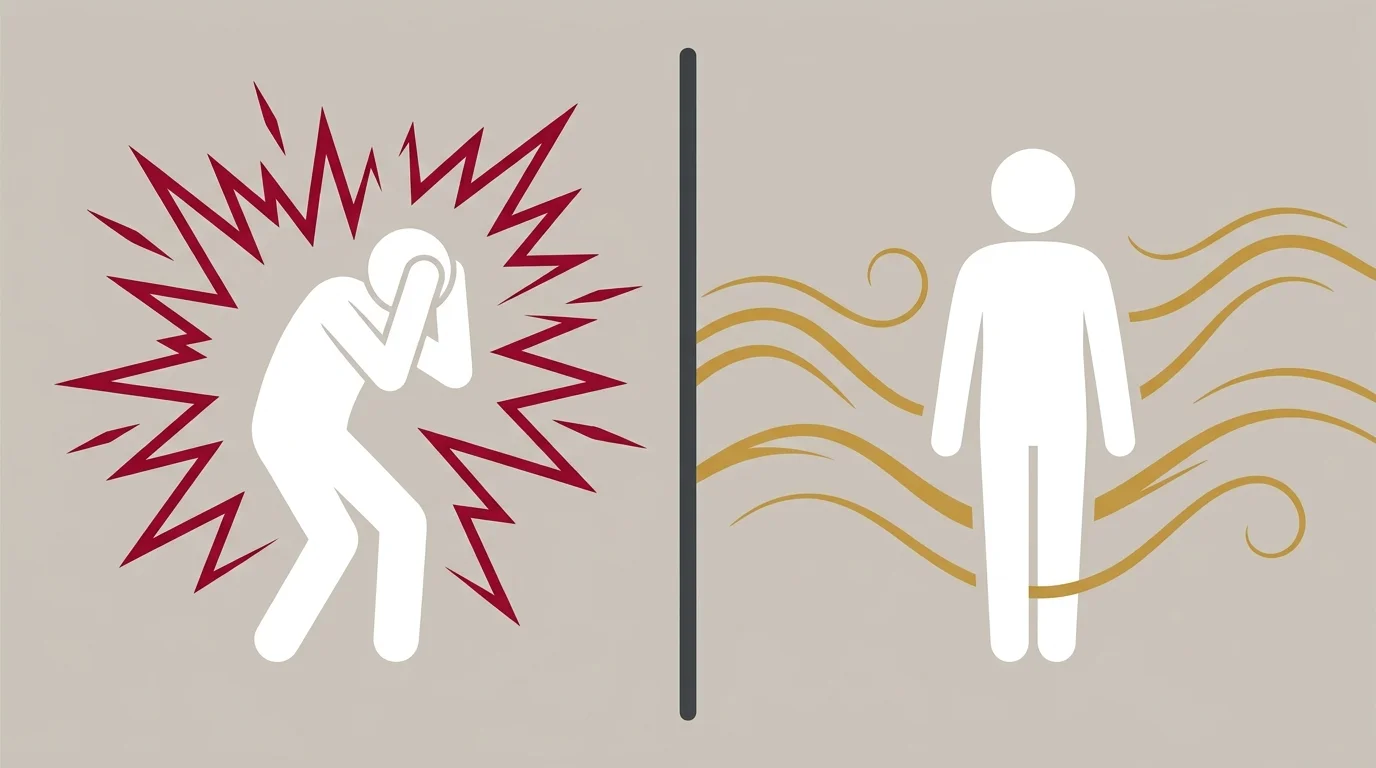
But solid evidence doesn't make this the right model for every patient who walks through the door.
Here's the premise this model runs on. The spine is the master control pathway of the nervous system — and dysfunction in that pathway has consequences that reach well beyond pain, including cognitive ones. If you're not willing to engage that framing, the results won't follow. That's not gatekeeping. That's just how the mechanism works.
So here's the line — and it's a clinical one, not a sales one. The wrong patient in the wrong model wastes time, money, and trust. The right patient gets their nervous system back.
The Patient Who Gets Results From This Approach
The patient who gets results here isn't always the one in the most pain. It's the one who knows something in their system isn't working — and wants to find out why.
They're dealing with brain fog, chronic fatigue, stress that won't quit, or cognitive performance that used to be sharp and isn't anymore. Most have noticed the physical signs of chronic autonomic overload showed up long before the pain did — tight shoulders, shallow breathing, wired-but-exhausted sleep nights. Nobody connected the dots for them. That's the gap this care model is designed to close.
And they're willing to follow a care plan. A nervous system under chronic sympathetic load didn't get there overnight. It won't reset in a single session. That's not pessimism — that's how autonomic recalibration actually works. The patients who get the most out of this model are the ones who show up consistently and let the process run.
If You're Looking for a One-Visit Fix, This Isn't It
If you're coming in expecting one adjustment to clear months of cognitive fog, this isn't the right fit. That's not a judgment. It's a physiological fact.
The autonomic nervous system doesn't flip a switch. It recalibrates. Sustained joint dysfunction has been feeding elevated sympathetic tone — often for months or years. Reversing that pattern takes consistent input across multiple sessions. One intervention doesn't erase what chronic structural stress has been signaling to the brainstem on a daily loop.
If you want a provider who'll tell you what you want to hear, hand you a care plan that never changes, and call it progress regardless of results — Touch of Wellness Chiropractic isn't that practice. The care plan here is built from your actual clinical picture. If it isn't producing results, it changes. What doesn't change is the standard: honest, outcome-based recommendations, even when that means a shorter plan than you expected.
| Patient Profile | Likely Fit | Reason | What to Expect |
|---|---|---|---|
| Chronic brain fog and cognitive decline patient | Strong fit | Recognizes that diminished focus and mental fatigue have a physical root — and is willing to address the nervous system, not just the symptom | Gradual autonomic recalibration over a consistent care plan; cognitive bandwidth expands as sympathetic load decreases |
| Stress-exhausted professional with persistent tension and sleep disruption | Strong fit | Physical signs of autonomic overload — tight shoulders, shallow breathing, wired-but-tired sleep — are present and the patient is ready to connect those dots | Shift from sympathetic dominance toward parasympathetic recovery; improved sleep quality and stress resilience as the nervous system resets |
| Patient who has tried pain-focused care without lasting results | Strong fit | Previous care treated the output, not the control pathway; this model targets the neurological source of downstream dysfunction | A new clinical picture built from what the patient actually reports — not a rerun of the previous protocol |
| One-adjustment miracle seeker | Not a fit | Expects complete resolution in a single session; the autonomic nervous system recalibrates through consistent input, not a single intervention | Frustration and early dropout before meaningful neurological change has had time to occur |
| Protocol challenger who replicates previous provider's exact sequence | Not a fit | Assessment drives the care plan here — not prior habits; arriving with a required sequence before evaluation is complete overrides the clinical process | Conflict early in care, before the nervous system picture is even established |
| Skeptic who won't suspend inherited bias | Not a fit | GP-inherited dismissal of chiropractic as a neurological intervention means the clinical recommendations won't receive a fair trial — and partial engagement produces partial results | No meaningful autonomic shift; the closed framework prevents the care plan from doing what it's designed to do |
What a Nervous System-Focused Care Plan Actually Looks Like
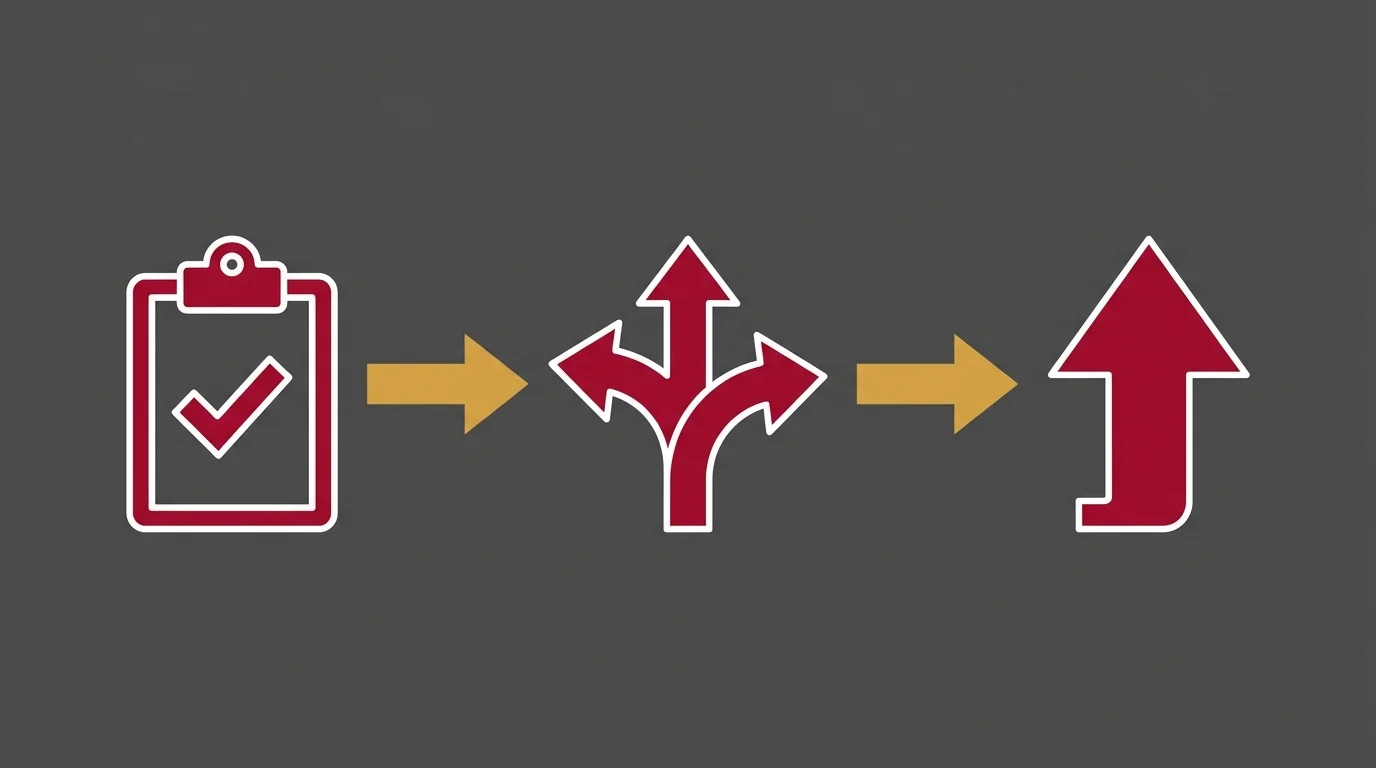
Here's what that actually looks like.
Not what most patients have seen before. There's no standard protocol handed over at the first visit. There's no 12-month plan that ignores how your nervous system actually responds to care.
At Touch of Wellness Chiropractic, the spine isn't treated as a structural problem to manage. It's the master control pathway of the nervous system — and dysfunction there has consequences well beyond pain. The care plan gets built around what's actually happening in your system. Not around a template someone printed out for the last ten patients.
Assessment First, Protocol Never
Every care plan starts with assessment. A real clinical picture — not a quick intake form and a best guess.
Sustained joint dysfunction doesn't present the same way in every patient. Two people with identical complaints can have entirely different autonomic patterns driving them. A protocol built for one won't work for the other. That's not a fringe position. It's basic physiology — and it's why a clinical picture matters more than a checklist.
For patients working toward nervous system stress recovery in Morton, IL, the assessment is where the real clinical work begins. It's where the connection between spinal input and cognitive load gets mapped. The adjustment sequence, the frequency, the timeline — all of it follows from what the assessment actually reveals. Not from a billing calendar. Not from a default protocol.
Reassessment as a Clinical Standard, Not an Afterthought
Reassessment isn't optional here — it's built into the model. If something isn't producing results after a reasonable number of sessions, the plan changes. Not the patient. The plan.
That's what separates an individualized care plan from a repeated protocol. Chiropractic adjustments shift autonomic balance — measurable parasympathetic improvement of up to 15% to 28%, tracked through heart rate variability — but how that shift progresses is different for every patient. For patients tracking mental clarity and energy after stress recovery, this is exactly what that means: if the data says something isn't working, the honest response is to stop doing it. Reassess. Pivot. That's not a weakness in the model. That's the model.
| Care Plan Phase | What Happens | Clinical Goal | Patient Role |
|---|---|---|---|
| Initial Assessment | Full clinical picture built from what you actually report — symptom history, autonomic patterns, and how your nervous system is currently responding | Identify the root drivers of spinal dysfunction and autonomic load before any adjustment sequence begins | Show up with your full history — not just the pain complaint. The cognitive and stress symptoms matter as much as the physical ones. |
| Early Care Phase | Targeted chiropractic adjustments aimed at reducing the chronic physical stressors keeping the sympathetic system dominant — frequency and sequence based on your clinical picture, not a standard protocol | Begin shifting autonomic balance toward parasympathetic recovery and reduce the neurological noise feeding the prefrontal cortex | Follow the care plan consistently. Autonomic recalibration requires regular input — sporadic visits produce incomplete results. |
| Active Reassessment | Clinical check-ins that measure how your nervous system is actually responding — not assumed progress, but tracked outcomes | Confirm the plan is producing results. If it isn't, the plan changes — not the patient. | Report what's changing — including cognitive and energy shifts, not just pain levels. That information drives the next clinical decision. |
| Plan Pivot (when needed) | If the current approach isn't moving the clinical picture, the adjustment sequence, modality selection, or care frequency gets revised — immediately, not at the end of a pre-set timeline | Eliminate ineffective inputs and redirect care toward what your system is actually responding to | Stay engaged. A plan that changes isn't failing — it's working the way an individualized care plan is supposed to work. |
| Stabilization and Maintenance | Reduced visit frequency as autonomic baselines stabilize and cognitive function improves — care transitions from corrective to supportive based on your clinical response | Lock in the gains. Protect the autonomic reset from chronic stressors that could rebuild sympathetic dominance over time. | Maintain the lifestyle and consistency that support what the care plan built. Recovery isn't passive — it requires both parties showing up. |
Frequently Asked Questions
These questions come up every time. They deserve straight answers.
If you're skeptical that a spinal adjustment could change how your brain works — that's fair. Here's what the research actually says.
How can adjusting the spine improve mental clarity?
The spine feeds sensory input directly to the prefrontal cortex. When joints are dysfunctional, that input degrades — and the cortex works with corrupted data. A targeted chiropractic adjustment restores the signal. Prefrontal cortex activity changes measurably in response. That's documented in peer-reviewed research. Not a metaphor. A neurological mechanism. Mental clarity improves when the cortex gets clean input instead of distorted noise.
Is there scientific evidence connecting chiropractic adjustments to brain function?
Yes — and it's peer-reviewed. Spinal adjustments alter somatosensory evoked potentials, showing real neuroplastic changes in cortical processing. Adjustments also shift autonomic balance — parasympathetic tone improves by up to 15% to 28%, measured through heart rate variability. Higher parasympathetic tone is directly tied to stronger executive cognitive performance. The mechanism isn't theoretical. It's measurable.
How many sessions are needed to feel a difference in cognitive focus?
Anyone who gives you a number before seeing your clinical picture is guessing. The autonomic nervous system doesn't reset in a single session — it recalibrates through consistent input over time. Some patients notice shifts early. Others need more sessions before the autonomic changes hold. The care plan is built around how you actually respond. Not a predetermined timeline someone handed you before the assessment was finished.
Can chiropractic care help lower brain fog caused by chronic stress?
It can — and the mechanism is specific. Brain fog driven by chronic stress is largely an autonomic problem. Sustained sympathetic dominance consumes the metabolic resources the prefrontal cortex needs to function. Chiropractic adjustments reduce the chronic physical stressors keeping that stress system elevated. Parasympathetic tone increases. Vagal activity rises — and higher vagal tone is directly tied to executive cognitive performance and mental flexibility. Clearing the structural load gives the nervous system room to recover. That's not a wellness claim. That's how autonomic biology works.
What makes the nervous system stress recovery model different from standard pain-relief chiropractic?
Standard pain-relief chiropractic targets symptoms. This model targets the system driving them. The spine is the master control pathway of the nervous system — not just a structural column. When dysfunction in that pathway keeps the sympathetic system chronically elevated, the downstream effects include cognitive load, fatigue, and brain fog. Not just back pain. The nervous system stress recovery model addresses the autonomic source. The care plan is built from your actual clinical picture, reassessed as you respond, and changed when something isn't working. Chiropractic adjustments shift autonomic balance — with measurable parasympathetic improvement of up to 15% to 28% tracked through heart rate variability. That's a fundamentally different standard than running the same protocol until you stop coming back.
The Nervous System Runs Everything — Including Your Focus
The spine isn't just holding you upright. It's running the whole system.
When that pathway gets disrupted by joint dysfunction, nothing downstream works right. Not your sleep. Not your pain threshold. Not your focus.
Spinal adjustment doesn't just relieve pressure. It restores the input the prefrontal cortex depends on to function — and that's not a chiropractic claim. That's basic biology.
Higher parasympathetic tone isn't a side effect of this care model. It's the mechanism.
When the nervous system stops burning resources on unresolved spinal tension, those resources go somewhere useful. Back to executive function. Back to decision-making. Back to the clarity that's been missing.
That's not a wellness pitch. That's autonomic biology. And it's why patients who've tried everything else sometimes find the one thing nobody checked was the thing running everything.
If you've been dealing with brain fog, chronic stress load, or cognitive performance that used to be sharper — and nobody has looked at the nervous system as the source — that's the gap.
At Touch of Wellness Chiropractic, that's exactly where the assessment starts. Not with symptoms. With the system driving them.
The spine runs the whole system. Restore the pathway, and the rest follows. The only question left is whether you keep waiting for something else to fix what the spine has been disrupting all along.
Brain fog doesn't fix itself. And if the nervous system has been running in overdrive long enough to affect your focus, your sleep, and your ability to function at work — that's not a mindset problem. That's a system problem worth examining. At Touch of Wellness Chiropractic, the assessment starts with what you actually report — not a standard intake template. If the spine is contributing to your cognitive load, that shows up clinically. And if it isn't, you'll know that too. Real answers beat comfortable guesses. Book Appointment.
Copyright Touch of Wellness Chiropractic 2026
1101 W Jackson St, Suite A Morton, IL 61550
Web Design by iTech Valet