
(309) 321-8412 | 1101 W Jackson St, Suite A, Morton, IL 61550
(309) 321-8412 | 1101 W Jackson St, Suite A, Morton, IL 61550
How to Achieve Nervous System Stress Recovery in Morton, IL
Nervous system stress recovery is not a mindset shift. It's a biological process — and it starts in the spine.
The body runs on two autonomic states: the sympathetic ('fight-or-flight') division and the parasympathetic ('rest-and-digest') division. Chronic stress locks the body into the first one. Cortisol and adrenaline stay elevated. Heart rate and blood pressure don't come down. The body loses its ability to shift into recovery mode — not because the threat is still there, but because the switch is jammed.
That switch runs through your spine.
The autonomic nervous system's control pathways travel through spinal structures. When alignment is disrupted — by postural strain, repetitive physical stress, or accumulated tension — those pathways are compromised. The nervous system stays activated even after the external stressor is gone. Under prolonged stress, central nervous system pathways can become sensitized, making muscles more prone to persistent guarding and pain.
This isn't overreaction. It's a stuck system with a structural cause.
Chiropractic adjustments address it at that structural level. Research measuring heart rate variability (HRV) after spinal adjustments shows a measurable shift away from sympathetic dominance toward parasympathetic recovery. HRV is a direct physiological marker of autonomic balance — and the data confirms chiropractic care moves it in the right direction. Occupational and chronic stress are recognized biological hazards, with prolonged exposure contributing directly to musculoskeletal strain and physical tension.
Nervous system stress recovery — in a clinical context — means identifying the physical contributors to sympathetic overactivation, correcting spinal interference with the autonomic control loop, and confirming the nervous system is actually responding.
Passive relaxation manages the feeling. Correcting the spine is how you flip the switch back off.
Last Updated: June 22, 2026
- • Stress Is a Biological Event, Not a Mindset Problem
- • What Happens Inside Your Body When Stress Gets Physical
- • How Spinal Adjustments Shift the Autonomic Balance
- • What a Structural Stress Assessment Actually Examines
-
• Frequently Asked Questions About Nervous System Stress Recovery
- • How does stress-related physical tension differ from regular muscle fatigue?
- • Can a chiropractic adjustment actually calm my fight-or-flight response?
- • How many visits are typically required before stress symptoms start resolving?
- • Will I have to commit to a long-term treatment plan to see results?
- • What does a nervous system stress assessment look like at Touch of Wellness Chiropractic in Morton, IL?
- • The Light Switch Your Body Has Been Waiting to Flip
Stress Is a Biological Event, Not a Mindset Problem
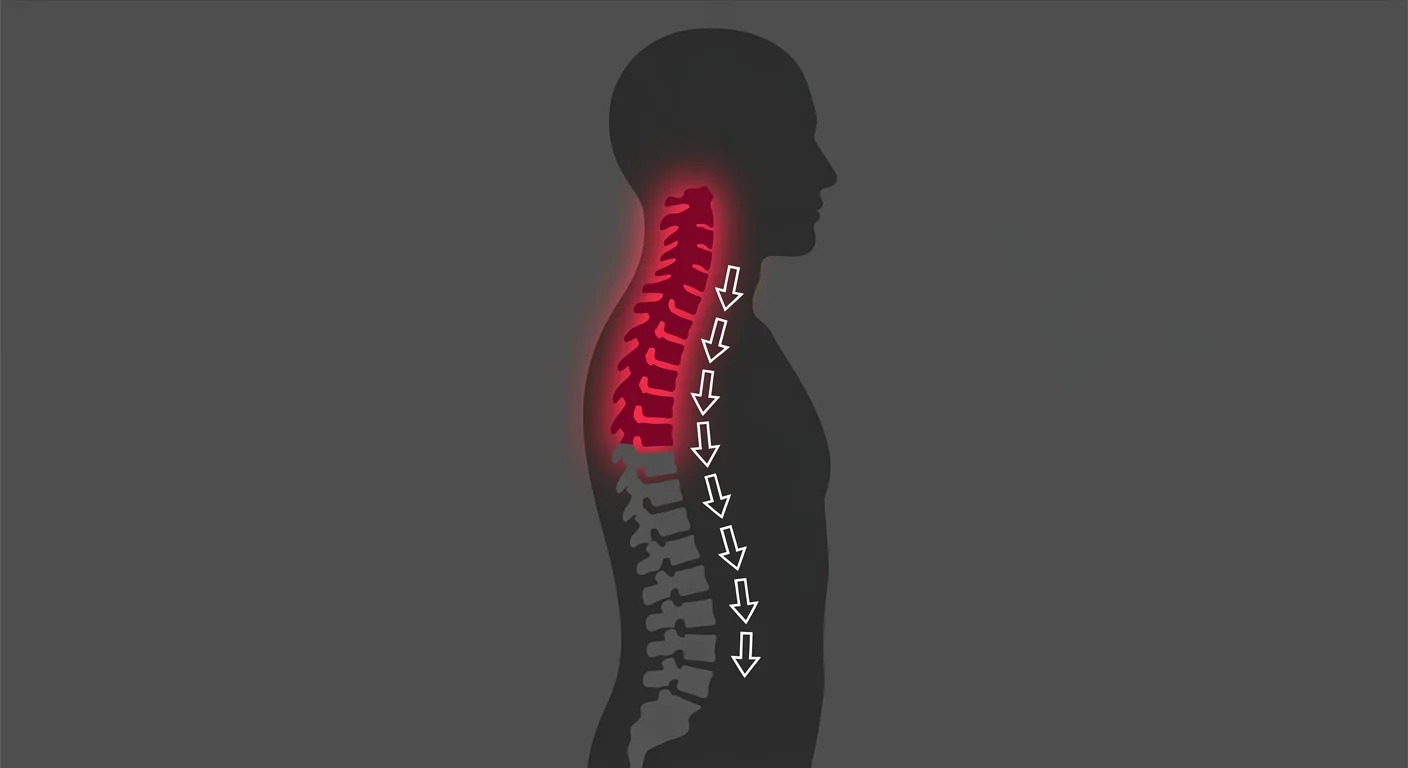
Most people treat stress like it lives in their head. So they journal, they breathe, they reframe. And when the tension comes back anyway, they decide they're just not trying hard enough.
Here's the thing: stress isn't a mindset failure. It's a biological event. The moment your body perceives a threat — real or perceived — your sympathetic nervous system fires, flooding your bloodstream with cortisol and adrenaline, spiking your heart rate and blood pressure. That's not a thought pattern. That's a full-system physiological response.
The problem isn't that the stress response fired. Every body does that. The problem is it won't turn off. That's the distinction most providers skip — and it's exactly why people stay stuck no matter how much mental work they put in. What they're dealing with isn't a mindset gap. It's stress as a biological, not mental issue.
Why Deep Breathing and Meditation Won't Fix a Structural Problem
Deep breathing and meditation are real tools. Nobody's dismissing them. But they work on the output — the symptoms you feel — not on the structural interference that's keeping the response running in the first place.
Here's what sustained stress actually builds inside you. Cortisol stays elevated. Adrenaline keeps heart rate and blood pressure high. Muscles lock up. The spine loads unevenly under weeks of postural tension. At that point, a meditation session doesn't reset the physical architecture that months of overactivation have shaped. The body isn't tense because you're thinking stressed thoughts. It's tense because it's been structurally loaded that way.
A structural problem needs a structural solution. That's why individualized chiropractic care starts with the physical contributors — not the mental ones. The breathing exercises belong in the sequence. Just not at the front of it.
The Autonomic Two-Switch System Most Providers Never Explain
Your autonomic nervous system runs on two divisions, and they're not built to run at the same time. According to NIH research, the sympathetic division governs fight-or-flight — raising heart rate, tightening muscles, redirecting blood to your limbs for action. The parasympathetic division governs rest-and-digest — slowing the heart, lowering blood pressure, letting the body repair itself. You need both. But chronic stress picks a side and camps there.
When sympathetic dominance becomes the default, the parasympathetic side never gets its rotation. Sleep doesn't restore you. Digestion runs poorly. Muscles don't fully release between demands. Peer-reviewed research is blunt about this: sustained activation of the survival mechanism impairs the body's systems across the board. This isn't just feeling off. Your physiology is functionally compromised — and it stays that way until the load on the system actually changes.
That's the switch most providers never explain. The body has an on state and an off state. Chronic stress jams it on. And the jam isn't in your head — it's in the neural pathways running through your spine. Until those pathways are cleared, no mental strategy flips it back.
| Stress Response Stage | What the Nervous System Does | Physical Symptom the Patient Feels | Why It Persists Without Structural Intervention |
|---|---|---|---|
| Acute threat detected | Sympathetic division fires — heart rate spikes, muscles tighten, blood pressure rises, digestion pauses | Racing heart, jaw clenching, shallow breathing, sudden muscle tension | The response is designed to be temporary — but without structural correction, the nervous system has no clear signal to stand down |
| Threat passes but body stays activated | Cortisol and adrenaline remain elevated; parasympathetic division is suppressed and can't gain access | Persistent fatigue, poor sleep quality, muscles that won't fully release between stressors | Spinal interference disrupts the neural pathways that signal the shift from sympathetic to parasympathetic — the off switch is structurally jammed |
| Chronic sympathetic dominance sets in | The parasympathetic division is chronically underactive — rest, repair, and digestion are all compromised | Ongoing neck and shoulder tension, digestive irregularity, waking unrefreshed regardless of hours slept | The spine has adapted to a sustained load pattern; passive relaxation addresses output symptoms but doesn't correct the underlying structural interference |
| Central nervous system sensitization | Neural pathways become hyperexcitable; the stress threshold lowers and minor triggers produce outsized physiological responses | Pain that lingers longer than expected, heightened sensitivity to everyday stressors, muscles that guard without an obvious cause | Sensitized pathways reinforce themselves without intervention — no amount of mental reframing resets the structural pattern driving the response |
| Structural correction initiates recovery | Spinal adjustments restore the autonomic control loop — clearing interference so the parasympathetic division can reassert itself | Gradual reduction in baseline tension, improved sleep depth, nervous system able to complete a full recovery cycle | Recovery is sustained only when the structural root cause is addressed — symptom management alone leaves the underlying loop intact |
What Happens Inside Your Body When Stress Gets Physical
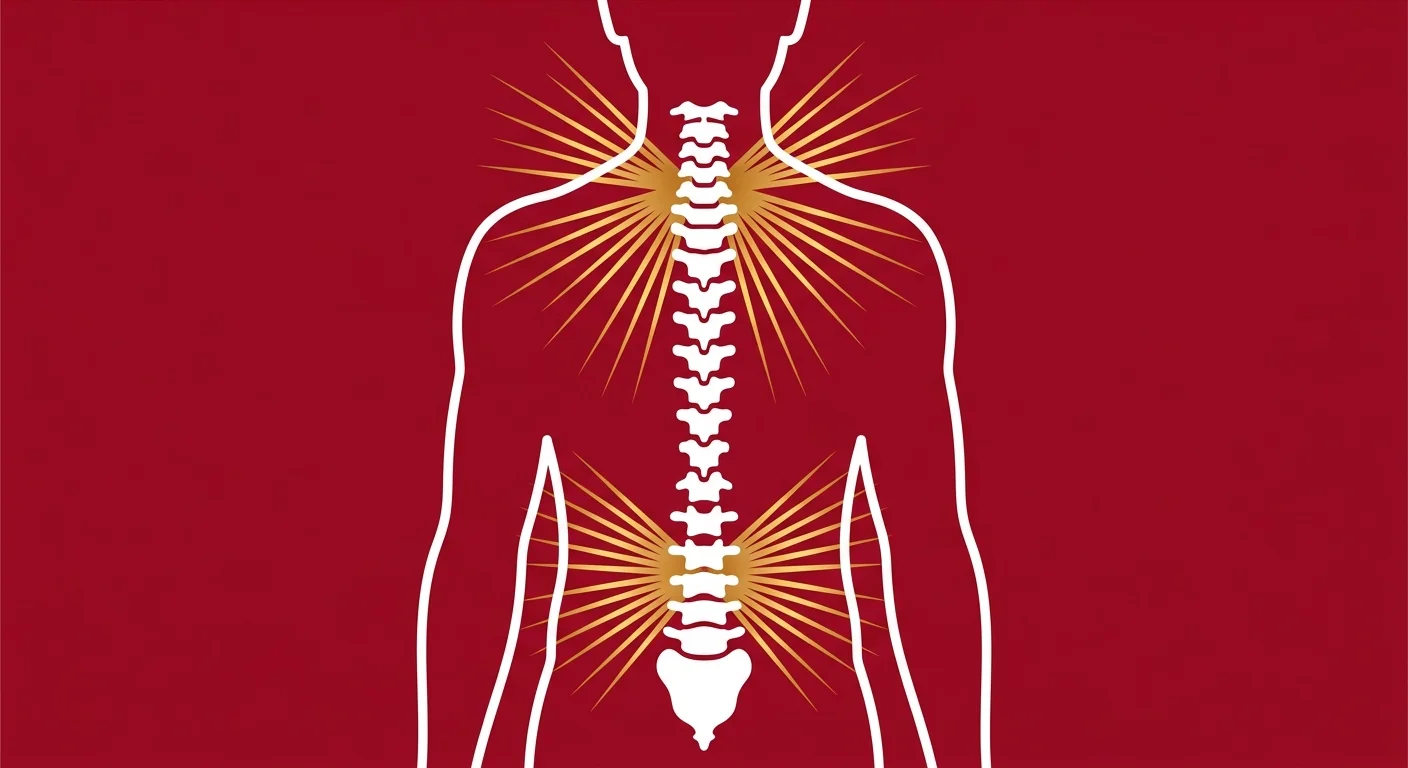
Stress doesn't stay in your head. It moves into your body — and it rewrites the physical architecture that holds you upright.
Occupational and chronic stress are classified as biological hazards. Not metaphors. The CDC confirms it: prolonged exposure drives musculoskeletal strain and physical tension directly. The body keeps score — structurally.
What most people call a stress problem — the tension, the dull ache, the feeling that nothing quite resets — is a nervous system that never got the signal to stand down. That's not a mental health conversation. That's biology — and it's why the same structural care that calms the nervous system can also restore mental clarity and focus.
The Cascade: From Cortisol Spike to Musculoskeletal Breakdown
Here's the sequence. Cortisol and adrenaline spike. Heart rate climbs. Blood pressure stays elevated. The muscles along your spine and shoulders go rigid — bracing for impact that never fully arrives. That's not anxiety. That's a full-system cascade with a structural endpoint.
Run that long enough and the spine starts loading unevenly. Postural strain builds on top of postural strain. The muscles that were supposed to fire briefly and release stay contracted — day after day, layer over layer. The body's structure starts to reflect everything it's been holding.
That's when cortisol stops being the acute problem and becomes the chronic one. Sustained adrenaline and cortisol keep the heart rate high and the muscles braced. The breakdown isn't dramatic. It's cumulative — and by the time most people walk through the door, it's been building for months.
Why Central Sensitization Makes the Problem Compound
Here's where it gets worse — and why people who manage their stress well still end up in pain.
Under chronic stress, the central nervous system doesn't just respond — it rewires. Neural pathways sensitize. The threshold for firing drops. Muscles lock into what researchers call persistent guarding — a low-grade, constant contraction that's no longer reacting to a real threat but to the pathway itself. The body has trained itself to stay in pain.
That sensitization correlates directly with structural subluxations — specific points in the spine where alignment is off and nerve pathway hyper-excitability has taken hold. The switch is jammed on. A compromised spinal pathway keeps the sympathetic system firing long after the stressor is gone. That's not a mindset problem. That's a structural one — and it's exactly what a clinical assessment at Touch of Wellness Chiropractic is designed to find.
| Biological Stress Marker | Acute Response (Short-Term) | Chronic Response (Unresolved) | Physical Presentation in the Musculoskeletal System |
|---|---|---|---|
| Cortisol & Adrenaline Release | Short burst of energy and alertness; heart rate spikes temporarily | Hormones remain chronically elevated; body never returns to baseline | Persistent muscle bracing along the spine, shoulders, and jaw; postural tension that doesn't release |
| Heart Rate & Blood Pressure | Temporarily elevated to redirect blood flow to limbs for action | Sustained elevation taxes the cardiovascular system over time | Increased axial spinal loading; reduced capacity for soft tissue recovery between activity cycles |
| Muscle Contraction & Guarding | Muscles tighten rapidly to protect and prepare for movement | Muscles stay contracted in a low-grade holding pattern — no threat present, but the signal doesn't stop | Chronic tension in the cervical, thoracic, and lumbar regions; restricted range of motion; trigger point development |
| Autonomic Nervous System Balance | Sympathetic system temporarily overrides parasympathetic to manage the perceived threat | Sympathetic dominance becomes the default state; parasympathetic recovery is crowded out | Spinal pathways remain under load; the autonomic control loop can't complete its recovery cycle |
| Central Nervous System Sensitization | Neural pathways fire at normal thresholds in response to a real stressor | Firing thresholds drop; pathways become sensitized and hyper-reactive even without an external trigger | Structural subluxations correlate with sensitized nerve pathways; muscles guard against pain signals that are now internally generated |
How Spinal Adjustments Shift the Autonomic Balance
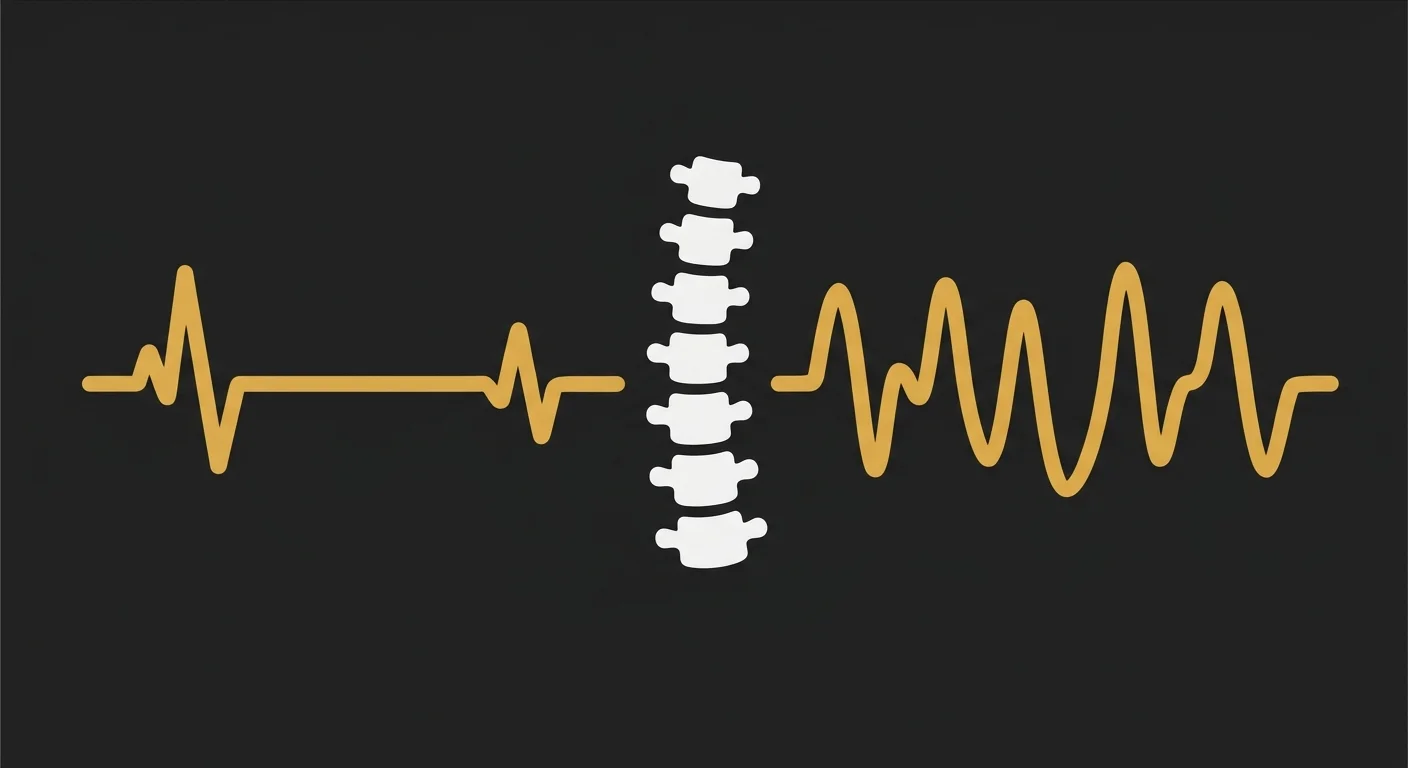
The switch doesn't reset on its own.
Once the spine is loaded unevenly and the neural pathways running through it are compromised, the autonomic control loop stays broken. The sympathetic system keeps firing. Not because the threat is still there — but because the structural interference is.
That's the mechanism most stress care skips entirely. Breathing exercises don't reach it. Journaling doesn't reach it. A chiropractic adjustment works directly on the structural interference in that control loop — restoring alignment at the spinal level, removing the physical obstruction that's been jamming the autonomic signal. It's the clearest example of how a spinal adjustment can calm the fight-or-flight response.
This isn't a claim. It's documented. NIH peer-reviewed findings show that spinal adjustments produce verifiable changes in autonomic nervous system markers — the body's own physiology responding in a measurable, confirmed direction. The switch starts moving back toward off.
Heart Rate Variability: The Measurable Marker of Autonomic Recovery
Heart rate variability — HRV — is one of the most reliable clinical windows into autonomic function. It measures the variation in time between heartbeats.
A higher HRV means the parasympathetic system is active. The body has room to recover. A suppressed HRV means the sympathetic system is running the show — the body is braced, not restoring. That single metric tells you which state the nervous system is actually in.
Research measuring HRV after chiropractic adjustments shows a consistent shift away from sympathetic dominance toward parasympathetic recovery.
That's not a patient reporting they feel better. It's a physiological marker moving in a documented direction. Autonomic balance improving — not because someone relaxed harder, but because the structural source of the interference was corrected.
Published clinical findings confirm the same pattern: chiropractic care produces significant decreases in self-reported pain scores alongside positive changes in autonomic balance as measured by physiological markers.
Both axes move together. Pain drops. The nervous system rebalances. Same correction, same visit. That's what happens when you address the source instead of managing the output. Managing the output keeps you functional. Correcting the source is how you actually flip the switch back off.
| Outcome Marker | What It Measures | Direction of Change After Spinal Adjustment | Clinical Significance |
|---|---|---|---|
| Heart Rate Variability (HRV) | Variation in time between heartbeats — a direct window into autonomic nervous system balance | Increases after chiropractic adjustments — signaling a shift toward parasympathetic recovery | Higher HRV confirms the parasympathetic system is active and the body has capacity to restore itself |
| Sympathetic Dominance | The degree to which the fight-or-flight system is overriding the rest-and-digest system | Shifts away from sympathetic dominance following spinal adjustment | Confirms the structural interference driving the autonomic imbalance is being addressed at its source |
| Autonomic Nervous System Balance | The functional equilibrium between sympathetic and parasympathetic divisions | Positive changes in autonomic balance as measured by physiological markers | Documents that nervous system rebalancing is verifiable — not self-reported perception alone |
| Self-Reported Pain Score | Patient-rated pain intensity on a clinical scale — reflects how the nervous system is processing and amplifying pain signals | Significant decrease following chiropractic care | Pain reduction occurring alongside autonomic rebalancing confirms both outputs of the stress-pain loop are moving in the right direction simultaneously |
| Autonomic Nerve Function | The integrity and responsiveness of the nerve pathways governing involuntary physiological regulation | Verifiable changes documented post-adjustment | Establishes that spinal correction produces measurable functional change in the autonomic control loop — not just symptom relief |
What a Structural Stress Assessment Actually Examines
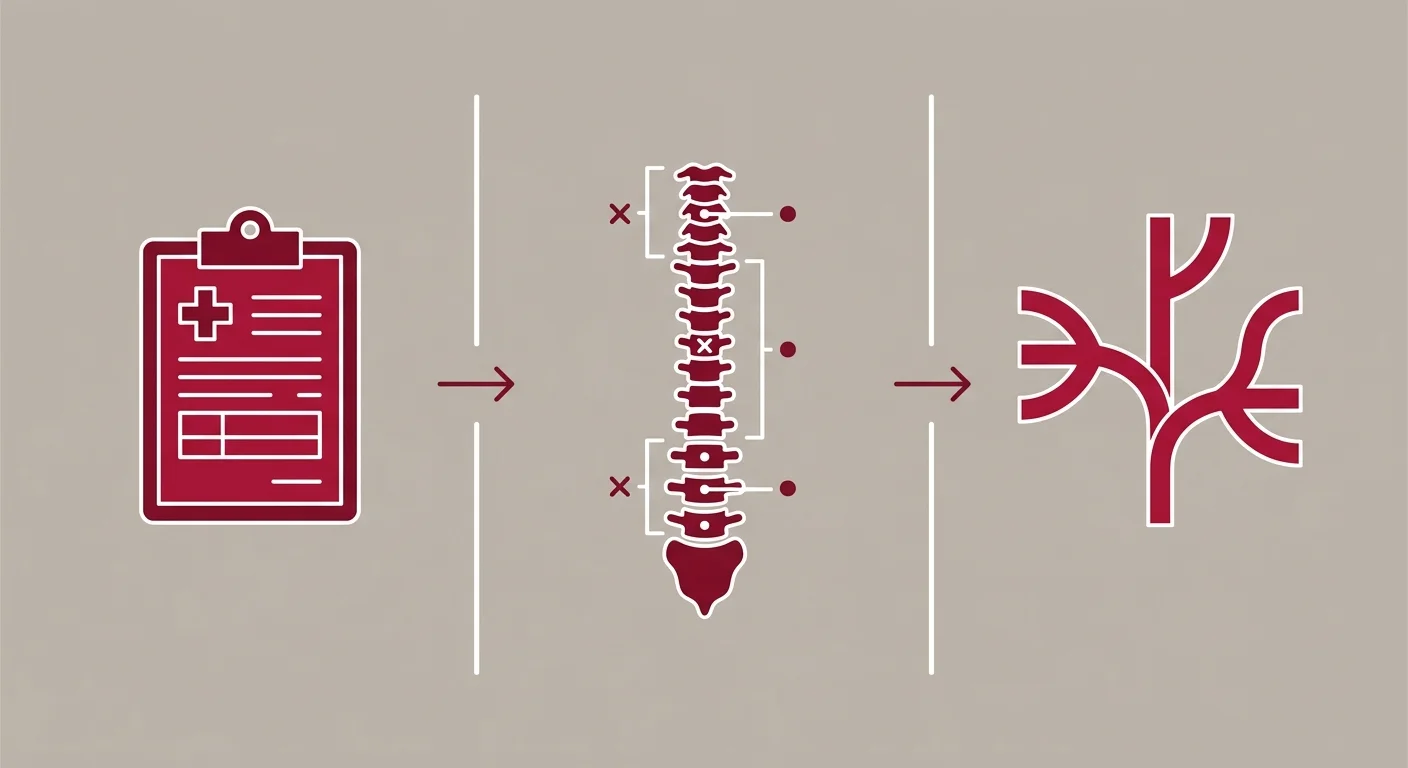
Knowing the biology matters. But knowing what to actually examine — and why — is what separates a clinical assessment from a checklist that runs the same sequence on every patient regardless of what they walk in with.
At Touch of Wellness Chiropractic, the assessment starts with what you actually report. Not what a diagnosis code says you should have. Not what the last provider guessed.
Where the tension lives. How long it's been there. What makes it worse — and what's happened to your sleep, your energy, and your ability to function. That's the clinical picture. That's where the examination begins.
From there, the structural examination looks at the spine directly — posture under load, segmental alignment, muscle guarding patterns, and the neural pathways running through the areas of concern.
That's not a general wellness scan. Every element points toward a specific clinical question: where is the autonomic control loop being interrupted, and what's keeping the switch jammed on. The answer lives in the chronic stress–misalignment connection
This Approach Is Not for Everyone
This approach isn't for everyone. That's worth saying clearly — before you book anything.
If you're arriving with a list of what your last provider did and you need it replicated exactly, this isn't the right fit. The assessment drives the care plan here. Not your previous provider's habits. Not a sequence you read about online. Not a protocol built around what your insurance prefers to reimburse.
If that's a problem before we've even started, that's important clinical information for both of us.
And if you're expecting one adjustment to resolve months of nervous system overactivation — that's not a realistic clinical picture.
The switch didn't jam overnight. Correcting the structural interference that's been sustaining sympathetic dominance takes a committed care plan, not a single visit. Partial commitment produces partial results. That's not a warning. It's just how physiology works.
What the Assessment Covers and Why Each Element Matters
The structural assessment covers five clinical areas. Each one exists because stress leaves a different kind of fingerprint — and every fingerprint points toward a different part of what's keeping the switch jammed on.
Spinal alignment and segmental mobility come first. Chronic sympathetic dominance loads the spine unevenly — muscles brace, posture shifts, and specific segments lose normal movement range.
That's where subluxations develop. That's where nerve pathway hyper-excitability takes hold. You can't correct a structural interference you haven't located. So finding those points isn't a formality — it's the whole starting premise.
Muscle guarding patterns, postural asymmetry under load, and reported symptom history complete the picture. Central sensitization doesn't show up uniformly — it shows up differently in every patient, because every nervous system learned to stay locked on through a different sequence of events.
That's why the assessment is individualized. Not as a selling point. Because there's no template that accounts for your specific structural interference pattern. And a template that can't account for it definitely can't correct it.
| Assessment Component | What It Evaluates | Why It Matters for Stress Recovery |
|---|---|---|
| Spinal Alignment & Segmental Mobility | Where specific vertebral segments have lost normal movement range and how the spine is loaded under postural stress | Subluxations at these points create structural interference in the autonomic control loop — keeping the sympathetic system firing after the stressor is gone |
| Muscle Guarding Patterns | Which muscle groups are in persistent low-grade contraction and whether that contraction is reactive or sensitization-driven | Persistent guarding signals that the nervous system has learned to brace — not that a threat is present — meaning the source is structural, not situational |
| Postural Asymmetry Under Load | How the body distributes weight and compensates structurally when upright and under the physical demands of daily activity | Uneven spinal loading accelerates nerve pathway irritation and compounds the structural stress the autonomic system is already managing |
| Neural Pathway Sensitivity | Which spinal regions correspond to areas of reported pain, numbness, or radiating tension — and whether those patterns reflect central sensitization | Sensitized pathways lower the threshold for pain signals and sustain sympathetic dominance independently of any external stressor |
| Reported Symptom History | What the patient actually experiences — where tension lives, how long it has been present, how it affects sleep, energy, and daily function | The clinical picture is built from what you report, not from a diagnosis code — because the structural interference stress creates shows up differently in every patient |
Frequently Asked Questions About Nervous System Stress Recovery
The biology is mapped. The clinical path is clear. What's left are the questions people are actually asking at 11pm — when the tension won't release and they're trying to figure out if this is worth doing.
These aren't soft questions. They're the real hesitations — about timelines, about commitment, about whether a chiropractic adjustment can actually move a nervous system that's been jammed on for months. Here are straight answers.
How does stress-related physical tension differ from regular muscle fatigue?
Regular muscle fatigue has a clear arc — you worked hard, the muscle recovers, it's done. Stress-related physical tension doesn't work that way.
What's driving it isn't a muscle that's been used. It's a nervous system stuck in sympathetic dominance. The sympathetic division keeps the body braced — elevated heart rate, increased muscle tone, sustained contraction — not because of a physical demand, but because the autonomic control loop is locked on. The muscles are obeying a signal that hasn't stopped firing.
That's why rest doesn't fix it. You can sleep eight hours and wake up tight. You can stretch for thirty minutes and feel the same knot an hour later. The muscle isn't the problem. It's following orders from a compromised nervous system.
Can a chiropractic adjustment actually calm my fight-or-flight response?
Yes — and it's not theoretical. Research measuring heart rate variability (HRV) after chiropractic adjustments shows a consistent shift away from sympathetic dominance toward parasympathetic recovery. HRV is a direct physiological window into autonomic function. When it improves after an adjustment, the body's own biology is confirming the shift.
The mechanism is structural. A chiropractic adjustment removes the physical interference in the autonomic control loop — the misalignment that's been sustaining the sympathetic signal even when no real threat is present. Once that obstruction is addressed, the parasympathetic division has room to activate. The switch starts moving back toward off.
That's not a relaxation response. It's a structural correction with a measurable autonomic consequence.
How many visits are typically required before stress symptoms start resolving?
Anyone who gives you a visit count before the structural assessment is finished isn't giving you a clinical answer. They're handing you a billing calendar.
Here's what's honest: the switch didn't jam overnight. Chronic sympathetic dominance loads the spine unevenly and sensitizes neural pathways over time. Correcting the structural interference that's sustaining it isn't a one-visit event.
What changes after the first few visits is measurable — self-reported pain scores drop and autonomic balance shifts in a clinically verifiable direction. But the timeline is individualized. The assessment drives that answer. Not a number someone printed on a new patient intake form.
Will I have to commit to a long-term treatment plan to see results?
Not indefinitely. The goal of every care plan at Touch of Wellness Chiropractic is to get you to a point where you don't need to keep coming back. When something isn't producing results, the plan changes. When the structural interference is resolved and the nervous system is rebalancing, visit frequency drops.
What you won't get is a 12-month plan handed over before the examination is finished. That model serves the provider's schedule, not your recovery. It's the one this practice rejects.
Commitment to a complete care plan is not the same as permanent dependency. Partial commitment produces partial results — that's just how physiology works. But the endpoint is always function restored. Not an indefinite maintenance schedule designed to keep you in the chair.
What does a nervous system stress assessment look like at Touch of Wellness Chiropractic in Morton, IL?
It starts with what you actually report. Not a diagnosis code. Not a checklist built around what your insurance prefers to reimburse. Where the tension lives, how long it's been there, what's happened to your sleep, your energy, your ability to function — that's the opening of the clinical picture.
From there, Dr. Karen Hannah examines the spine structurally — posture under load, segmental alignment, muscle guarding patterns, and the neural pathways running through the areas of concern. The autonomic nervous system runs through the spinal column. Finding exactly where the sympathetic system is being held in dominance means looking at the structural level — not guessing from symptoms alone.
The assessment is individualized because the interference is individualized. No two patients arrive with the same spinal load pattern, the same sensitization history, or the same presentation. The examination finds what's actually there — not what a protocol assumes should be.
The Light Switch Your Body Has Been Waiting to Flip
The switch is jammed on. That's not a metaphor. It's a biological fact.
Chronic stress loads the spine unevenly. It sensitizes nerve pathways. It keeps the sympathetic system running at full output long after the original stressor is gone. And no amount of deep breathing resets a structural problem.
What flips it back off is correcting the source.
Spinal correction restores the autonomic control loop. It removes the structural interference that's been keeping your nervous system in survival mode. This framework is exactly why chiropractic stress recovery produces different outcomes than standard stress management — it targets the biology, not just the symptoms.
If you've been managing stress symptoms without ever looking at the spine — the tension that won't release, the sleep that won't stay fixed, the nervous system that won't quiet down — that's not a willpower problem. That's a structural one.
At Touch of Wellness Chiropractic, the assessment starts with what you actually report. Not a standard protocol. Not a timeline handed over before the evaluation is finished. If the biology is driving the symptoms, that's where the work begins.
The switch is still on. If the tension won't release, the sleep won't hold, and the system won't stand down — that's not stress. That's a structural problem. Book your clinical assessment and find out what's keeping it jammed.
Copyright Touch of Wellness Chiropractic 2026
1101 W Jackson St, Suite A Morton, IL 61550
Web Design by iTech Valet