
(309) 321-8412 | 1101 W Jackson St, Suite A, Morton, IL 61550
(309) 321-8412 | 1101 W Jackson St, Suite A, Morton, IL 61550
Why Touch of Wellness Focuses on Whole-Organism Clinical Health
Touch of Wellness Chiropractic focuses on whole-organism clinical health because Dr. Karen Hannah's Clinical Response Lens — forged through cross-species clinical training — taught her to see patients as complete biological systems, not collections of isolated symptoms. That lens changes everything.
The central nervous system controls and coordinates all bodily functions. When spinal misalignment disrupts that system, symptoms show up everywhere. Most chiropractic offices treat the symptom. This practice investigates the system.
Dr. Hannah's systems-biology framework means every patient gets a root-cause assessment built from what they actually report. Not a pre-written protocol applied to everyone who walks through the door. Systems biology studies the complex interactions between parts of a biological system to understand how it functions as an integrated whole. That's what happens here.
The spine isn't treated in isolation. The nervous system isn't treated in isolation. Every adjustment, every modality, every recommendation serves the entire organism's ability to self-regulate and heal.
Over 20% of U.S. adults are living with chronic pain. Most of them tried something that gave temporary relief before the pain came back. That cycle exists because symptom-chasing protocols never address the nervous system dysfunction driving the problem.
Whole-organism care starts with one question: what is the root cause preventing this system from functioning correctly?
The answer determines the care plan. Not the diagnosis code. Not the insurance reimbursement structure. Not the protocol the previous patient received.
Engaging patients in their own healthcare is a key strategy for improving outcomes. That requires explanation. Dr. Hannah explains what's happening, why it's happening, and what the realistic path to resolution looks like. No vague timelines. No indefinite treatment plans presented before the assessment is finished. Just honest answers built from a clinical lens that sees the whole system.
Last Updated: May 16, 2026
- • What Whole-Organism Clinical Health Actually Means
- • How Cross-Species Clinical Training Changes Clinical Judgment
- • What Individualized Assessment and Adaptive Care Plans Mean in Practice
- • Who This Approach Is Not For
-
• Frequently Asked Questions
- • How is a whole-organism approach different from just treating my symptoms?
- • Why is a cross-species clinical lens relevant for a Doctor of Chiropractic?
- • Can a whole-organism focus actually lead to faster or more permanent results?
- • Does whole-organism care require more appointments than traditional chiropractic?
- • What does a systems biology perspective mean for my chiropractic care plan?
- • The System Governs the Outcome
What Whole-Organism Clinical Health Actually Means
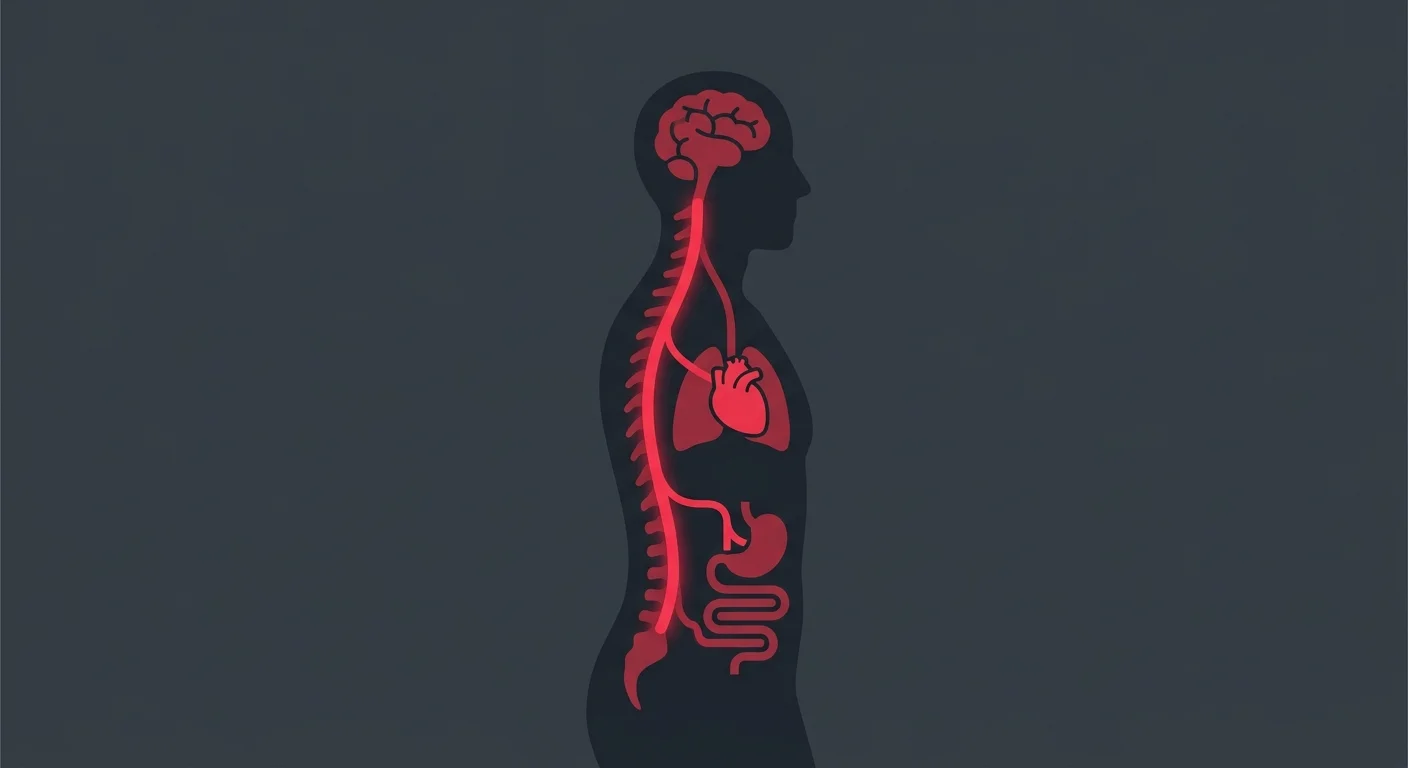
Whole-organism clinical health means treating the patient as a complete biological system where every part affects every other part. Not chasing individual symptoms. Restoring the function of the system that controls those symptoms.
Most practices run the same protocol on every patient. Same adjustment sequence. Same modality schedule. Same timeline. That approach assumes every patient's system broke in exactly the same way.
It didn't.
At Touch of Wellness Chiropractic, the assessment drives the care plan. Dr. Hannah's Clinical Response Lens means she's looking at how your nervous system is functioning as an integrated whole — not just where you're reporting pain.
The pain is the signal.
The nervous system dysfunction is the problem.
Why Systems Biology Is the Foundation
What systems biology studies — the complex interactions between various parts of a biological system to understand how it functions as an integrated whole — is the foundation of Dr. Hannah's clinical lens. Her cross-species clinical training, including AVCA-certified animal chiropractic practice, taught her to see organisms as interconnected systems where a disruption in one area cascades through the entire structure.
That training doesn't go away when you start treating patients. It shapes every clinical decision.
So when a patient walks in with chronic low-back pain, the question isn't just 'where does it hurt?' The question is: what's happening in this patient's nervous system that's preventing their body from resolving this on its own?
The body has an innate, self-regulating ability to heal. When healing isn't happening, something is blocking that process.
That's the clinical differentiator. Most chiropractors adjust the spine. Dr. Hannah adjusts the spine because she's targeting the nervous system's ability to restore function across the entire organism.
The adjustment is the tool. The goal is systemic restoration.
The Nervous System Runs Everything
The central nervous system controls and coordinates all bodily functions. It transmits signals between the brain and the rest of the body, including internal organs. When the spine misaligns and disrupts that signaling, nothing works right.
Your sleep suffers. Your digestion slows. Your pain persists. Your stress response stays locked in overdrive.
These aren't separate problems. They're symptoms of one problem: nervous system interference.
And that's why cookie-cutter protocols fail. They treat the pain without addressing the interference. They run the same adjustment sequence regardless of what the patient's nervous system actually needs.
Here's the thing: if you don't restore nervous system function, you don't restore health. You just mask symptoms until they come back.
| Body System | Nervous System Role | What Happens When Communication Breaks Down |
|---|---|---|
| Musculoskeletal System | The nervous system coordinates muscle contraction, joint stability, and pain signaling. Proper nerve communication allows muscles to fire correctly and joints to move without restriction. | Chronic pain, muscle tension, limited range of motion, recurring injuries. The body compensates around the dysfunction instead of resolving it. |
| Digestive System | The nervous system regulates digestion, nutrient absorption, and gut motility through the vagus nerve and spinal nerves. Proper signaling keeps digestion running smoothly. | Bloating, constipation, acid reflux, sluggish digestion. The gut can't process food efficiently when nerve signals are disrupted. |
| Sleep & Recovery | The nervous system controls circadian rhythm, stress hormone release, and the body's ability to shift into parasympathetic rest-and-repair mode. | Poor sleep quality, waking unrested, difficulty falling asleep, chronic fatigue. The body stays locked in a stress response and can't enter true recovery. |
| Immune Function | The nervous system modulates immune response and inflammation. Proper communication allows the body to fight infection and regulate healing without chronic inflammation. | Frequent illness, slow wound healing, persistent inflammation. The immune system can't self-regulate when nervous system signaling is compromised. |
| Cardiovascular System | The nervous system regulates heart rate, blood pressure, and vascular tone. It adjusts circulation based on activity level and stress load. | Elevated blood pressure, heart palpitations, poor circulation. The cardiovascular system can't adapt efficiently when nerve communication is blocked. |
How Cross-Species Clinical Training Changes Clinical Judgment
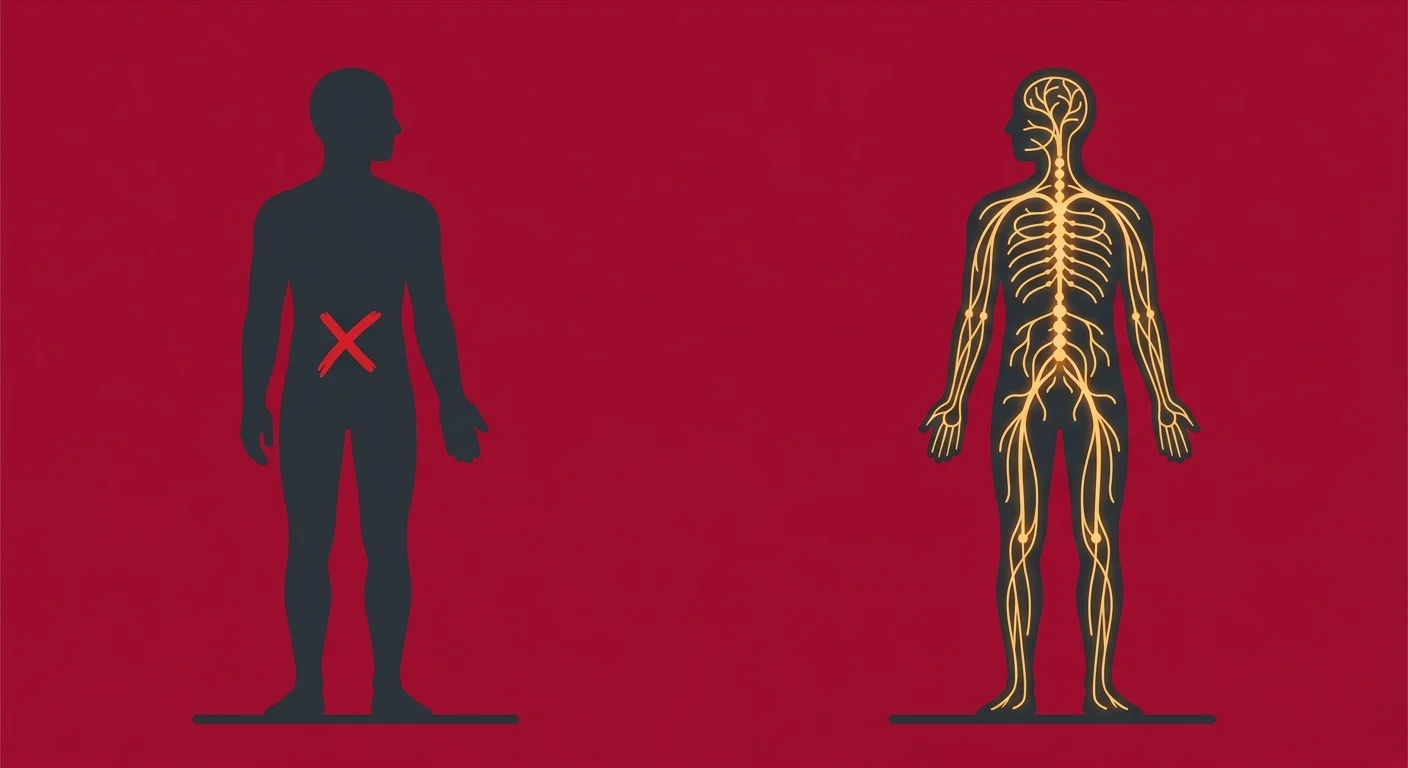
Most chiropractors graduate with a clinical lens shaped by protocol memorization. Learn the adjustment sequence. Apply it to the presenting condition. Repeat.
Dr. Hannah didn't graduate that way. Her cross-species clinical training — including AVCA-certified animal chiropractic and the clinical proof that adjusting a paralyzed kitten daily for four days restored full motor function — gave her a lens shaped by organismal biology. She learned to see a 're-integration of biology' — integrating data from the molecular level up to the organismal and ecological levels.
So when a patient walks in with a symptom, her first question isn't which protocol fits.
It's what system failure is producing this symptom in the first place.
That's how her clinical lens improves chiropractic care at Touch of Wellness Chiropractic.
She doesn't see a herniated disc. She sees a nervous system under enough mechanical stress that it can't maintain structural integrity anymore.
She doesn't see chronic headaches. She sees a cervical spine misalignment cutting off blood flow and nerve signaling to the head.
The Clinical Response Lens doesn't just change the diagnosis. It changes every decision that comes after.
The Cookie-Cutter Protocol Trap
The cookie-cutter protocol exists because it's efficient. Walk every patient through the same sequence. Bill the same codes. Hit the same visit count.
It works for the practice's schedule.
It fails the patient's recovery.
Here's why: no two patients' nervous systems are disrupted in exactly the same way.
Even if two people walk in with the same diagnosis — sciatica, let's say — the root cause driving that sciatica is different. One patient's sciatic nerve is compressed because of a lumbar misalignment. Another patient's sciatic nerve is irritated because chronic muscle tension is pulling the pelvis out of alignment.
Same symptom. Different system failure.
So if you run the same protocol on both, one improves and one doesn't.
The one who doesn't gets told they need more time. More visits. More patience.
What they need is a provider willing to stop and reassess the system.
That's the trap. The protocol becomes the standard. And when it doesn't work, the patient gets blamed for not responding correctly.
At Touch of Wellness Chiropractic, if a treatment isn't working after a few visits, it changes.
Not because the protocol failed. Because your system needed something different from the start.
What Individualized Root-Cause Care Looks Like Here
Individualized chiropractic care starts with what you report. Not what the diagnosis code assumes you should report.
Your pain history. Your stress load. Your sleep. Your previous treatments.
All of it builds the clinical picture.
Dr. Hannah's assessment is built to identify where your nervous system is failing to self-regulate. That's not philosophy. It's a clinical question with a testable answer.
If your body has an innate ability to heal and it's not healing, something is blocking the process.
The assessment finds the blockage.
So the care plan that follows is specific to your system. The adjustment technique targets your spinal misalignment. The modality addresses your tissue dysfunction. The timeline reflects your body's realistic recovery capacity.
Engaging patients in their own healthcare improves outcomes. And that starts with a care plan you can understand and participate in — not one handed over before the assessment is even finished.
| Clinical Scenario | Cookie-Cutter Protocol Response | Whole-Organism Response |
|---|---|---|
| Patient reports chronic low-back pain radiating down the left leg | Apply standard lumbar adjustment sequence. Schedule three visits per week for six weeks. Recommend ice and stretching. | Assess gait, pelvic alignment, and nerve pathway function. Identify whether the irritation is structural, muscular, or nerve-compression driven. Build a care plan around the root cause, not the symptom location. |
| Patient's headaches improve for two visits, then return at the same intensity | Continue the same cervical adjustment sequence. Add more visits. Assume the patient needs more time. | Stop. Reassess the nervous system. Ask what changed between visit two and visit three. Adjust the technique, change the modality, or investigate a different structural contributor. Repetition without results is clinical failure. |
| Patient reports numbness and tingling in both hands, worse at night | Adjust the cervical spine. Recommend wrist braces and ergonomic changes. Schedule ongoing maintenance visits. | Evaluate cervical alignment, thoracic outlet compression, and carpal tunnel involvement as a system. Determine whether the nerve disruption originates in the neck, the shoulder girdle, or the wrist. Treat the origin, not the symptom. |
| Patient's stress and sleep disruption are mentioned during intake | Note it in the chart. Focus the care plan on the musculoskeletal complaint only. | Recognize that chronic stress locks the nervous system into sympathetic dominance, which prevents healing. Address the nervous system's ability to shift into parasympathetic recovery. Stress and sleep are not separate issues — they are nervous system dysfunction showing up in daily life. |
| Patient asks why the previous chiropractor's protocol didn't work | Explain that every practice has a different philosophy. Avoid critiquing the previous provider. | Explain that the previous protocol likely treated the symptom without investigating the system-level cause. Name the specific failure: if a treatment isn't working and you keep repeating it, that's not care — it's guesswork. This practice stops and reassesses when results stall. |
What Individualized Assessment and Adaptive Care Plans Mean in Practice

Individualized assessment means the care plan is built from what you actually report. Not from what a diagnosis code assumes you should report.
At Touch of Wellness Chiropractic, the first appointment is an investigation.
Dr. Hannah asks about your pain history. Your stress load. Your sleep quality. Your previous treatments. What you've already tried that didn't work.
All of it feeds into the clinical picture.
Patient-centered care is respectful of and responsive to individual patient preferences, needs, and values. That requires listening before prescribing.
The assessment identifies where your nervous system is failing to self-regulate.
That's not a philosophical position. It's a clinical question with a testable answer.
Your body has an innate ability to heal. If it's not healing, something is blocking that process. The assessment's job is to find the blockage. The care plan's job is to remove it.
The Assessment Drives the Plan
The care plan that follows is specific to your system.
The adjustment technique is chosen because it targets your spinal misalignment. The modality is chosen because it addresses your tissue dysfunction. The timeline is chosen because it reflects your body's realistic recovery capacity.
And you're told why.
Explanation-driven care turns passive patients into active participants. Dr. Hannah explains what's happening in your system, why the recommended treatment targets that specific dysfunction, and what realistic progress looks like over the next few weeks.
No vague timelines. No indefinite treatment plans presented before the assessment is finished.
That's the difference between a protocol and a care plan.
A protocol is what the practice does to every patient. A care plan is what this patient's system needs right now.
The Clinical Response Lens doesn't allow for one-size-fits-all. Dynamically interconnected systems don't break in identical patterns.
When the Plan Changes Because It Should
Here's the conviction that separates Touch of Wellness Chiropractic from most practices: if a treatment isn't working after a few visits, the plan changes.
Not because the protocol failed. Because this patient's system is telling us it needs something different.
The willingness to stop and reassess isn't a weakness. It's the whole point.
Adaptive care plans mean the treatment evolves as your system responds. If you're not progressing, the plan pivots. If you're progressing faster than expected, the plan adjusts.
The care follows your system's feedback. Not a pre-printed schedule.
That's what whole-organism care looks like in practice.
The patient is a complete biological system. The assessment investigates the whole system. The care plan serves the whole system.
And when the system says the plan isn't working, the provider listens.
| Care Plan Component | Fixed-Protocol Approach | Adaptive Whole-Organism Approach |
|---|---|---|
| Initial Assessment | Brief intake focused on presenting symptom, minimal patient history, standardized diagnostic protocol applied uniformly | Comprehensive investigation of pain history, stress load, sleep quality, previous treatments, and system-level dysfunction before any care plan is discussed |
| Treatment Selection | Same adjustment sequence applied to every patient with the same diagnosis code, regardless of individual nervous system response | Adjustment technique and modality chosen specifically to address the patient's identified spinal misalignment and tissue dysfunction |
| Care Plan Timeline | Pre-determined visit schedule presented before assessment is complete, often emphasizing long-term retention over clinical necessity | Timeline reflects the patient's realistic recovery capacity based on assessment findings, explained with honest outcome expectations |
| Progress Monitoring | Patient progresses through fixed protocol regardless of response, lack of improvement attributed to patient non-compliance or need for more time | Care plan pivots when treatment isn't producing results after a few visits, adaptation driven by nervous system feedback rather than protocol adherence |
| Patient Communication | Minimal explanation of why specific treatments are recommended, vague reassurances without realistic timelines or outcome clarity | Explanation-driven care that details what's happening in the patient's system, why the treatment targets that dysfunction, and what realistic progress looks like |
Who This Approach Is Not For
If you're walking in with a list of what your last chiropractor did — and you need Touch of Wellness Chiropractic to replicate it exactly — we're not the right fit.
The assessment drives the care plan here. Not your previous provider's habits.
Dr. Hannah's Clinical Response Lens starts with what your nervous system is doing right now. Not what worked for someone else six months ago.
And if you expect the provider to do everything while you do nothing between appointments — this isn't the right fit.
Recovery requires both parties showing up.
Dr. Hannah provides the assessment, the adjustment, the clinical expertise, and the honest explanation. You provide the feedback, the follow-through, and the willingness to participate.
So if you're looking for a one-adjustment miracle or a provider who'll run the same protocol for six months without stopping to reassess — that's not what happens here.
The Clinical Response Lens doesn't allow for passive care. It requires active participation from you and adaptive decision-making from the provider.
That's how whole-organism care works.
Advanced Modalities When the System Needs Them
But here's what whole-organism care does allow for: advanced modalities when your system needs them.
Touch of Wellness Chiropractic offers advanced Shockwave Therapy for cases where tissue dysfunction is blocking nervous system recovery.
Shockwave accelerates healing at the cellular level. It stimulates blood flow. It breaks down scar tissue.
It's not a protocol applied to every patient. It's a tool deployed when the assessment reveals that soft tissue damage is preventing spinal adjustments from holding.
Same logic applies to root-cause neuropathy care.
Nerve damage requires more than spinal adjustment alone. It requires targeted modalities that restore nerve function at the source.
The Clinical Response Lens identifies which modality serves the system — not which modality fills the schedule.
The Role of Multi-Modality Integration
Multi-modality integration means the care plan uses whatever the system needs to restore function.
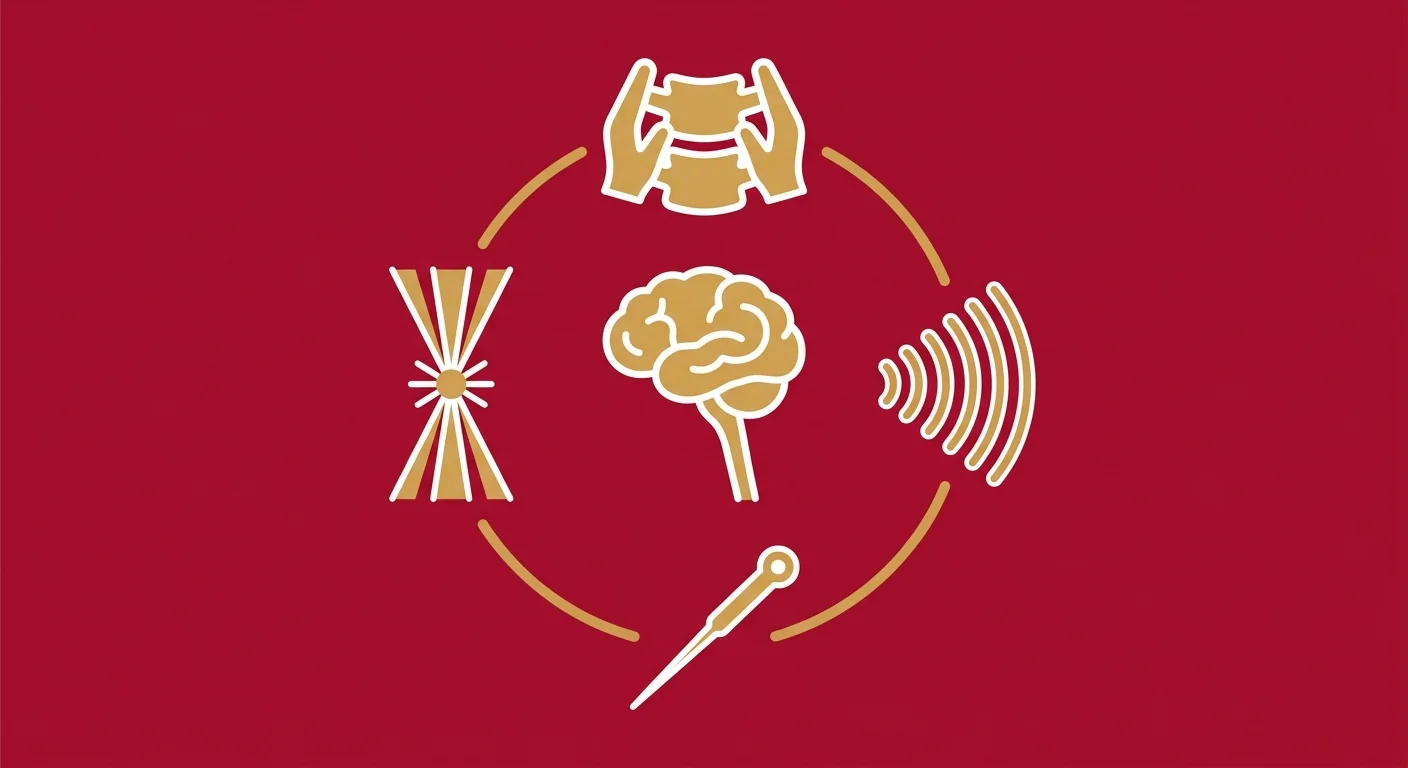
Chiropractic adjustment removes the spinal interference. Shockwave Therapy accelerates tissue repair. Acupuncture calms the sympathetic nervous system. Cold Laser reduces inflammation at the cellular level.
The modalities aren't competing. They're coordinated.
Because you're one system — not a collection of disconnected symptoms.
And when the assessment reveals that your nervous system needs more than adjustment alone, the care plan reflects that. That's what individualized care looks like when the provider has the clinical lens to see the whole organism.
Frequently Asked Questions
But if you're still deciding whether this fits your case — or whether it's worth the shift from what you've already tried — here's what most people ask before they book.
These are the questions worth asking.
How is a whole-organism approach different from just treating my symptoms?
Symptom treatment chases the pain wherever it shows up. Whole-organism care asks why your nervous system stopped self-regulating in the first place.
The difference isn't philosophy. It's function.
The central nervous system controls and coordinates all bodily functions. When spinal misalignment disrupts that system, symptoms show up downstream — headaches, nerve pain, sleep disruption, digestive trouble.
Treating the headache with medication doesn't fix the spinal interference. It masks the symptom while the root cause keeps running.
Whole-organism care removes the interference. The nervous system restarts its self-regulation. The symptoms resolve because the system's working again — not because you're managing pain forever.
Why is a cross-species clinical lens relevant for a Doctor of Chiropractic?
Dr. Hannah earned her Doctorate of Chiropractic from Palmer College of Chiropractic in 2009 and holds AVCA certification in Animal Chiropractic (she also holds a foundational Bachelor of Science in Biology/Zoology). Her assessments don't look like anyone else's because she routinely cross-trains her clinical lens across multiple species — demanding a real-time reading of neurological function that protocol-driven practitioners completely miss.
That cross-species framework carried into her clinical training. Most chiropractors learn spinal mechanics and adjustment technique. Dr. Hannah learned those tools through a systems-biology framework — one confirmed the day she adjusted a paralyzed kitten daily for four days and watched it run down the hallway. She sees you as a complete organism whose nervous system governs every function — digestion, sleep, pain response, immune coordination, tissue repair.
So when you walk in with chronic pain, she's not asking where it hurts.
She's asking what system failure is producing this symptom.
That's the Clinical Response Lens in practice.
Can a whole-organism focus actually lead to faster or more permanent results?
It can. Not because whole-organism care is faster by design — but because it targets the root cause instead of chasing symptoms.
When the nervous system interference is removed, the body restarts its self-regulation.
Systems biology creates predictive models of cells, organs, and organisms by studying how biological parts interact as an integrated whole. That's how Dr. Hannah builds care plans — by identifying which system is failing and restoring its function.
So if your pain keeps coming back after every treatment, that's not bad luck.
That's what happens when the symptom gets treated but the system failure stays.
Whole-organism care fixes the system. When the system works, the symptoms stop coming back.
Does whole-organism care require more appointments than traditional chiropractic?
Not necessarily. It requires honest appointments.
Cookie-cutter protocols stretch care plans across months because the timeline's designed to maximize visits — not to match your system's recovery.
Whole-organism care at Touch of Wellness Chiropractic builds the timeline from your assessment. If your nervous system responds quickly, the plan adjusts. If progress stalls, the plan pivots.
And here's the part most practices won't say: when your system no longer needs care, Dr. Hannah tells you.
The goal isn't to keep you coming back indefinitely. The goal is to restore your nervous system's ability to self-regulate so you don't need ongoing treatment.
That's the difference between a care plan and a revenue model.
What does a systems biology perspective mean for my chiropractic care plan?
It means your care plan is built from how your entire system is functioning. Not from a diagnosis code.
Patient-centered care is respectful of and responsive to individual patient preferences, needs, and values. At Touch of Wellness Chiropractic, that starts with the assessment.
Dr. Hannah investigates your pain history, your stress load, your sleep quality, your previous treatments. All of it feeds into the clinical picture.
Because your nervous system doesn't exist in isolation. It's integrated with every other system in your body.
So the care plan reflects that integration.
If tissue dysfunction is blocking spinal adjustments from holding, Shockwave Therapy accelerates repair. If sympathetic overload is preventing recovery, Acupuncture calms the system.
The modalities aren't arbitrary. They're chosen because your assessment revealed which system needs support.
That's what a systems-biology perspective looks like in practice.
The System Governs the Outcome
The nervous system runs everything.
When it's disrupted, nothing works right. Sleep won't stay fixed. Pain keeps coming back. Your body stops healing the way it used to.
That's not bad luck.
That's what happens when the master control system is compromised and no one's investigating the cause.
Touch of Wellness Chiropractic focuses on whole-organism clinical health because Dr. Hannah's Clinical Response Lens demands a root-cause investigation of the entire nervous system. She rejects the failed, symptom-chasing protocols common in the industry. (About Dr. Karen Hannah, DC — her clinical framework started with cross-species neurological training, not symptom lists.)
You aren't a collection of isolated symptoms. You're a complete biological system.
And when that system is treated as a whole — assessed honestly, adjusted precisely, supported with the right modalities — it remembers how to self-regulate.
That's not a miracle. That's what the body does when the interference is removed.
If you've been dismissed, told to wait and see, or handed a twelve-month plan that never explained the why — this is a different conversation.
Unexplained doesn't mean untreatable. It means no one's looked hard enough yet.
Book an honest assessment at Touch of Wellness Chiropractic in Morton, IL, and find out what your nervous system is actually doing.
Because when the system works, everything else follows.
Your body keeps breaking down in the same places. The pain returns a week after treatment. Your sleep won't stay fixed. You've been told there's nothing wrong when you know something is. That's your nervous system telling you it's not self-regulating. And the longer you wait, the harder it gets to restore that function. Dr. Hannah's Clinical Response Lens starts with one question: what system failure is producing this symptom? Her systems-biology framework was cemented not in a lecture hall, but the day she adjusted a paralyzed kitten daily for four days and watched it run down the hallway. That intervention proved that the nervous system acts as a live operating system — when structural interference is cleared, whole-organism self-regulation follows. Not where does it hurt. Not how do we mask it. What broke — and how do we fix it at the source. That's the conversation worth having.
Copyright Touch of Wellness Chiropractic 2026
1101 W Jackson St, Suite A Morton, IL 61550
Web Design by iTech Valet