
(309) 321-8412 | 1101 W Jackson St, Suite A, Morton, IL 61550
(309) 321-8412 | 1101 W Jackson St, Suite A, Morton, IL 61550
My Doctor Recommended Surgery for Back Pain: What Are My Options?
When a primary care physician recommends surgery for back or neck pain, the most critical next step is to get a second opinion from a specialist in non-invasive musculoskeletal care. Surgery's a last resort. Most back pain resolves with conservative care. Period. A second opinion provides a full picture of all available treatments, including options that may resolve the root cause without the risks, recovery time, and permanence of surgery.
Your PCP sees thirty patients a day. A chiropractor sees the spine all day, every day. That difference matters. Your primary care physician is a generalist — trained across dozens of conditions. A Doctor of Chiropractic is a primary spine care provider with deep, specialized training in nervous system and musculoskeletal function. That difference matters. A PCP sees back pain through the lens of medical management — injections, medication, and surgical referral. A chiropractor sees it through the lens of spinal mechanics, nerve function, and structural recovery. Both perspectives are valuable, but only one is trained to assess and treat the spine as its primary focus.
Most guidelines say wait six weeks before cutting. Your PCP skipped that step entirely. Clinical protocols recommend a minimum of six weeks to three months of conservative care before surgery's reconsidered. Yet many patients are referred directly to an orthopedic surgeon after a single office visit and an MRI, without ever exploring non-invasive options. That's not a failure of the physician's intent — it's a structural limitation of how primary care operates. PCPs are managing high patient volumes and dozens of conditions daily. Spine-specific care isn't their area of depth, and surgery is often the clearest "next step" they can offer within a 15-minute appointment window.
But a surgical recommendation is not a diagnosis. It's one option. And for most patients, it's not the only option — or even the best first option. Before you consent to an irreversible procedure, you deserve to know what else is available, what the realistic outcomes are, and whether your condition is one that can be managed conservatively. The patients who regret surgery the most are the ones who later discover they never needed it in the first place.
Last Updated: April 30, 2026
- Why a Second Opinion Matters Before Surgery
- What Your PCP May Not Know About Chiropractic Care
- When Surgery Is Actually Necessary
- What a Chiropractic Evaluation Reveals
- The Risks Your Surgeon Might Not Emphasize
- Questions to Ask Before You Consent
- What Happens If Conservative Care Doesn't Work
- Frequently Asked Questions
- How long should I try non-surgical treatments before considering surgery?
- Can I get a second opinion from a chiropractor if my PCP recommended an orthopedic surgeon?
- Will my insurance cover a second opinion for back surgery?
- What are the biggest risks of spinal fusion surgery I should know about?
- What happens if chiropractic care doesn't work for me?
- Isn't chiropractic just for minor aches, not something serious enough for surgery?
- How do I know if a chiropractor is qualified to evaluate my surgical case?
- My surgeon said I need surgery "soon" or my condition will get worse — is that true?
- Conclusion
Why a Second Opinion Matters Before Surgery
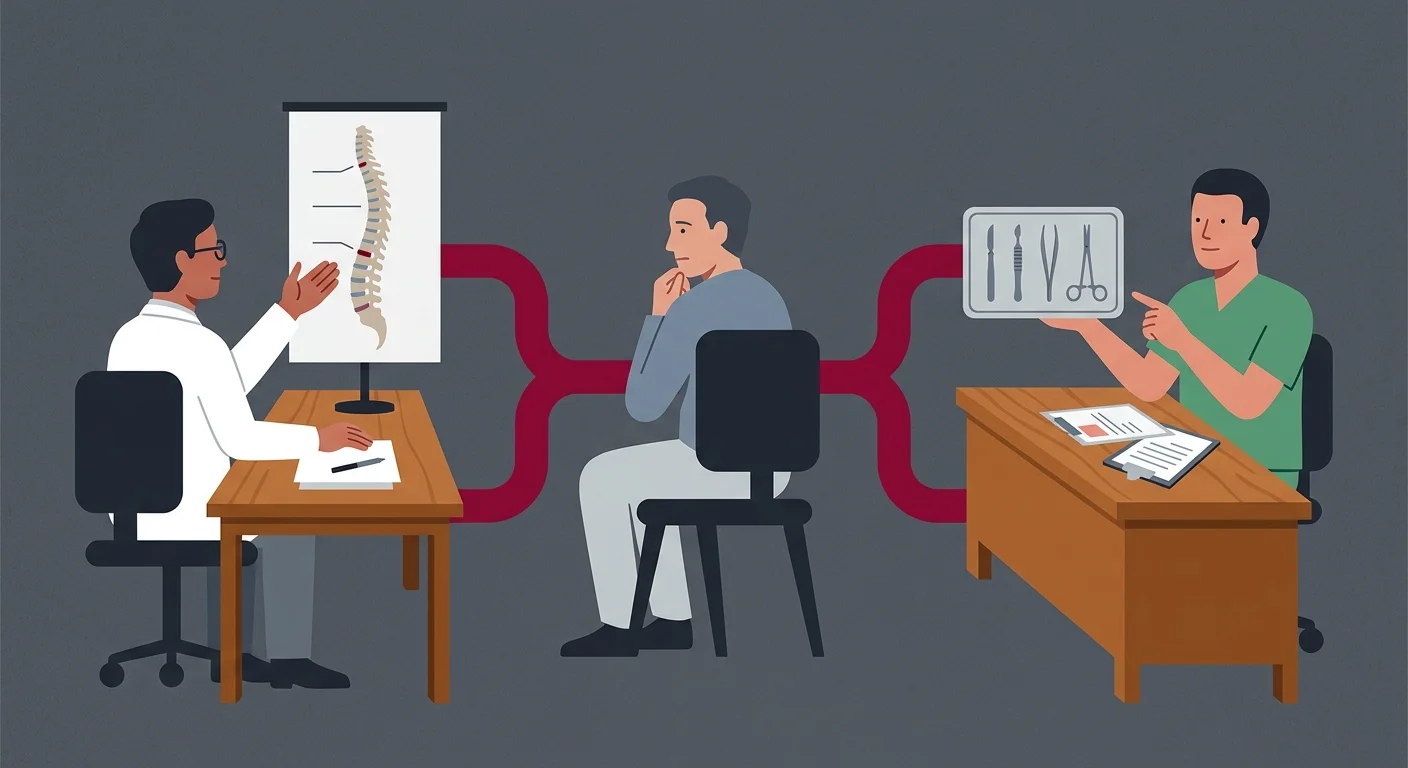
Your doctor handed you a referral. Told you the MRI showed damage. Said surgery's the next step.
And now you're sitting there wondering if this is really it — if cutting is the only way forward.
Here's the thing: most people who end up in a surgical consultation already believe it's their only option. Their PCP told them they needed surgery. An MRI confirmed something's wrong. The referral was written before they even asked what else might work.
That's the pipeline.
It's not because your doctor doesn't care. It's not because they're trying to rush you into something unnecessary. It's structural. Primary care physicians are managing thirty patients a day across every system in the body. Back pain is one file in a stack of dozens. When the standard protocol — rest, NSAIDs, maybe some physical therapy — doesn't fix it in a few weeks, surgery becomes the logical next step within the framework they're working in.
But here's what that framework doesn't account for: most chronic back pain isn't a surgical problem.
The Mayo Clinic confirms it — the majority of back pain resolves with conservative treatment. Surgery's reserved for specific structural emergencies, not general pain management.
Your PCP did their job. They identified something outside their scope and made a referral. That's appropriate.
Now your job is to make sure the next provider you see has the training and perspective to assess whether surgery's actually necessary — or whether your pain's coming from something conservative care can fix.
A second opinion isn't questioning your doctor's competence. It's completing the diagnostic picture before you consent to something permanent.
NIH News in Health backs this up: seeking a second opinion before major procedures is standard, recommended practice — especially when the first recommendation's invasive and irreversible.
The Surgery-First Model Isn't Evidence-Based
The "surgery or nothing" conversation isn't based on what the research says works best.
It's based on what fits into a 15-minute primary care appointment when conservative options aren't the PCP's area of training.
Most patients are told they need surgery after one MRI and one office visit. No movement assessment. No evaluation of how the spine's actually functioning. No exploration of whether the pain matches what the imaging shows.
That's not diagnostic thoroughness. That's referral efficiency.
And it creates a problem: patients end up in surgery for conditions that didn't require it.
A USA TODAY investigation found that unnecessary surgeries remain a significant issue in U.S. healthcare. The drivers? Time constraints. Reimbursement structures. Limited access to conservative specialists.
Surgery should be the answer when conservative care's been genuinely tried and failed — or when there's a true structural emergency.
It shouldn't be the default because it's the fastest path out of a crowded waiting room.
Why PCPs Refer to Surgery Quickly
Your primary care physician wasn't trained to manage chronic spine conditions conservatively.
That's not a criticism. It's a fact.
Medical school curriculum prioritizes diagnosis and medical management — prescriptions, injections, referrals. It doesn't include deep training in spinal biomechanics, nerve function restoration, or non-surgical musculoskeletal intervention. That's not the PCP's role.
So when back pain persists past the initial conservative recommendations they're equipped to offer — rest, over-the-counter medication, maybe a round of physical therapy — the next step in their toolkit is a surgical referral.
Not because surgery's the best option. Because it's the clearest next step within their scope of practice.
Add in the time pressure of managing a full patient load, and the referral becomes inevitable. They can't spend 30 minutes walking you through every alternative. They've got twelve more patients to see that afternoon.
That's where root-cause chiropractic care in Morton, IL fills the gap.
A Doctor of Chiropractic is trained specifically to assess and treat the spine and nervous system. It's not a secondary skill set. It's the entire focus of the degree.
What Your PCP May Not Know About Chiropractic Care
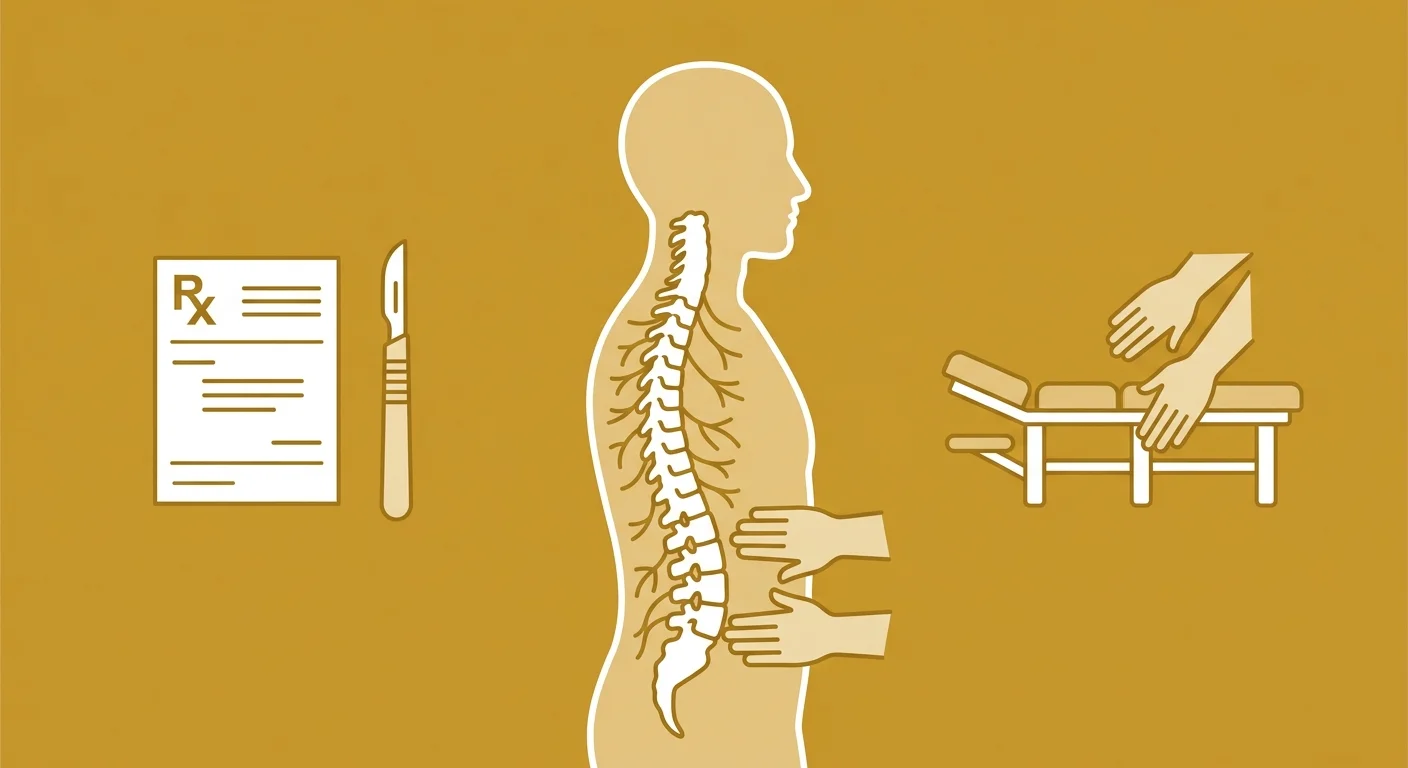
If your PCP dismissed chiropractic when you brought it up — or didn't mention it at all — that's not surprising.
Many primary care physicians were trained in an era when chiropractic was viewed with skepticism or outright dismissed. Others simply don't have exposure to what modern, evidence-based chiropractic practice actually looks like.
Their clinical training focused on medication and surgery. Conservative spine care wasn't part of the curriculum.
That creates a knowledge gap. Not malice. Not incompetence. Just a structural blind spot.
The result: patients are told surgery's their only option when it's actually one option among several — and often not the best first option.
Chiropractic Is Primary Spine Care
A Doctor of Chiropractic isn't an "alternative" provider.
They're a primary spine care specialist.
The degree requires four years of doctoral-level education focused specifically on the musculoskeletal and nervous systems. Training includes biomechanics, neurology, radiology, diagnostic imaging, and hands-on clinical technique. Chiropractors are licensed to diagnose and treat spinal and nervous system conditions without referral.
That's not supplementary care. It's specialized, front-line expertise in the exact systems driving your pain.
When a PCP refers you to an orthopedic surgeon, you're seeing a specialist in surgical intervention. When you see a chiropractor, you're seeing a specialist in non-surgical spinal restoration.
Both are necessary. Both have a place.
But only one's trained to exhaust conservative options before cutting.
What a Chiropractic Adjustment Actually Does
The adjustment isn't a temporary pain relief technique.
It's a structural intervention designed to restore proper motion to restricted spinal segments and reduce nerve interference.
When a vertebra loses its normal range of motion — whether from injury, repetitive stress, or degenerative changes — it creates mechanical dysfunction. That dysfunction irritates surrounding nerves, creates muscle tension, and triggers the pain signals your brain interprets as "back pain."
The adjustment re-establishes movement in that restricted segment.
Motion's restored. Nerve irritation decreases. The body's own healing mechanisms can function properly again.
That's not masking symptoms. It's addressing the mechanical cause.
And when the cause is addressed, the symptoms resolve — not temporarily, but structurally.
Chiropractic care to restore nervous system function works by targeting the root cause, not just managing the pain.
| Area of Study | PCP Training Hours | DC Training Hours | Clinical Focus |
|---|---|---|---|
| Spinal anatomy and biomechanics | 40–60 hours | 400+ hours | DCs specialize in spinal structure and movement patterns |
| Diagnostic imaging interpretation | 20–40 hours | 200+ hours | DCs are trained to read and interpret spine-specific imaging |
| Hands-on musculoskeletal technique | Minimal | 1,000+ hours | DCs spend years mastering adjustment and manual therapy |
| Nervous system assessment | 80–120 hours | 300+ hours | DCs focus on nerve function and spinal-nerve interaction |
When Surgery Is Actually Necessary
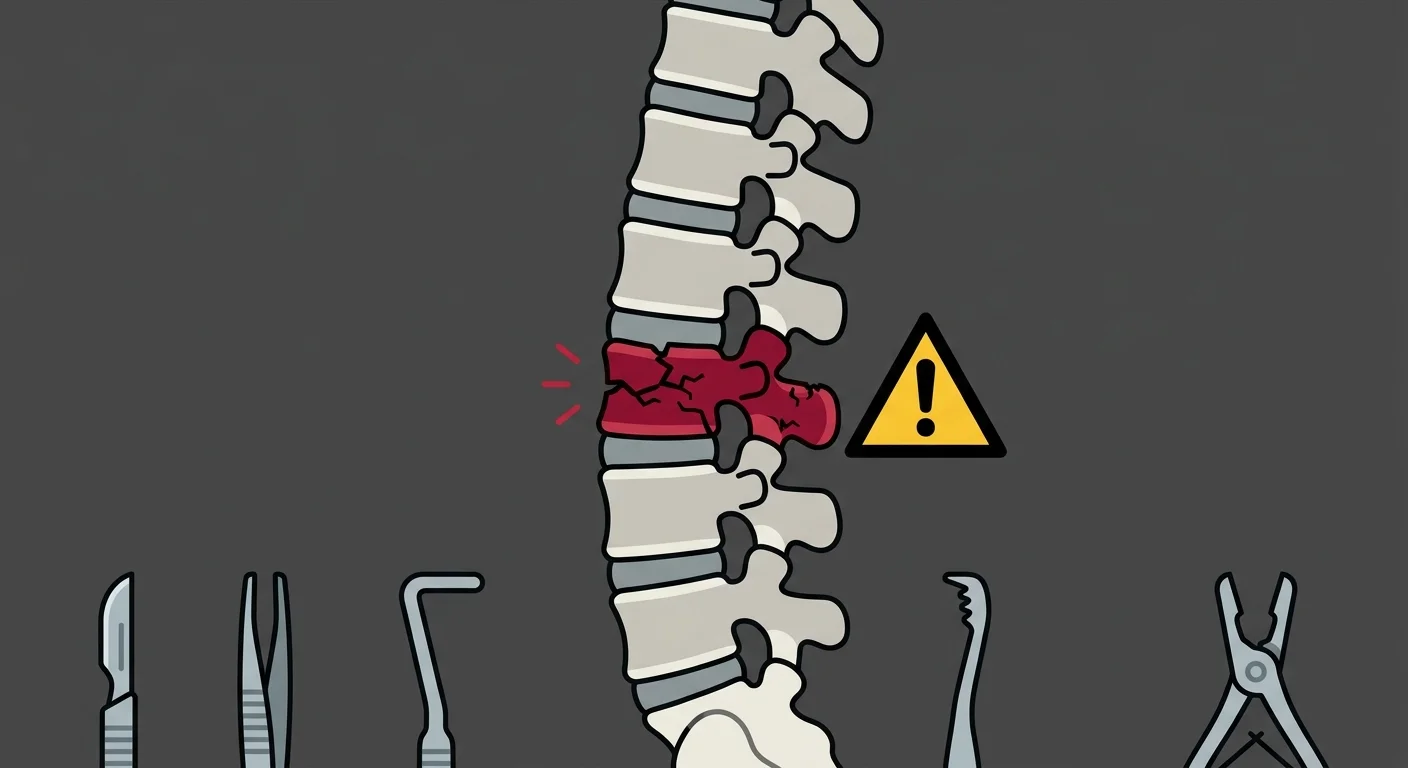
Surgery has a place.
There are conditions where it's the right call — the only call. But those conditions are specific, measurable, and rare compared to the volume of surgeries actually performed.
If you're experiencing any of the following, surgery may be medically necessary and time-sensitive:
- Progressive loss of motor function — your leg's getting weaker week by week
- Cauda equina syndrome — loss of bowel or bladder control, saddle numbness
- Spinal cord compression with measurable neurological deficits
- Severe trauma causing spinal instability
These are emergencies. Conservative care isn't appropriate. Surgery's the correct intervention.
But if your pain's chronic, manageable, and not producing measurable neurological loss — you're not in that category.
And that distinction matters.
True Surgical Indications
Surgical necessity's determined by objective findings — not by how much pain you're in.
Pain alone, no matter how severe, isn't a surgical indication. Pain's a symptom. Surgery addresses structure.
If there's no structural emergency threatening nerve or spinal cord function, surgery's elective — meaning it's a choice, not a requirement.
True indications include:
- Rapidly progressing weakness or numbness that correlates with imaging findings
- Fractures or dislocations causing spinal instability
- Tumors or infections compressing the spinal cord
- Severe spondylolisthesis (vertebral slippage) causing nerve compression that doesn't respond to conservative care
If you don't fit those criteria, you've got time to explore other options.
The Mayo Clinic confirms it: most back pain improves within a few months with conservative treatment. Surgery's typically considered only when pain persists despite other therapies.
What Doesn't Require Surgery
Most of what shows up on an MRI doesn't require surgical intervention.
Disc bulges are common — and most of them don't produce symptoms. Degenerative disc disease is a normal part of aging, not a surgical emergency. Mild to moderate spinal stenosis can often be managed conservatively for years.
The imaging findings don't determine surgical necessity. Your symptoms do.
And if your symptoms don't match a true structural emergency, surgery's a choice — not a mandate.
That's where why your MRI results might not fully explain your back pain becomes critical to understand.
The structure the MRI shows and the pain you're experiencing may not be directly related. Surgery fixes what's on the image. It doesn't always fix the pain.
| Condition | Surgical Emergency? | Conservative Care Appropriate? | Typical Timeline |
|---|---|---|---|
| Disc bulge (no neurological loss) | No | Yes | 6–12 weeks |
| Degenerative disc disease | No | Yes | Ongoing management |
| Mild to moderate spinal stenosis | No | Yes | Months to years |
| Chronic low back pain (no red flags) | No | Yes | 6–12 weeks minimum |
| Cauda equina syndrome | Yes | No | Immediate surgery required |
| Progressive motor loss | Possibly | Trial first if stable | Weeks to months before surgical decision |
What a Chiropractic Evaluation Reveals
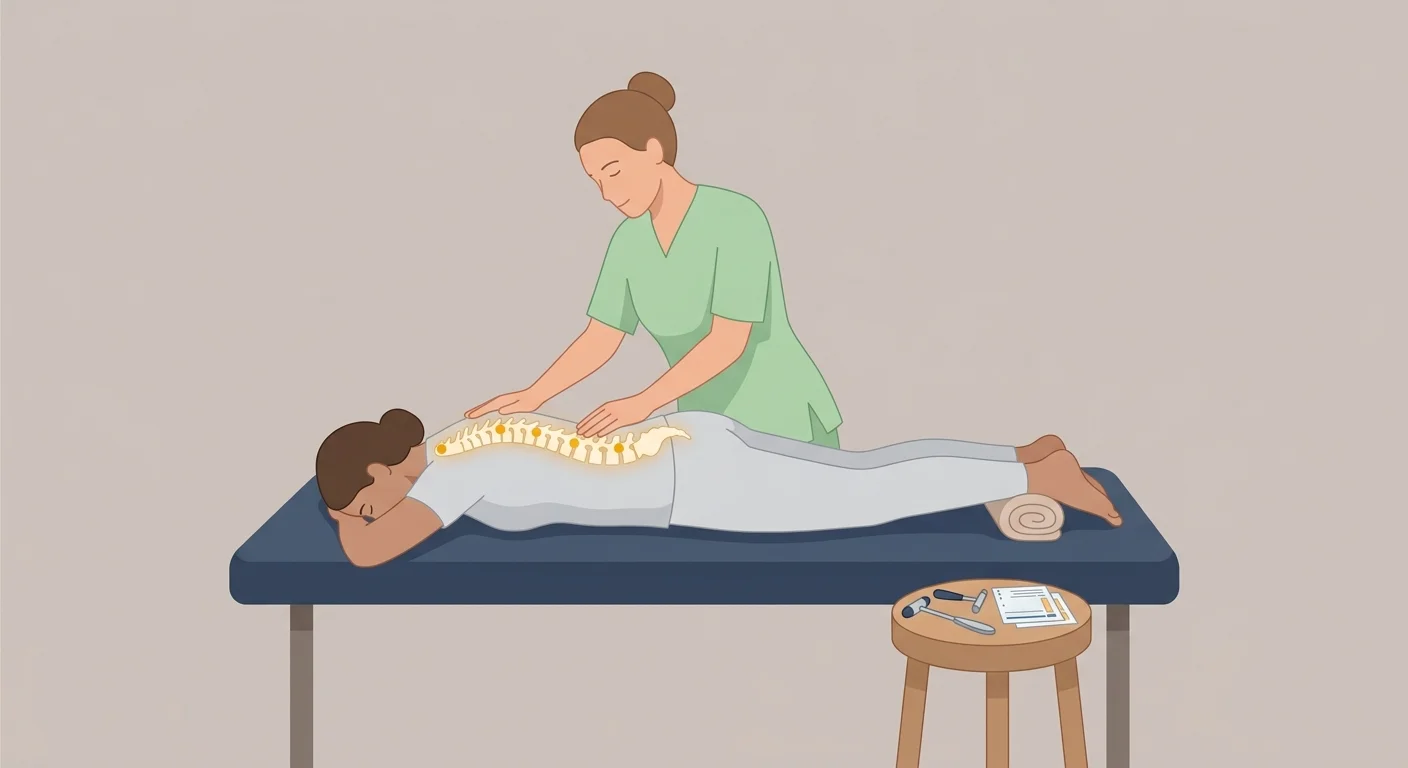
An MRI tells you what the structure looks like.
It doesn't tell you how the spine's functioning. And function's where pain actually lives.
A chiropractic evaluation is worth having because it assesses what imaging can't: movement quality, nerve interference, muscle compensation patterns, and whether the structural findings on your MRI actually match your symptoms.
That last part's critical.
Just because something shows up on an MRI doesn't mean it's the source of your pain. A disc bulge at L4-L5 might be incidental. The real problem might be nerve irritation two segments higher, or thoracic restriction that's forcing your lumbar spine to compensate.
Surgery at the wrong level fixes nothing.
Conservative care at the right level fixes everything.
What the Assessment Includes
A full chiropractic evaluation includes:
- Movement analysis — How does each spinal segment move? Where's motion restricted?
- Neurological testing — Reflexes, muscle strength, sensory function. Are the nerves firing correctly?
- Palpation — Physical examination of the spine to identify areas of restriction, inflammation, or muscle tension.
- Functional range of motion testing — Can you move the way your body's designed to move, or are compensations masking the real problem?
- Postural assessment — Structural alignment and load distribution patterns.
This reveals whether your pain's coming from what the MRI shows — or from something the imaging missed entirely.
And that answer determines whether surgery's necessary or whether conservative care can resolve the problem.
Why This Matters Before Surgery
If your symptoms don't match your imaging, surgery won't help.
Let's say your MRI shows a disc bulge at L5-S1. Your surgeon looks at the image and says, "That's the problem. We'll fuse it."
But during a functional assessment, it becomes clear that your pain's being driven by restricted motion at L2-L3 and nerve irritation in the thoracic spine. The L5-S1 bulge is there, but it's not symptomatic. It's just visible.
Surgery at L5-S1 removes the bulge.
It doesn't touch the actual source of your pain.
Six months post-op, the pain's still there — because the problem was never addressed.
A Hospital for Special Surgery study found that patients with certain spinal conditions who delayed surgery and pursued conservative care had similar long-term outcomes to those who had surgery immediately.
For many, the wait-and-see approach with structured conservative treatment avoided surgery entirely.
Conservative care doesn't just "try something else." It completes the diagnostic picture surgery skips over.
The Risks Your Surgeon Might Not Emphasize
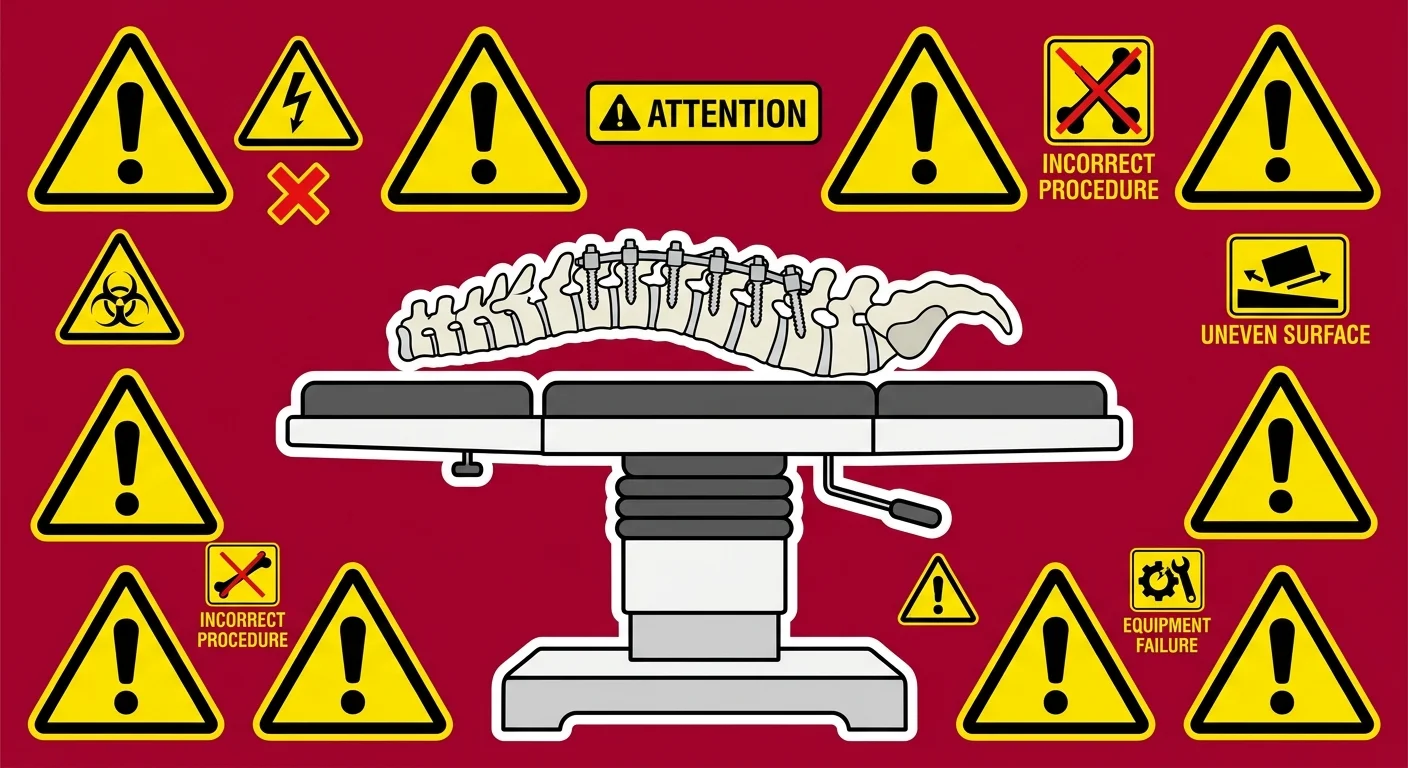
Surgeons are trained to solve problems surgically.
That's their expertise. That's what they do well.
But every surgery carries risk. And spinal surgery — especially fusion — carries risks that are significant, permanent, and often under-discussed in pre-operative consultations.
This isn't about fear-mongering. It's about informed consent.
You deserve to know what you're agreeing to before you sign.
Adjacent Segment Disease
When two vertebrae are fused together, they no longer move independently.
The segments above and below the fusion take on the extra stress.
Over time — usually within 5 to 10 years — those adjacent segments begin to degenerate faster than they would've naturally. Discs break down. New pain develops.
And in many cases, the patient needs another surgery to address the new problem the first surgery created.
A discussion in The New England Journal of Medicine notes that the rising prevalence of complex spinal fusion surgeries isn't matched by clear evidence they outperform simpler procedures — or that they're always necessary in the first place.
Adjacent segment disease isn't a rare complication. It's a predictable mechanical consequence of altering the spine's natural movement patterns.
Non-Union and Hardware Failure
Spinal fusion surgery relies on the bones growing together over time.
But sometimes, they don't.
Non-union — when the bones fail to fuse — happens in a percentage of cases. When it does, the pain persists. The hardware remains. And a second surgery's required to attempt the fusion again.
Even when the bones do fuse, the hardware itself — screws, rods, plates — can shift, break, or loosen over time.
That's another revision surgery.
The success rate for the first fusion is higher than for any revision that follows. Every additional surgery compounds risk and reduces the likelihood of a good outcome.
Persistent Pain
This is the one most patients don't expect.
You have surgery. The surgeon tells you the procedure went well. The MRI post-op shows the fusion's solid.
But the pain's still there. Sometimes it's worse.
Why? Because the structural problem the MRI identified wasn't the source of the pain.
And surgery only fixes structure. It doesn't diagnose function.
The USA TODAY investigation highlighted cases where patients underwent procedures they didn't need — often because the diagnostic process was incomplete, and the real source of pain was never identified.
If you don't know what's actually causing your symptoms, you can't fix it.
And cutting based on imaging alone doesn't guarantee pain resolution.
| Risk Category | Spinal Fusion | Conservative Chiropractic Care | Reversibility |
|---|---|---|---|
| Adjacent segment disease | 20–30% within 10 years | Not applicable | Irreversible |
| Hardware complications | 5–15% | Not applicable | Requires revision surgery |
| Non-union (bones don't fuse) | 5–10% | Not applicable | Requires second surgery |
| Persistent pain post-procedure | 10–40% depending on condition | Symptoms re-evaluated and care adjusted | Fully reversible |
| Nerve damage | 1–3% | Extremely rare | Potentially irreversible |
Questions to Ask Before You Consent
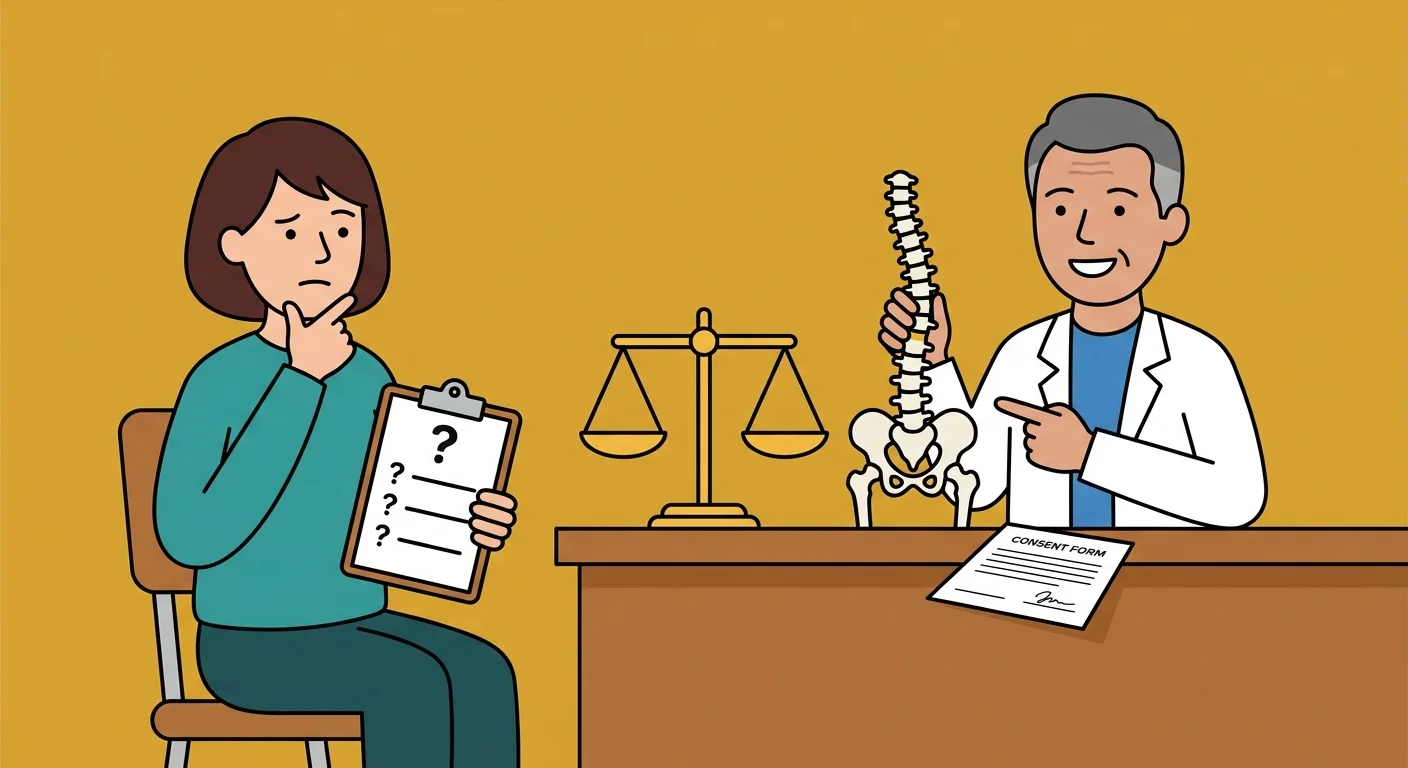
You're allowed to ask hard questions.
Any provider — surgeon or otherwise — who gets defensive or dismissive when you ask for clarity is showing you exactly why a second opinion matters.
These questions aren't confrontational. They're essential.
What to Ask Your Surgeon
Start here:
- What are the alternatives to surgery? Not just "rest and physical therapy," but actual conservative spine care options.
- What happens if I wait six months and pursue conservative care first? Will my condition get worse, or is this timeline flexible?
- What are the specific risks for my age, weight, and medical history?
- What percentage of your patients with this exact condition report complete pain resolution after this procedure?
- What does recovery look like — realistically? Not best-case. Average-case.
- If this surgery doesn't resolve my pain, what's the next step?
If your surgeon can't answer these clearly, or pressures you to decide quickly, that's not confidence.
That's a red flag.
What to Ask a Chiropractor
When you find a chiropractor who will actually listen, ask:
- What does a full evaluation look like here? What are you assessing that my PCP didn't?
- How long will it take to know if this approach is working for my specific case?
- What happens if we try conservative care and it doesn't produce results?
- Will you refer me back to a surgeon if that's truly the best option — or will you keep trying to treat me past the point where it's appropriate?
A competent provider will give you clear, honest answers.
They'll tell you what realistic outcomes mean for your specific situation, not hand you a 12-month treatment plan on day one.
What Happens If Conservative Care Doesn't Work
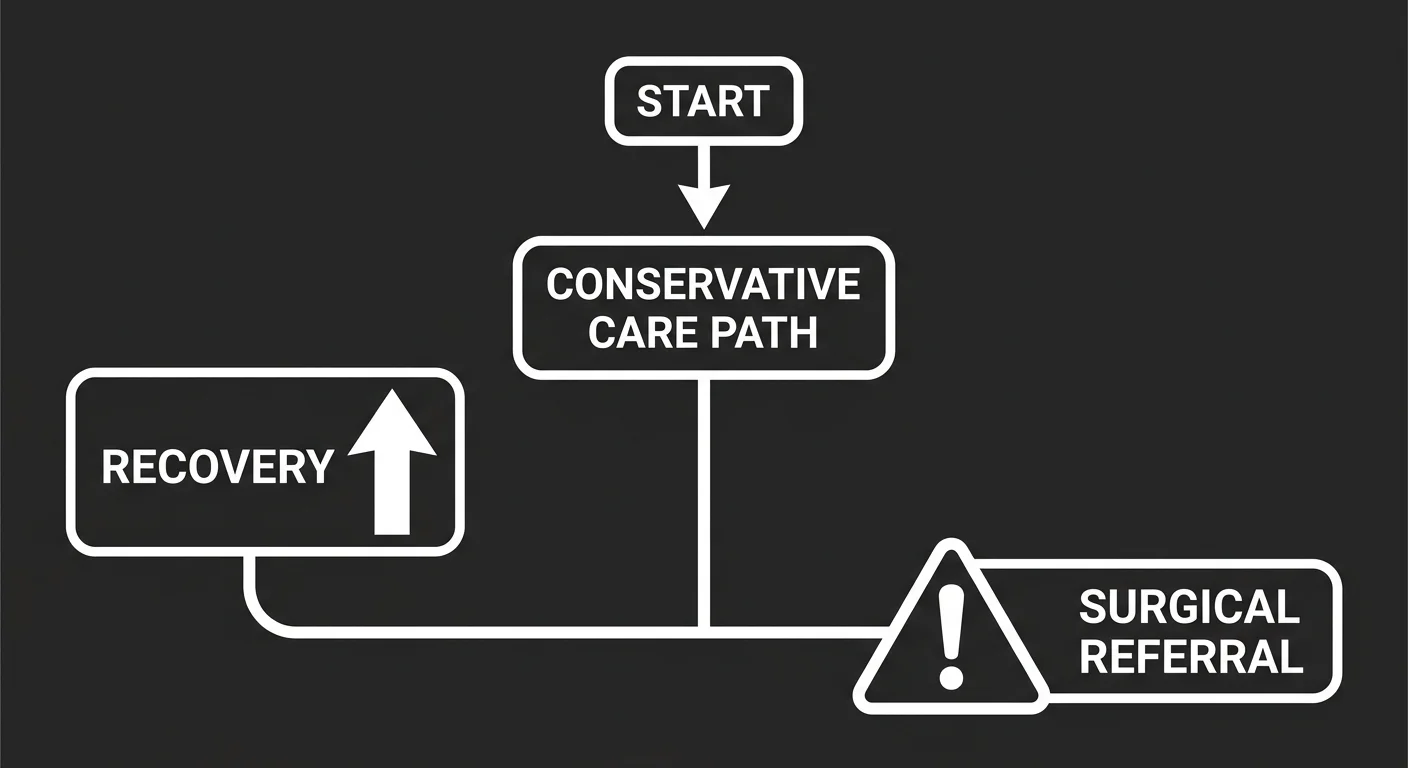
If you're reading this and thinking, "What if I try chiropractic care and it doesn't work? Did I just waste time?" — that's a fair question.
Here's the answer: if you've genuinely tried conservative care and it hasn't produced results, surgery becomes a clearer decision.
Not a panicked one. Not one you'll second-guess for the rest of your life.
A decision you can make knowing you exhausted every reasonable option first.
But this only works if you're willing to show up as an active participant in your own recovery.
If you're expecting someone else to do all the work while you passively wait for results — that's not how this works. Not with surgery. Not with conservative care.
Recovery requires both parties engaged.
If that's a problem for you before we've even started, that's important information. For both of us.
Honest Reassessment Is the Standard
Conservative care isn't "let's just keep trying the same thing and hope it works eventually."
If you're three weeks into care and nothing's changing, a competent provider stops. They reassess. They ask what's different, what's the same, and whether the initial clinical picture was accurate.
Then they either adjust the care plan or refer you to the next appropriate specialist.
Keeping you on the same protocol when it's not working is a failure. And providers who do that are serving their schedule, not your recovery.
Real answers are more valuable than comfortable ones.
If conservative care isn't the right fit for your case, you deserve to know that — not six months in, but six weeks in.
Surgery Becomes a Clearer Decision
If conservative care's been genuinely tried — not half-tried, not passively participated in, but actually executed — and your condition still meets surgical criteria, you'll know surgery was the right call.
You won't spend years wondering if you could've avoided it. You won't second-guess whether the pain would've resolved on its own.
You'll have clarity.
And for some cases, that clarity leads right back to the operating room.
That's not a failure of conservative care. It's a confirmation that surgery was necessary all along.
But you'll know. And that's worth something.
For cases where additional non-invasive options exist, Shockwave Therapy as a non-invasive treatment might be part of that reassessment conversation — depending on the condition and how the tissue's responding.
Frequently Asked Questions
How long should I try non-surgical treatments before considering surgery?
Most clinical guidelines recommend a minimum of six weeks to three months of consistent, structured conservative care before surgery's reconsidered — unless you're dealing with a true surgical emergency.
"Consistent" means showing up. Following the care plan. Doing the at-home work if it's part of the protocol. Not skipping visits. Not half-committing.
If you're three months in and there's been no measurable improvement in function or pain levels, that's when surgery moves back into the conversation.
But the timeline isn't arbitrary. It's based on how long it realistically takes for conservative interventions to produce structural change in most cases.
For some conditions — like severe stenosis with progressive weakness — that timeline's shorter. For others, it's longer.
The evaluation determines the timeline, not a calendar.
Can I get a second opinion from a chiropractor if my PCP recommended an orthopedic surgeon?
Yes.
A Doctor of Chiropractic is a primary spine care provider, licensed to diagnose and treat musculoskeletal conditions without referral.
Getting a second opinion from a chiropractor when your PCP's referred you to a surgeon isn't only appropriate — it's encouraged.
The American College of Surgeons confirms that seeking a second opinion before major procedures is a standard, responsible step in the decision-making process.
Chiropractors are trained to assess the same structural findings your surgeon will be looking at — but from a non-surgical perspective.
That gives you a complete diagnostic picture before you consent to an irreversible procedure.
Will my insurance cover a second opinion for back surgery?
Many insurance plans cover second opinions for major surgical procedures specifically because it's a cost-prevention mechanism.
Surgery's expensive. If a second opinion prevents an unnecessary procedure, the insurer saves money.
That's why most plans encourage it — and some even require it for certain high-cost surgeries.
Call your insurance provider. Ask if a chiropractic consultation's covered under your plan, and whether a second opinion for spinal surgery requires prior authorization.
In most cases, the answer's yes — but confirm the details before you book.
What are the biggest risks of spinal fusion surgery I should know about?
Your surgeon told you surgery will fix the problem.
And maybe it will. But you need to know what you're risking to get there.
The major risks include:
- Non-union — The bones don't fuse. Requires a second surgery.
- Adjacent segment disease — The vertebrae above and below the fusion degenerate faster, often requiring additional surgery within 5–10 years.
- Nerve damage — Rare, but permanent when it happens.
- Persistent pain — Surgery removes the structural problem but doesn't resolve the pain, because the pain was coming from something else.
- Hardware complications — Screws, rods, or plates shift, break, or loosen over time.
These aren't hypothetical. They're documented, measurable risks with known incidence rates.
Your surgeon should've explained all of them before asking you to sign a consent form.
If they didn't, that's not informed consent. That's a sales pitch.
What happens if chiropractic care doesn't work for me?
If conservative care isn't producing results, a competent chiropractor will stop. Reassess the clinical picture. And either adjust the care plan or refer you to the next appropriate specialist.
That's the standard. Not the exception.
The willingness to stop and pivot when something isn't working is what separates a provider focused on outcomes from one focused on visit counts.
If your care plan isn't changing and your symptoms aren't improving, that's a problem — and a good provider will address it directly.
What happens next depends on what the reassessment reveals. Maybe it's a referral to a different specialist. Maybe it's imaging that wasn't done initially. Maybe surgery was always necessary, and conservative care confirmed that.
But you'll know. And you'll know because someone was honest with you, not because they ran out of ways to keep you coming back.
Isn't chiropractic just for minor aches, not something serious enough for surgery?
That's a misconception that comes from outdated assumptions about what chiropractic care actually is.
A Doctor of Chiropractic is a primary spine care provider. Not a wellness coach. Not a massage therapist with extra training.
A licensed, doctoral-level clinician trained to diagnose and treat serious musculoskeletal and nervous system conditions.
DCs manage disc herniations, spinal stenosis, nerve impingement, degenerative joint disease, and post-surgical complications. They're trained to read MRIs, perform neurological exams, and determine whether a condition's within their scope — or whether it requires referral to a surgeon.
If your condition's serious enough that your PCP recommended surgery, it's serious enough to be evaluated by a spine specialist before you consent to that surgery.
And a chiropractor is a spine specialist.
How do I know if a chiropractor is qualified to evaluate my surgical case?
Look for:
- A DC credential (Doctor of Chiropractic) from an accredited institution
- Years in practice — experience matters when dealing with complex cases
- Willingness to collaborate with other providers, including medical doctors and surgeons
- Honest communication about what they can and cannot treat
If a chiropractor tells you they can fix everything and surgery's never necessary — walk away.
That's not competence. That's overreach.
A qualified provider will tell you when conservative care's appropriate, when it's not, and when a surgical referral's the right call.
The best chiropractors know their scope — and they stay in it.
My surgeon said I need surgery "soon" or my condition will get worse — is that true?
Sometimes. But not usually.
True surgical emergencies — cauda equina syndrome, rapidly progressing motor loss, spinal cord compression — require immediate intervention. If you're dealing with one of those, surgery shouldn't wait.
But most chronic back and neck pain cases aren't emergencies.
If you've got time to schedule a consultation, read articles, and ask questions, you've got time to get a second opinion.
The "you need this soon or it'll get worse" line's often a pressure tactic designed to prevent you from seeking other perspectives.
If your surgeon's confident in their recommendation, they won't be threatened by you taking two weeks to explore conservative options first.
If they are threatened — that tells you everything you need to know.
Conclusion
A surgical recommendation from your PCP isn't a diagnosis.
It's one option presented within the framework of what they were trained to offer. And that framework has limitations.
Your doctor isn't wrong to refer you to a surgeon. But the referral doesn't mean surgery's the only answer — or even the best first answer.
It means your condition's moved past what primary care can manage within a 15-minute visit window.
What you do next determines whether you end up in an operating room six months from now wondering if you could've avoided it — or whether you walk into surgery knowing you exhausted every reasonable alternative first.
Real answers are more valuable than comfortable ones.
A surgeon will tell you surgery can fix the structural problem your MRI shows. A chiropractor will tell you whether that structural problem's actually the source of your pain.
Both perspectives matter. But you can't make an informed decision without both.
The patients who regret surgery the most aren't the ones who genuinely needed it. They're the ones who never got a second opinion. Who never asked hard questions. Who assumed their PCP's referral was the final word.
You're not obligated to accept the first answer you're given. You're obligated to make the most informed decision you can with the information available to you.
And right now, you don't have all the information.
If your primary care physician told you surgery's the next step, that's worth a real conversation with someone trained to assess whether it's the only step.
A chiropractic evaluation at Touch of Wellness Chiropractic doesn't start with a pre-determined treatment plan. It starts with what you actually report — what's working, what's not, and whether the pain matches the imaging findings.
If conservative care's appropriate for your case, you'll know what that looks like. If surgery's truly necessary, you'll know that too.
Either way, you'll have the full picture before you make a decision you can't take back.
Get a chiropractic second opinion before you consent to surgery.
Unexplained doesn't mean it can't be addressed. It means no one's looked hard enough yet.
Copyright Touch of Wellness Chiropractic 2026
1101 W Jackson St, Suite A Morton, IL 61550
Web Design by iTech Valet